
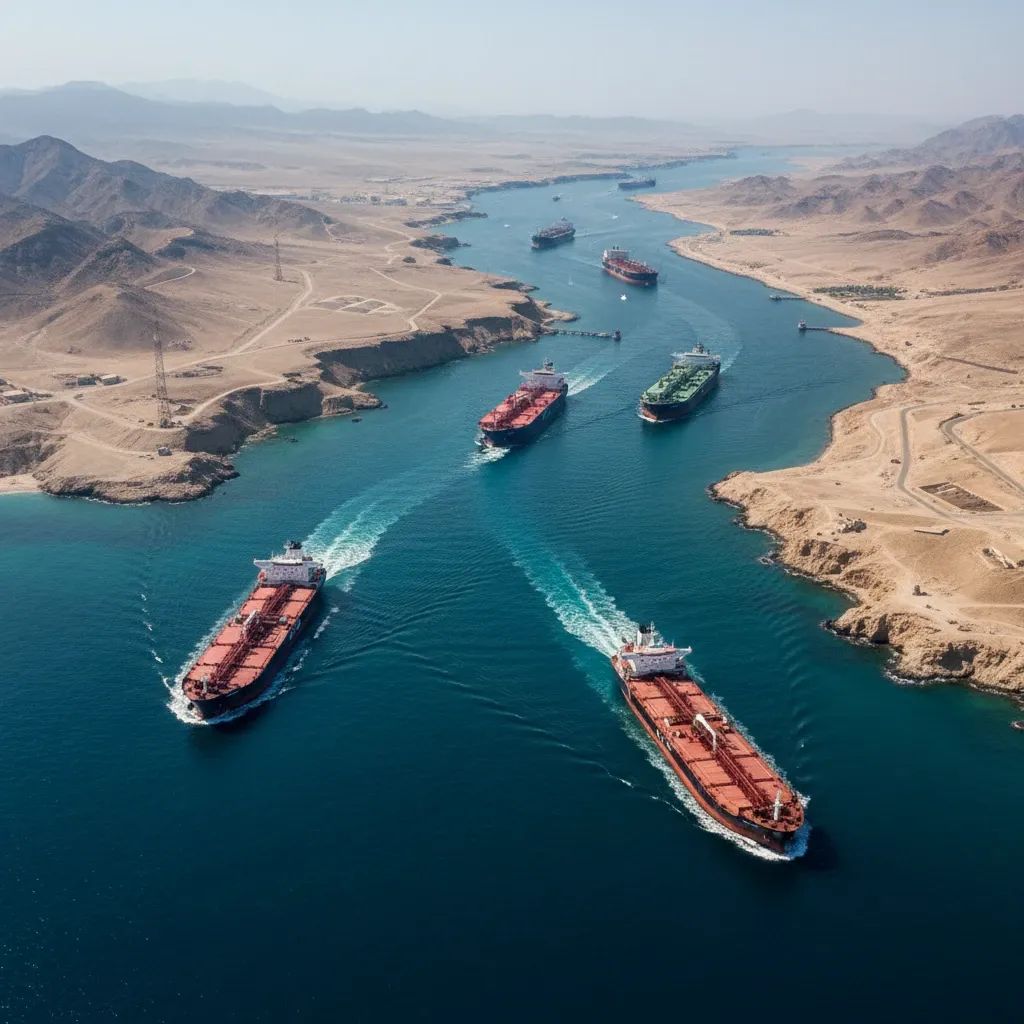
The United Kingdom Foreign Office is convening a critical meeting tomorrow with coalition partners to discuss developing a concrete strategy for restoring freedom of navigation through the Strait of Hormuz. Italy is among the core signatories participating in this planning session for one of the world's most strategically vital maritime corridors.
Why This Matters for Italy
• Strategic significance: Roughly 20% of global oil supplies transit through Hormuz, directly affecting Italian energy prices and supply chains.
• Italy's role: Italian participation reflects the country's ongoing commitment to international maritime security operations.
• Planning phase: Tomorrow's ministerial meeting will be followed by specialized technical working groups to develop operational details for the reopening strategy.
• Energy security link: Italy's participation connects the country's energy security interests—particularly liquefied natural gas imports—to stability in the Persian Gulf region.
The Coalition Members
The group gathering under British coordination includes: the United Kingdom, France, Germany, Italy, the Netherlands, and Japan. This configuration represents a blend of European naval powers and a key Indo-Pacific stakeholder, underscoring the strait's global economic significance.
For Italy, participation extends the country's long-standing role in international maritime security operations. The Hormuz coalition marks a geographic expansion of Rome's naval diplomacy in regions critical to European energy supplies.
The Foreign Office in London is handling coordination, positioning the UK as the diplomatic anchor for what could evolve into a coordinated approach to ensuring navigation security in the region.
What This Means for Italian Energy Supply
Italy's inclusion in the Hormuz coalition directly ties to the country's energy import dependency. While Italy has diversified gas sources since 2022—expanding regasification capacity and increasing Algerian pipeline imports—any significant disruption in Gulf oil and gas flows would affect European spot markets and ripple through to Italian households and industry.
The strait serves as the critical sea passage from the Persian Gulf to open ocean, funneling tankers carrying crude oil and LNG from Saudi Arabia, the UAE, Kuwait, Iraq, and Qatar. Restricted navigation through the waterway would impact transit times and shipping costs, with potential consequences for energy-intensive Italian sectors including chemicals, steel, and ceramics.
Technical Meetings Ahead
Following tomorrow's ministerial session, the coalition will convene technical working groups to translate political commitments into concrete operational plans. These sessions will involve military planners, maritime security specialists, and legal experts who will address the practical requirements for implementing the reopening strategy.
The technical discussions will need to address coordination with regional actors, legal frameworks for operating in the region, and logistical requirements for any operational presence.
Timeline Uncertain
No public timeline has been announced for when the coalition might deploy assets or declare the strait fully reopened. Tomorrow's meeting represents the coalition's first formal gathering to review the strategy and establish the mandate for subsequent technical sessions.
For Italian policymakers and businesses, the coalition's progress will be closely monitored as a barometer of energy security and supply chain stability in the region. Concrete outcomes from the technical meetings will provide clearer signals for logistics planning and risk assessment for companies dependent on Middle Eastern energy supplies and Asian trade routes transiting Hormuz.


