
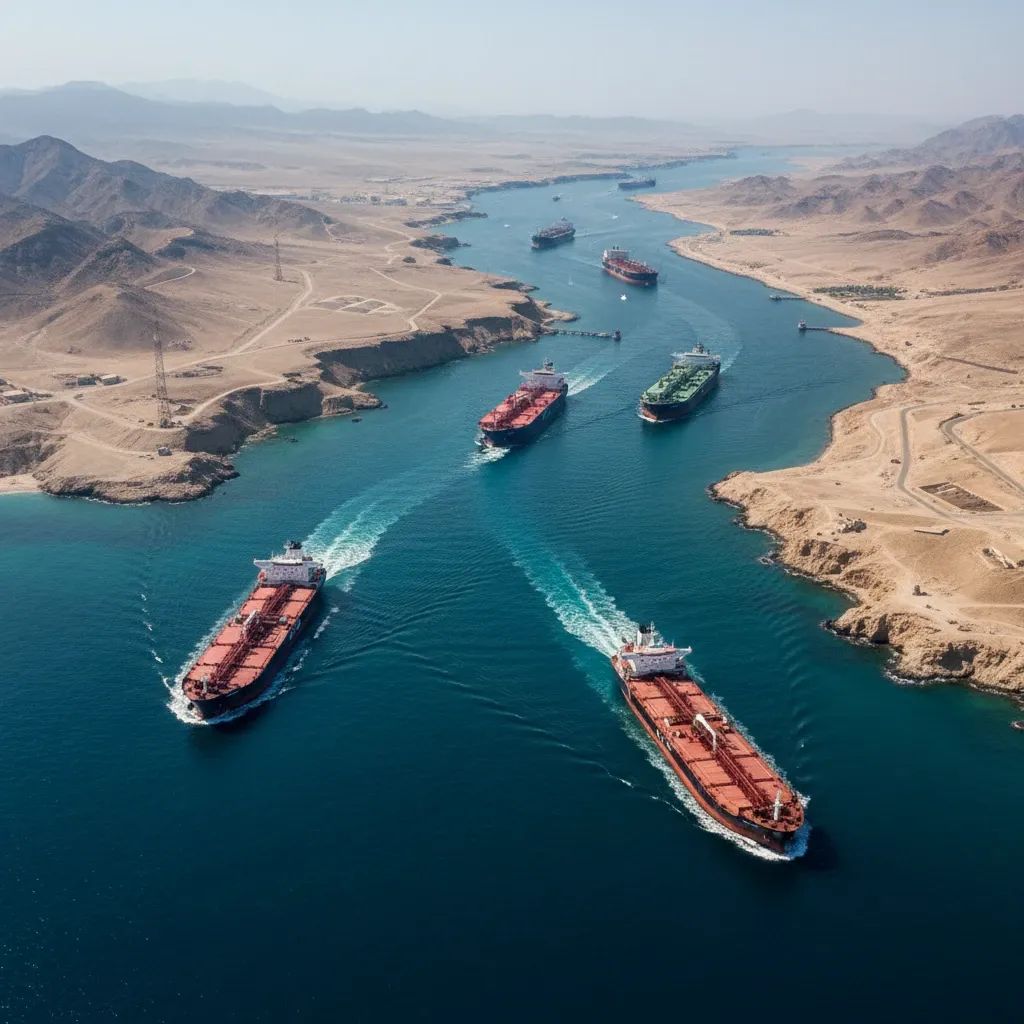
According to the ANSA news agency, a 30-nation coalition is now forming to secure maritime transit through the Strait of Hormuz, a critical waterway handling roughly one-fifth of the world's oil trade. The NATO Secretary General Mark Rutte confirmed the expanded alliance is working to finalize operational plans—deciding "what, where, and when" to deploy—as pressure mounts to keep the strategic chokepoint open to commercial shipping.
Italy is among the six founding members of the initiative, joining the United Kingdom, France, Germany, Netherlands, and Japan in responding to demands from former U.S. President Donald Trump that European and Asian partners shoulder more of the security burden in the Persian Gulf. Rutte acknowledged Trump's concerns about allied response times but defended the delay, noting that the United States did not give advance warning to its partners before publicly calling for the coalition, and that allies "needed time" to coordinate.
Why This Matters
• Economic exposure: Italy relies heavily on international energy markets; any disruption in Hormuz could impact domestic fuel prices and industrial supply chains, particularly given the region's significance in global oil trade.
• Naval commitment: Italian warships may soon redeploy to the Gulf under the expanded mission, potentially extending ongoing operations already active in the region.
• Geopolitical realignment: The coalition reflects a shift toward burden-sharing in global security, with Asia-Pacific democracies joining European NATO members in defending shared trade routes.
Widening Circle of Contributors
The coalition has swelled from its original half-dozen founders to include 24 additional countries, according to Rutte's latest statements. While the majority are NATO member states, the roster also incorporates key Indo-Pacific partners: South Korea, Australia, New Zealand, and Bahrain. This geographic diversity underscores the global stake in keeping Hormuz navigable—the strait funnels tankers carrying oil and liquefied natural gas to markets from Tokyo to Rotterdam.
Rutte emphasized that the group is now in the "decision phase," hashing out rules of engagement, deployment schedules, and area-of-responsibility zones. The NATO label is not attached to the mission itself; rather, the alliance's command infrastructure and intelligence-sharing apparatus are serving as an organizing backbone for what remains a voluntary, ad-hoc coalition outside formal Article 5 obligations.
Italy's Strategic Calculus
For Italy, participation carries both economic and diplomatic weight. The country's Navy has maintained a near-continuous presence in the Gulf since the 1980s, contributing frigates and support vessels to counter-piracy and maritime security operations. Joining the Hormuz coalition formalizes that commitment and aligns Rome with international efforts to ensure stable passage through this vital energy corridor.
Italian officials have not yet disclosed whether additional assets will be dispatched or if existing deployments will be rebranded under the coalition flag. However, European naval forces operating in the region include advanced surface combatants equipped with modern radar and anti-missile systems suited to the Gulf's operational environment.
The move also serves Italy's broader diplomatic strategy: demonstrating reliability to both NATO and key Arab partners—particularly Saudi Arabia and the United Arab Emirates—while maintaining influence in global security decisions. By contributing naval assets, Rome preserves its voice in international forums and signals commitment to international maritime security.
The Trump Factor and Allied Coordination
Rutte's comments shed light on the discussions that preceded the coalition's formation. Trump had raised concerns about European and Asian contributions to Gulf security, arguing that the United States was carrying a disproportionate share of the defense burden. His administration's calls for greater allied participation prompted this broader international response.
The Secretary General acknowledged that these concerns "had merit," but he also pointed to a procedural reality: Washington launched the public call for a coalition without first consulting NATO's North Atlantic Council or bilateral defense channels. This lack of advance coordination left European defense ministries needing to assess budgets, legal authorities, and parliamentary approvals—particularly in countries like Germany and the Netherlands, where overseas military deployments require legislative consent.
The coordinated response now reflects political buy-in across democracies. The coalition's current challenge is operational coherence: harmonizing rules of engagement, intelligence protocols, and logistical support across navies that rarely train together outside NATO exercises.
Strait of Hormuz: Flashpoint and Chokepoint
The Strait of Hormuz is a 21-mile-wide passage separating Iran from the Arabian Peninsula, connecting the Persian Gulf to the Gulf of Oman and the open Indian Ocean. Industry estimates suggest that roughly 20 million barrels of crude oil and petroleum products transit the strait daily, making it the world's most critical energy corridor. Any sustained closure—whether by military conflict, mining, or blockade—would send global oil prices soaring and disrupt supply chains from Europe to East Asia.
Tensions have spiked periodically over the past decade, with Iranian forces seizing tankers, deploying fast-attack craft, and conducting missile tests near shipping lanes. Western navies have responded with escort operations, minesweeping patrols, and surveillance flights, but the burden has fallen disproportionately on the United States Navy's Fifth Fleet, based in Bahrain.
The new coalition aims to distribute that load more evenly, leveraging the combined capabilities of European frigates, Japanese destroyers, and regional partners' coastal patrol vessels. Bahrain's participation is particularly significant, as the tiny Gulf monarchy hosts the U.S. Fifth Fleet headquarters and offers port facilities critical to sustained naval operations.
What This Means for Residents
For Italians, the coalition's success matters for energy security. Italy has limited domestic oil production and relies on international markets for most of its crude imports. Gulf disruptions could translate into higher refinery costs, which cascade through transportation, manufacturing, and electricity generation. In a worst-case scenario of prolonged Hormuz closure, industry analysts suggest fuel prices could face significant upward pressure.
Beyond energy, the deployment underscores Italy's commitment to maintaining its voice in global security forums. By contributing naval assets, Rome preserves influence in NATO, strengthens ties with Gulf partners that are key investors in Italian infrastructure, and signals to international allies that European nations are willing to share the burden of defending open sea lanes—even in theaters far from the North Atlantic.
For military families, the expansion of the Hormuz mission may mean extended deployments for sailors and officers currently assigned to Mediterranean or Red Sea patrols. The Italian Navy has not announced rotation schedules, but maritime security operations typically employ six-month rotation cycles similar to those used in counter-piracy missions off the Horn of Africa.
Operational Timeline and Next Steps
Diplomatic sources indicate that planning meetings are accelerating. The group is expected to finalize operational frameworks outlining command structure, coordination procedures, and rules of engagement in coming months, with actual operational activities potentially following as planning concludes.
Key decisions remain unresolved: Will the coalition operate under a unified command or as parallel national missions? How will intelligence on regional threats be shared among NATO and non-NATO members? What protocols will guide operational responses? These questions are being addressed in discussions at NATO headquarters in Brussels and in capitals from Tokyo to Canberra.
For now, the coalition represents a significant diplomatic achievement—proof that democracies can coordinate on hard security challenges even when initial calls for action come from political pressure rather than a shared crisis. Whether it translates into effective deterrence in the Persian Gulf will depend on operational discipline, sustained political will, and regional developments in the months ahead.


