
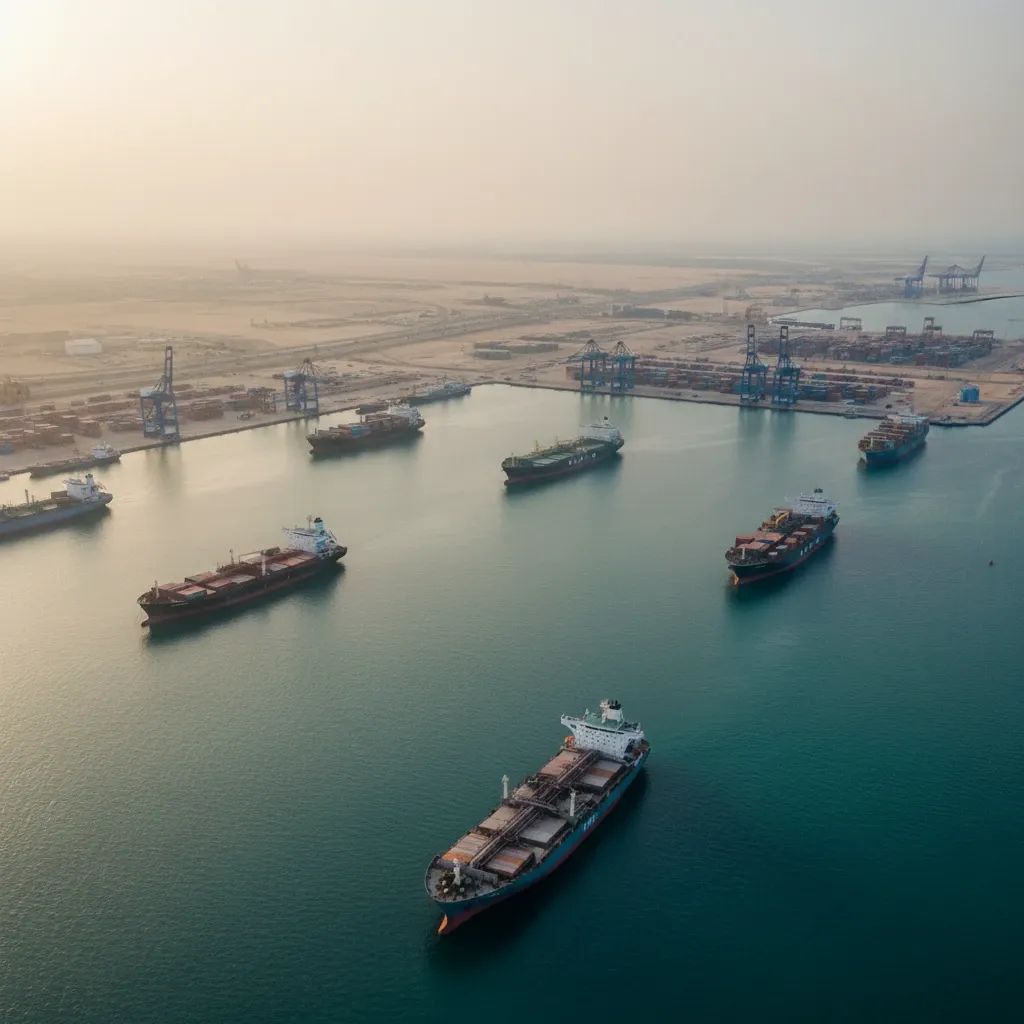
Italy's government has categorically denied holding direct negotiations with Tehran to secure passage for Italian vessels through the Strait of Hormuz. The denial specifically targets a Financial Times report claiming that France and Italy had opened channels with Iran's Revolutionary Guard Corps to negotiate safe passage for flagged ships. The denial comes as a broader military crisis in the Gulf has brought Europe's maritime commerce to a near standstill, forcing governments across the continent to recalibrate their energy and shipping strategies.
Why This Matters
• Critical chokepoint closed: Hormuz, which channels 20% of the world's oil, has seen commercial traffic plummet over 90% since late February.
• War-zone premiums spike: Insurance costs for vessels entering the Persian Gulf have surged, and some carriers have halted service entirely.
• Alternative routes add weeks: Ships detouring around Africa via the Cape of Good Hope face longer transit times and drastically higher fuel costs.
• Energy costs hit households: Italian businesses and families are bracing for another wave of rising electricity and heating bills tied to volatile crude prices.
Rome Rejects Claims of Secret Talks
Following the Financial Times report, Italy's Office of the Prime Minister issued a swift rebuttal. Sources from Palazzo Chigi stated unequivocally that no bilateral negotiations or direct talks with Iran regarding the transit of Italian vessels through Hormuz are underway. The Foreign Ministry echoed this position, clarifying that while Italian diplomats maintain regular contact with counterparts in Tehran to promote regional de-escalation, there is no "under-the-table deal" aimed at privileging Italian merchant ships over others.
Deputy Prime Minister Antonio Tajani, speaking on Italian television, reinforced the denial. "We are not negotiating with anyone, and certainly not with Iran, to secure passage for Italian ships through Hormuz," he said. Tajani noted that the operational reality in the strait is grim—only a handful of vessels, mostly Iranian-flagged, are managing to pass. He characterized the broader conflict as making any bilateral arrangement "extremely complicated" and stressed that Italy's priority remains pushing all parties toward a comprehensive ceasefire and preventing Iran from developing nuclear weapons.
What Triggered the Crisis
The current standoff erupted on February 28, when the United States and Israel launched a coordinated military operation targeting Iranian military installations and infrastructure. Tehran responded with missile strikes on targets in Saudi Arabia and deployed naval assets, including fast-attack boats, kamikaze drones, and naval mines, across the narrow waterway separating the Persian Gulf from the Gulf of Oman. Iran's supreme leader declared the strait effectively closed to vessels from the U.S., Israel, and their allies, a move that prompted the international maritime industry to officially classify the area as a "war zone."
The Strait of Hormuz is just 33 kilometers wide at its narrowest point and serves as the only sea route from the Persian Gulf to open ocean. Approximately one-fifth of global crude oil and significant volumes of liquefied natural gas flow through this passage daily, making it indispensable to energy markets in Europe, Asia, and beyond. The disruption has sent oil prices surging and triggered emergency consultations among G7 nations, which are coordinating the potential release of up to 400 million barrels from strategic reserves to stabilize supply.
Impact on Residents and Businesses
For Italians, the ramifications extend well beyond geopolitical headlines. Energy costs have already begun climbing as traders price in the risk of prolonged supply interruptions. Businesses reliant on imported raw materials from the Gulf—ranging from petrochemicals to plastics and textiles—are reporting delivery delays and increased freight charges. Some shipping lines have imposed emergency fuel surcharges and extended delivery windows by several weeks as vessels reroute around Africa.
The insurance sector has reacted by sharply raising war-risk premiums for any vessel entering the Persian Gulf or adjacent waters. Several carriers have announced they will evaluate coverage on a case-by-case basis, effectively pricing smaller operators out of the market. Meanwhile, Italian seafarers unions have raised concerns about crew safety, noting that mariners have the right to refuse assignments in designated combat zones and are entitled to double compensation in case of death or disability.
Italy's exposure is compounded by its historical trade ties with Iran. As one of Tehran's largest European commercial partners before the escalation, Italian exporters and importers now face not only logistical hurdles but also reputational and regulatory risks tied to sanctions enforcement. The Italian Revenue Agency and customs authorities have stepped up scrutiny of shipments to ensure compliance with both EU and U.S. sanctions regimes.
For residents concerned about rising energy costs: The Italian government's website (governo.it) and regional utility providers are publishing regular updates on energy price forecasts. Citizens experiencing hardship can contact their local social services office for information on government support programs for heating and electricity costs during emergencies.
Europe's Fractured Response
Rome's denial reflects broader European tensions between bilateral pragmatism and collective unity. While Italy maintains its official stance, other European capitals are exploring a patchwork of options that reveal the strain on Europe's coordinated energy strategy.
France has announced plans for a "purely defensive" naval escort mission to shepherd commercial vessels once hostilities subside. Germany and the United Kingdom are coordinating with allies on measures to protect merchant shipping, though no formal joint operation has been announced.
At the EU level, officials have signaled a preference for a UN-led multilateral initiative to guarantee organized and legitimate passage for all ships, rather than individual member states cutting separate deals with Tehran. High-ranking European sources told reporters that bilateral negotiations with the Revolutionary Guard are viewed as "insufficient and less desirable" given the scope of the conflict. The European Union is also considering a sanctions regime targeting entities that obstruct freedom of navigation, though details remain vague.
The bloc's existing naval mission in the Red Sea, Operation Aspides, has come under renewed scrutiny. EU High Representative Kaja Kallas is expected to ask member states to contribute additional ships and resources, with the aim of creating a coordinated command structure that could be extended to cover the Gulf of Oman if circumstances allow. Italy, France, and Greece already have warships deployed in the region under Aspides, but extending the mission's mandate to Hormuz would require unanimous approval from all 27 member states.
Russia and Energy Leverage
French President Emmanuel Macron warned this week that Moscow should not expect any relief from Western sanctions as a result of the Iranian crisis. Speaking at a press conference, Macron emphasized that higher oil prices—which benefit Russia as a major exporter—must not prompt the G7 to soften its stance on Moscow. "Russia is mistaken if it hopes to gain breathing room because of the war in Iran," he said, reaffirming that France and its European partners will maintain the current sanctions architecture regardless of energy market volatility.
The comment reflects concerns in European capitals that prolonged disruption in the Gulf could inadvertently strengthen Russia's fiscal position, enabling the Kremlin to sustain its military operations in Ukraine. The G7 has publicly committed to coordinating the release of strategic oil reserves to blunt any price spike, though analysts caution that such measures offer only temporary relief if the blockade persists.
Legal and Maritime Precedents
Under international maritime law, the Strait of Hormuz is classified as an international strait subject to the right of "transit passage," allowing all vessels to pass through continuously without interference from coastal states—in this case, Iran and Oman. Tehran's effective closure of the strait to Western-flagged vessels is widely considered a violation of these principles, though enforcement mechanisms are limited without Security Council action.
Bilateral agreements to secure safe passage through contested waterways are rare but have precedent. The Montreux Convention of 1936, which governs the Turkish Straits, established detailed rules for merchant and warship transit. More recently, China has reportedly negotiated informal arrangements with Iran to ensure its tankers can continue loading crude from Gulf terminals. Italy and France appear to have explored similar channels, though Rome's emphatic denials suggest any such talks either failed to materialize or were limited to exploratory diplomatic contacts.
Outlook and Contingencies
The Italian government's stance reflects a delicate balancing act. On one hand, Rome seeks to avoid the appearance of unilateral dealmaking that could undermine European unity or provoke backlash from Washington. On the other, Italian shipping companies and energy importers are under intense commercial pressure to restore access to Gulf markets. The Italian Maritime Authority has raised security protocols for vessels in the region to the highest level, and the Italian Navy is quietly reviewing contingency plans for potential escort duties.
For now, the official line remains unchanged: Italy supports a broad diplomatic de-escalation and a UN-brokered framework to reopen Hormuz for all nations. Whether that position holds if the crisis drags on—and energy costs continue climbing—remains an open question. European diplomats privately acknowledge that the longer the blockade lasts, the greater the temptation for individual capitals to pursue pragmatic arrangements, regardless of the optics.


