
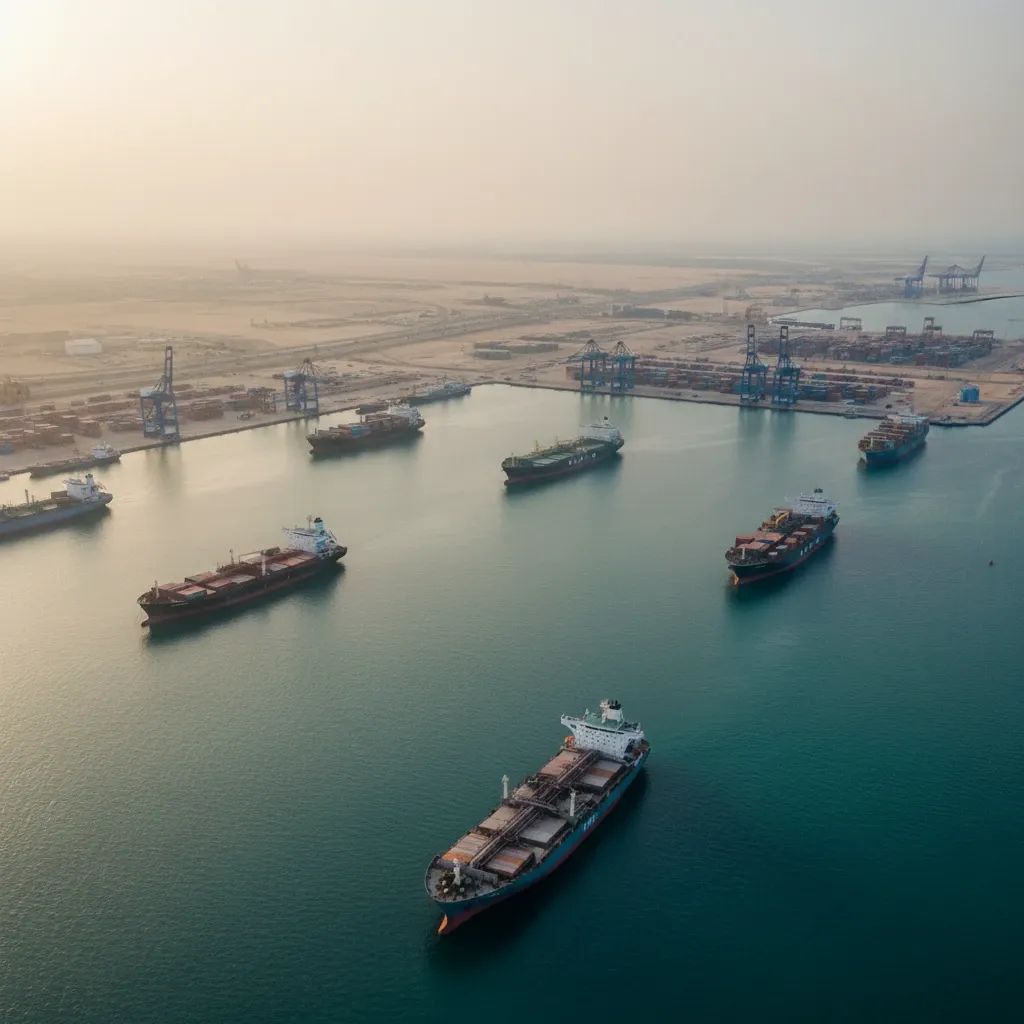
Italy's energy import costs are climbing sharply as Brent crude trades at $108.25 per barrel and WTI hovers near $97, driven by the ongoing Strait of Hormuz crisis and stalled negotiations between Washington and Tehran. The standoff has pushed European benchmark gas futures to €45.13 per megawatt-hour in Amsterdam trading, adding fresh pressure to household budgets already strained by April's 19.2% increase in regulated gas tariffs.
Why This Matters
• Brent crude has surged 2.8% to $108.25, while WTI is up 2.5% to $96.72—both reflecting renewed risk premiums from Middle East instability.
• The Strait of Hormuz remains effectively closed since early March, blocking 20% of global oil and LNG flows and creating what the International Energy Agency calls the largest supply shock in history.
• Italian households under the Maggior Tutela (vulnerable customer) tariff regime saw gas bills jump 19.2% this month, with electricity up 8.1%—translating to roughly €500M in additional import costs for March alone.
• Negotiations between Iran and the United States have collapsed after Trump rejected Tehran's latest proposal as "insufficient," leaving over 105 tankers and 2,400 seafarers stranded in the Gulf.
The Hormuz Bottleneck and Its Ripple Effect
The crisis began February 28 when Israeli and U.S. forces struck Iranian targets. Iran retaliated March 1 by blocking the Strait of Hormuz, a chokepoint that normally handles one-fifth of the world's oil and liquefied natural gas shipments. Unlike the Red Sea disruptions that forced container ships around the Cape of Good Hope, rerouting supertankers and LNG carriers from Hormuz is far more complex and costly.
Goldman Sachs initially forecast Brent would average $85 per barrel in April, but revised its near-term estimate to $110 amid persistent supply disruptions. The bank now projects a 9.6M barrel-per-day deficit in global oil markets for the second quarter of 2026. By contrast, Capital Economics anticipates prices stabilizing between $70–80 if the standoff drags on without catastrophic escalation, while a worst-case scenario could push Brent toward $100.
The U.S. Energy Information Administration raised its 2026 forecasts in April, pegging WTI at $87.41 (up from $73.61) and Brent at $96 (versus $78.84 previously). HSBC and Standard Chartered have similarly adjusted their outlooks to $80 and $85.50, respectively.
Iran's Proposal and Washington's Rejection
Tehran recently floated a new framework that would reopen the strait and defer nuclear talks to a later stage. However, President Donald Trump canceled plans to send envoys to Pakistan for indirect negotiations, deeming the offer inadequate and urging Iran to contact Washington directly. Iranian sources cite "excessive demands" from the U.S. side, while reports suggest internal divisions within Tehran's leadership over how much ground to concede.
A U.S. naval blockade remains in place, with the White House insisting it will stay until a nuclear deal is signed. On April 27, Trump is expected to convene his national security and foreign policy advisers to review the impasse and chart next steps. Meanwhile, Iranian Foreign Minister Abbas Araghchi traveled to St. Petersburg to meet Russian President Vladimir Putin, seeking a diplomatic breakthrough through Moscow's mediation. Araghchi also held talks with the Sultan of Oman and his Saudi counterpart to explore regional de-escalation options.
What This Means for Residents
For anyone living in Italy, the geopolitical standoff translates into tangible financial pain. The Italian Energy Regulatory Authority (ARERA) announced that approximately 5M households still on regulated tariffs will face cumulative increases that could add €950 annually to energy-related expenses when factoring in knock-on effects on food, transport, and other essentials.
Natural gas costs have spiked from €0.37 to €0.55 per cubic meter, while the wholesale electricity market has seen a 15% jump in raw energy costs compared to the previous quarter. Analysts caution that these hikes—currently confined to vulnerable consumers—may soon spill over into the mercato libero (liberalized market), affecting millions more.
Even as some forecasters had predicted modest annual savings of €200 for a typical family in 2026, the Hormuz crisis has upended those projections. Federconsumatori now estimates total annual energy spending could reach €2,964, approaching historic alert thresholds last seen during the 2022 energy crunch.
Gas Markets Show Cautious Resilience
Despite the oil surge, Amsterdam TTF gas futures have moderated from earlier highs, gaining just 0.6% to €45.13 per megawatt-hour in Monday trading. This relative stability reflects two countervailing forces: the supply shock from the Middle East and a simultaneous contraction in global demand.
The International Energy Agency's April report signals a 80,000 barrel-per-day drop in worldwide oil demand for 2026, with the second quarter expected to see the steepest quarterly decline—1.5M barrels per day—since the COVID-19 pandemic. Mild weather across Europe and record U.S. natural gas inventories have also cushioned the blow, with NYMEX futures trading near $2.65 per million BTU.
Longer-term forecasts suggest TTF gas could settle around €56.02 per megawatt-hour within 12 months if Hormuz reopens by late June, as Goldman Sachs anticipates. However, any prolonged closure or escalation—such as direct strikes on Iranian oil infrastructure—could push prices well beyond current levels.
OPEC+ Struggles to Offset Losses
Eight OPEC+ members—Saudi Arabia, Russia, Iraq, the UAE, Kuwait, Kazakhstan, Algeria, and Oman—agreed in April and May to boost collective output by 206,000 barrels per day. Yet this modest increment has done little to counterbalance the 10.1M barrel-per-day collapse in global supply triggered by the Hormuz blockade.
Iraq's production plummeted from 4.15M barrels per day in February to 1.4M in March, as U.S.-Israeli operations disrupted export routes through the Gulf. Saudi Arabia is maintaining output between 10.5M and 11M barrels daily, well below its potential capacity of 13M, while the UAE is investing to reach 5M barrels per day by 2027. Even so, these expansions will take months to materialize, leaving markets vulnerable to further shocks.
Trading Opportunities and Investor Sentiment
Market analysts describe 2026 as a year of "accumulation and monitoring" rather than explosive growth. Brent is considered the preferred instrument for hedging Middle East escalation risk, while WTI appeals to traders seeking relative value plays.
Speculative interest has surged in crude futures and CFDs, with volatility creating short-term profit windows for nimble investors. Yet the broader consensus among institutions is one of caution: Bank of America pegs the 2026 Brent average at $77.50, while Standard Chartered sees $85.50—both well below current spot prices—assuming the Hormuz bottleneck resolves by summer.
For Italian investors and businesses with energy-intensive operations, the key question is timing. If negotiations yield a breakthrough in the coming weeks, prices could retreat sharply; if the standoff deepens, a climb toward $126 per barrel—as seen during peak panic in March—remains plausible.
Outlook and Policy Implications
The Italian government has so far refrained from introducing emergency subsidies comparable to those deployed during the 2022 crisis, instead urging households to accelerate energy efficiency upgrades and diversify suppliers. Rome is also lobbying Brussels for coordinated EU measures to cap gas prices and expand strategic reserves.
Looking ahead, the trajectory hinges on three variables: the outcome of U.S.-Iran talks, OPEC+ production discipline, and the pace at which alternative supply routes—such as increased North African pipeline flows—can compensate for lost Gulf exports.
For now, Italy's energy import bill is climbing, and the political window for fiscal relief is narrowing as inflation concerns force the European Central Bank to hold rates steady. Residents should brace for continued volatility through at least the second quarter, with any material improvement contingent on diplomatic breakthroughs that remain frustratingly elusive.


