
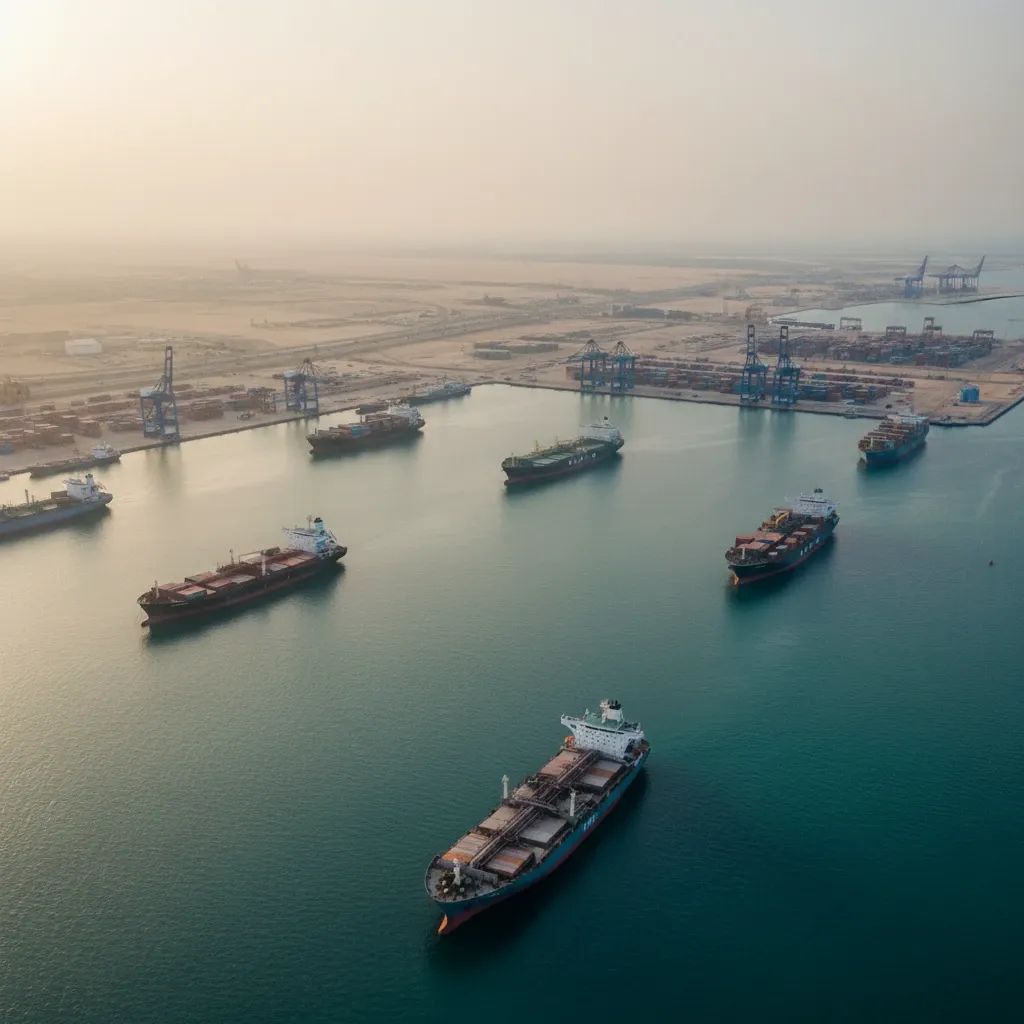
Italy's government is confronting one of the most severe energy crises in modern history as Iran's closure of the Strait of Hormuz threatens to push the Italian economy toward recession, inflation, and unpredictable supply chain disruptions. Prime Minister Giorgia Meloni warned Parliament that if Iran succeeds in imposing transit fees on ships passing through the strategic waterway, the economic fallout could become "incalculable."
Why This Matters
• Energy shock incoming: Italy depends on Qatar for roughly 20% of its natural gas needs, nearly all of which transits through Hormuz—now effectively under Iranian control.
• Recessionary risk: Confindustria warns that Italy faces not just higher energy costs, but potential contraction, with inflation pressure, tighter credit conditions, and uncertain supplies converging.
• Policy response on the table: Meloni has raised the possibility of suspending the EU's Stability and Growth Pact if the crisis escalates, echoing pandemic-era emergency measures.
• Regional impact already visible: Industrial confidence in Piedmont has deteriorated sharply, with over 70% of firms anticipating significant cost increases and export orders declining for 12 consecutive quarters.
Iran's Chokehold on Global Energy
The Strait of Hormuz, a narrow passage connecting the Persian Gulf to the Arabian Sea, handles approximately one-fifth of the world's oil and a significant portion of liquefied natural gas (LNG) shipments daily. In recent days, Iran's Revolutionary Guards have seized effective control of the waterway, forcing vessels onto alternative routes near Iranian territorial waters and, according to international shipping sources, demanding transit tolls.
The International Energy Agency (IEA) has declared the current disruption worse than the combined crises of 1973, 1979, and 2002. Director Fatih Birol told Le Figaro that the world has "never experienced an energy supply interruption of this magnitude." Oil prices have surged significantly, and natural gas benchmarks in Europe have spiked by double-digit percentages within days.
Satellite tracking data shows maritime traffic through the Strait has virtually collapsed, with only a handful of dry cargo vessels successfully navigating the passage. War-risk insurance premiums have nearly doubled, and major shipping companies have suspended operations or rerouted vessels around the southern tip of Africa—significantly extending transit times and pushing logistics costs upward on certain supply chains.
Italy's Exposure: Gas, Manufacturing, and Consumer Costs
Italy ranks among the most vulnerable economies in Europe to this shock. The country imports roughly 74% of its energy, one of the highest dependency rates on the continent. The immediate concern centers on Qatari LNG, which supplies a fifth of Italy's gas consumption and flows exclusively through Hormuz.
The ripple effects extend far beyond energy bills. In Piedmont, a manufacturing heartland, business sentiment has deteriorated sharply according to a March survey by the Centro Studi dell'Unione Industriali Torino, which polled over 1,200 firms. For the first time since the pandemic, over 70% of companies expect significant increases in costs related to raw materials, logistics, and energy—a figure climbing to 85% in energy-intensive sectors. Export expectations have remained negative for a dozen straight quarters, and service-sector confidence has dropped significantly on production and profitability indicators.
"We hope for concrete progress toward peace in the Middle East," said Marco Gay, president of Turin's industrial association. "Now Europe must act like Europe, taking clear pro-business, pro-industry positions. We need an industrial policy plan centered on investment, energy, and innovation. Turin companies continue to plan investments and new facilities despite the unpredictability, because that's the only way to avoid a genuine shock to businesses, workers, and families."
The Italian government has extended fuel tax cuts to cushion drivers from pump prices that have risen significantly. Strategic petroleum and gas reserves are being carefully managed to address potential supply disruptions.
Fragile Truce and Diplomatic Deadlock
On April 7, the United States and Iran reached a Pakistan-mediated two-week ceasefire that was supposed to include the full reopening of Hormuz. President Donald Trump announced a suspension of U.S. airstrikes in exchange for immediate and unrestricted passage through the Strait. However, the Iranian interpretation, articulated by Foreign Minister Abbas Araghchi, stipulated that safe passage would require "coordination with Iranian armed forces"—language that implied control and potential toll enforcement.
The truce has already frayed. Iran has accused Israel of violating the ceasefire through continued attacks on Hezbollah targets in Lebanon, prompting Tehran to re-close the Strait intermittently. The White House countered that Lebanon was never part of the agreement. Radio communications monitored by maritime security firms report Iranian forces threatening destruction of vessels attempting transit without explicit approval. Further talks are scheduled for April 10 in Islamabad, but U.S. military assets remain deployed in the region pending a durable settlement.
Iran's chief nuclear official, Mohammad Eslami, compounded tensions by declaring that no law or individual could halt the country's uranium enrichment program, dismissing international demands as "illusions." The statement underscored Tehran's defiance and reduced the likelihood of a swift diplomatic resolution.
What This Means for Residents
For households and businesses across Italy, the Hormuz crisis translates into immediate and medium-term economic pressure:
• Rising household costs: Energy bills for gas and electricity are projected to increase significantly in the coming months if the blockade persists. Fuel prices at the pump have already climbed, eroding disposable income and increasing transportation expenses.
• Inflation pressure: The spike in energy costs feeds directly into the prices of food, manufactured goods, and services, according to economic analysts and industry experts.
• Job and investment uncertainty: Companies facing higher input costs and weakened export demand may delay hiring or capital expenditure, slowing labor market recovery and wage growth.
• Potential policy shifts: If Meloni's government succeeds in securing a suspension of EU fiscal rules, Italy could gain short-term budget flexibility to subsidize energy costs or support strategic sectors, though this would require unanimous agreement among member states.
Europe's Emergency Response
The European Commission has urged member states to prepare for prolonged supply disruptions. Key European measures to address the crisis include:
• Accelerated LNG diversification: Increasing imports from alternative suppliers to offset disruptions.
• Renewable energy acceleration: Initiatives to boost wind and solar capacity across the continent.
• Demand reduction campaigns: Voluntary measures such as lower highway speed limits, expanded remote work, and substitution of short-haul flights with high-speed rail.
• Strategic reserve releases: EU member countries, including Italy, have begun releasing stockpiles, though this provides only temporary relief.
Italy is also negotiating emergency supply agreements with Algeria and other partners while considering adjustments to its energy transition timelines.
Markets React: Stocks Slide, Oil Surges
Asian equity markets closed lower as the Hormuz closure overshadowed initial optimism about the ceasefire. Tokyo's Nikkei fell 0.73%, Hong Kong dropped 0.38%, and Seoul lost 1.61%. European bourses opened in negative territory, tracking futures on Wall Street that signaled further declines. Brent crude futures climbed significantly, while European gas benchmarks surged.
Shipping and logistics stocks faced heavy selling pressure, while energy producers and alternative fuel companies saw gains. The volatility underscores the market's assessment that the crisis is far from resolved and could intensify if diplomatic efforts collapse.
Political Stakes: Meloni's Fiscal Gambit
In her address to the Italian Chamber of Deputies, Prime Minister Meloni framed the Hormuz crisis as a potential inflection point for European economic governance. She argued that if the conflict escalates, the EU should consider a generalized suspension of the Stability and Growth Pact—not a country-by-country exemption, but a bloc-wide emergency measure akin to the pandemic response.
"If there is a new escalation, we must seriously address the need for a European response similar in approach and instruments to what was deployed during the pandemic," Meloni said. "In that case, temporarily suspending the Stability and Growth Pact should not be a taboo—this would not be a waiver for a single member state, but a generalized measure."
The proposal signals Italy's willingness to leverage the crisis for broader fiscal flexibility, a move that could face resistance from fiscally conservative northern European states but may gain traction if energy shortages worsen and recessionary pressures mount.
Outlook: Uncertain Path Ahead
The coming days will be critical. Negotiations in Islamabad could yield a breakthrough, but Iran's hardline rhetoric on uranium enrichment and its demands for transit fees suggest limited willingness to compromise. If the blockade extends into May, Italy and other vulnerable European economies will face stark choices regarding energy management and potential industrial adjustments.
For residents of Italy, the immediate imperative is to brace for higher costs and prepare for potential disruptions. The government's ability to secure alternative energy supplies and negotiate EU-level fiscal relief will determine whether the crisis results in a manageable economic slowdown or more significant economic pressure that reverberates through jobs, incomes, and public services.


