
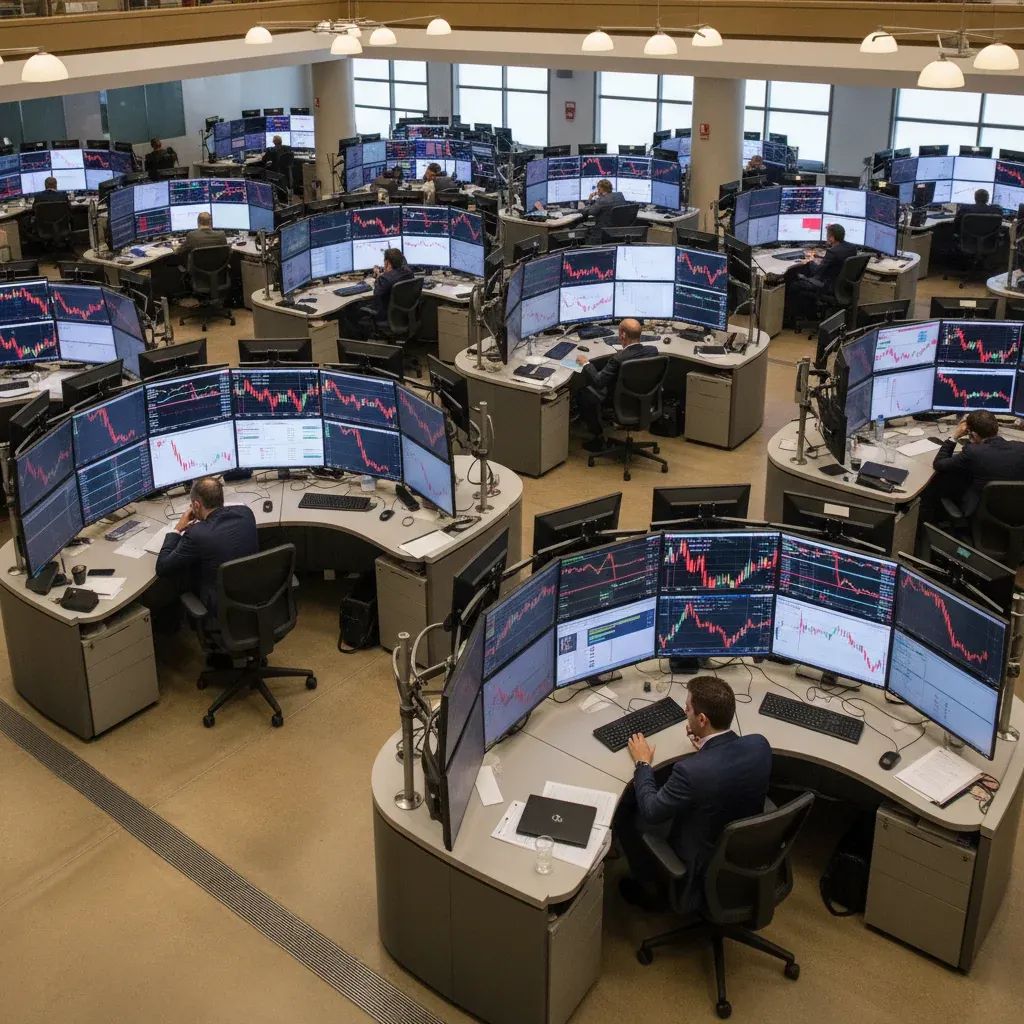
European markets opened lower, rallied mid-morning on strong earnings, then reversed course by afternoon as Iran hardened its nuclear stance.
Why This Matters
• Energy costs are climbing again: Crude oil jumped 1.96% to $107 per barrel as diplomatic hopes faded, directly impacting household bills and industrial costs across Italy.
• Italy's borrowing costs edge up: The BTP-Bund spread widened to 75 basis points, reflecting investor sentiment about sovereign debt in an uncertain environment.
• Your portfolio felt the squeeze: Milan's FTSE MIB dropped 0.64%, reversing earlier gains as geopolitical risk outweighed positive corporate earnings.
A Volatile Day in Three Acts
European bourses opened marginally lower. The cautious tone reflected investor caution despite strong overnight sessions in Asian markets.
By mid-morning, sentiment turned positive. Milan climbed 0.35%, Frankfurt added 0.5%, and Paris gained 0.36% as traders digested better-than-expected quarterly results from major companies. At Piazza Affari, Avio surged 3.5%, Ferrari advanced 2.7%, and Generali rose 2.2%. Speculation about a potential U.S.-Iran deal fueled a brief relief rally.
That optimism proved short-lived. Afternoon trading saw a sharp reversal once reports indicated Iran's rigid stance on its enriched uranium stockpile reached trading desks. Milan closed at -0.64% after initial gains.
Commodities React
Energy markets absorbed the geopolitical shift swiftly. Natural gas futures rose 1.06% to €49.95 per megawatt-hour, while gold edged up 0.16% to $4,519 per ounce as safe-haven demand returned. The BTP-Bund spread widened to 75 basis points, as Italy's borrowing costs rose relative to Germany's benchmark.
What This Means for Residents
For anyone living in Italy, the immediate concern is energy affordability. Crude at $107 per barrel translates into sustained pressure on petrol stations, heating bills, and industrial input costs—especially as the country remains heavily reliant on imported hydrocarbons. The 1.96% jump in oil prices signals that energy expense relief remains on hold.
The spread widening to 75 points reflects investor caution about economic stability in an uncertain environment. While not alarming, it underscores how external shocks can affect borrowing costs.
For investors with exposure to Italian equities, the session's reversal demonstrates how quickly geopolitical uncertainty can override positive fundamentals. Even strong earnings from Ferrari, Generali, and Avio could not sustain gains once diplomatic concerns returned.
The Iran Factor
The core issue centers on Iran's enriched uranium stockpile and ongoing negotiations with the United States. Tensions over these talks created uncertainty in commodity and equity markets, illustrating how Mideast developments directly impact European investors and Italian households dependent on energy imports.
What Comes Next
All eyes are now on diplomatic developments between Washington and Tehran. Any sign of progress on nuclear negotiations could support market sentiment, while further deterioration would likely increase pressure on energy prices and investor risk appetite.
For Italy, the immediate concern is managing energy costs during this uncertain period. For residents, expect continued volatility as long as diplomatic uncertainty persists. Vigilance on energy bills and caution on equity exposure remain prudent.


