
The United States has declared Iran "completely defeated" following two weeks of intensive bombing under the joint US-Israeli Operation Epic Fury. President Donald Trump told G7 leaders in a virtual summit Wednesday that Iran is "about to surrender," though he simultaneously rejected any peace offer Tehran might propose. Yet despite these proclamations, the conflict is far from resolved.
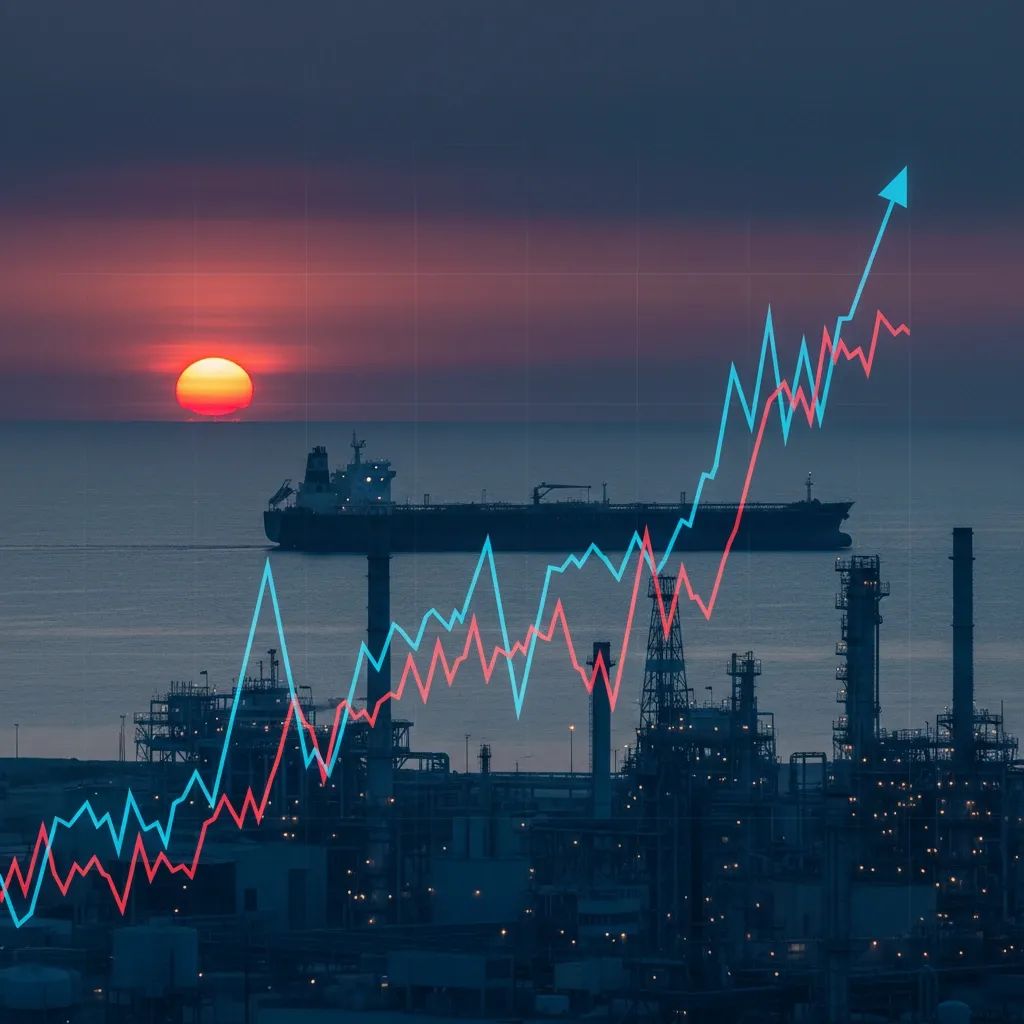
Iranian military officials have threatened to incinerate all US-linked energy infrastructure in the Middle East. The standoff over the Strait of Hormuz—the waterway through which 20-25% of the world's oil passes—continues to strangle global energy supplies. European gas prices have surged as much as 74%, and Brent crude hovers above $100 per barrel.
For residents and businesses in Italy, this is no longer distant geopolitical news. It is an immediate economic threat that will hit fuel prices, heating bills, and grocery costs in the coming weeks.
Immediate Impact on Your Wallet: What Italian Residents Need to Know
Fuel Prices: Diesel and petrol prices are expected to rise an additional €0.15-0.25 per liter within the next two to three weeks if the crisis persists. A typical fill-up (50 liters) could cost an extra €7.50-12.50. Monthly driving costs for an average Italian household could increase by €30-50 depending on consumption.
Heating Oil: Residents using heating oil for home furnaces should expect price increases of €0.10-0.15 per liter, translating to approximately €150-250 more per month for winter heating through April if supplies remain constrained.
Food Staples: Prices for bread, pasta, and grain-based products are likely to rise 8-15% by late March. Fertilizer shortages threaten spring planting, which could push dairy and meat prices up 5-10% by May. Budget grocers should monitor prices on cereals, pasta, and imported grains over the next 14 days.
Timeline: Residents will begin seeing these increases at petrol pumps within 1-2 weeks. Supermarket prices typically lag by 3-4 weeks. The most acute period is expected mid-March through April if the Strait of Hormuz remains contested.
What Happened During the G7 Call
Three senior G7 officials briefed Axios on Wednesday's virtual meeting, painting a picture of Trump alternately boastful and vague about his war aims. The US President claimed he had "eliminated a cancer threatening all of us" and belittled Iran's new Supreme Leader, Mojtaba Khamenei, calling him a "lightweight" with no authority to negotiate surrender.
Every other G7 leader—including Italy's Prime Minister—urged Trump to bring the war to a swift conclusion. They emphasized the urgent need to secure the Strait of Hormuz and restore commercial shipping through the waterway, which has seen daily transits plunge 97% since late February. Trump responded that conditions in Hormuz are "improving" and that merchant vessels should resume operations, though maritime insurers have quadrupled war-risk premiums and tanker charter rates have spiked 72%, making the route economically prohibitive even if militarily passable.
According to participants, Trump was "ambiguous and indecisive" about endgame objectives. Some diplomats left the call convinced he intends to wind down hostilities; others came away with the opposite impression, fearing an indefinite campaign aimed at regime collapse in Tehran.
The Economic Shockwave Hitting Europe
The partial closure of Hormuz has already forced Gulf producers to cut output by 10 million barrels per day because storage tanks are full and tankers cannot leave port. Qatar, Europe's critical supplier of liquefied natural gas, has no viable land alternative to ship LNG, leaving the continent acutely exposed. The International Energy Agency has released 400 million barrels from strategic reserves to calm markets—a stopgap that cannot be sustained indefinitely.
Italy, which imports roughly 58% of its fossil fuels, faces a renewed energy shock barely two years after the dislocation caused by the war in Ukraine. Beyond hydrocarbons, the Strait of Hormuz is also a transit corridor for one-third of global fertilizer exports. Iran is the world's 4th-largest exporter of urea, essential for wheat and cereal production. Agricultural economists warn that a prolonged blockage will push up costs for European farmers ahead of the spring planting season, with knock-on effects on grain prices later in the year.
Italy's Government Response and Consumer Support Measures
The Italy Ministry of Economic Development has convened emergency consultations with oil majors and utility providers to assess supply continuity. Sources indicate preliminary discussions about potential measures, though no official announcements have been made yet. The government is also evaluating options for strategic petroleum reserve releases and is monitoring EU-level discussions on possible price stabilization measures.
The Ministry of Defense is evaluating a US request to approve the logistical use of American bases on Italian soil for defensive operations, including deployment of air-defense systems to Gulf partners. This would represent a material contribution to the US campaign without direct combat participation.
Residents should monitor official announcements from the Italian government and regional authorities for potential consumer support measures, including possible subsidies for lower-income households or energy price caps. The EU is expected to discuss coordinated support measures in the coming weeks.
Italy's Diplomatic Position and NATO's Non-Involvement
Italy has sought to navigate a middle path. Officials in Rome have made clear the country is not at war and does not intend to be dragged into one. At the European level, the United Kingdom—though no longer an EU member—has authorized the US to launch defensive strikes against Iranian missile sites from RAF bases. France's President Emmanuel Macron has pledged to reinforce French military assets in the Middle East and warned that any Iranian attack on Cyprus, an EU member state, would constitute an attack on Europe. Italy has signaled preliminary support for a UK-led European naval task force to escort commercial shipping, alongside France and Denmark.
NATO Secretary General Mark Rutte has clarified that the alliance is not a party to the conflict. However, NATO air defenses have been activated multiple times to intercept Iranian ballistic missiles aimed at Turkey, a member state. Spain broke ranks, denying the US permission to use American bases on Spanish territory for strikes against Iran, stating that unilateral military action violates international law. The divergence underscores the absence of a unified EU stance.
Humanitarian Toll and Civilian Casualties
The United Nations and Human Rights Watch have documented "enormous damage" and several hundred civilian deaths since Operation Epic Fury began on 28 February. A strike on the Shajareh Tayyebeh girls' elementary school in Minab, southern Iran, killed 182 people, including teachers and students. UNICEF reports approximately 180 children killed overall, with an estimated 3.2 million people—between 600,000 and 1 million families—internally displaced from major cities. Iran's airspace remains closed, universities have suspended academic activities, and emergency declarations are in force across multiple provinces.
What's Next: Diplomacy or Further Escalation?
The internal situation in Iran complicates any ceasefire calculus. Since December 2025, the country has been convulsed by mass protests—dubbed the "Iranian Revolution of 2026"—driven by economic collapse and political repression. Trump's declaration that Iran is defeated suggests he may believe the government is on the verge of collapse without a formal surrender. G7 allies, including Italy, are more cautious, fearing a power vacuum could destabilize the region further and prolong energy disruptions.
France has called an emergency G7 meeting focused specifically on the economic fallout. Italy, Germany, and other European states are pressing for a coordinated diplomatic push involving Russia and China, Iran's largest crude buyer. Whether Trump will engage in such multilateral diplomacy remains to be seen.
For now, the war continues. The US Fifth Fleet remains engaged in escort operations, and Iranian missiles continue to fly intermittently at facilities across the Gulf. The Strait of Hormuz, the 21-mile-wide chokepoint that global commerce depends upon, remains contested with no clear reopening in sight.
Practical Advice for Italian Residents and Small Businesses
For Households: Consider locking in forward contracts for home heating oil now if you use fuel oil for heating. Carpooling, public transportation, and remote work can help reduce petrol costs. Monitor supermarket prices closely starting this week, and consider purchasing essential staples like pasta and oil before significant price increases take effect.
For Small Businesses: Energy-intensive operations should consult with suppliers about forward contracts and hedging options. Agricultural businesses should accelerate fertilizer purchases if possible, and review EU and Italian government support programs that may be announced in coming days. Watch for official guidance on potential subsidies or tax relief measures.
For All Residents: Stay informed through official Italian government channels and EU announcements for any consumer protection measures, subsidies, or support programs being implemented in response to the crisis.


