
Italy's Milan exchange and other European bourses are trading in cautious territory as investors parse the implications of stalled U.S.-Iran negotiations and the fragile status of the Strait of Hormuz, the narrow waterway that carries roughly 20% of the world's oil supply. Despite President Donald Trump's assertion to Sky News UK that a deal could materialize "by the end of April," market participants are treating the statement with skepticism, mindful that the first round of talks in Pakistan collapsed without progress less than a week ago.
Europe's Markets React with Caution
At midday Wednesday, the pan-European Stoxx 600 edged up a mere 0.06%, reflecting investor ambivalence. Frankfurt's DAX gained 0.23%, while Paris's CAC 40 slipped 0.46% and Madrid's IBEX shed 0.35%. London's FTSE 100 barely budged at +0.02%. Under the surface, divergence is sharp. Technology shares rallied 0.8% after Dutch chipmaker ASML reported better-than-expected earnings, lifting sentiment for the sector. Conversely, banks dropped 0.3% and insurers fell 0.4%, weighed by flat yield curves and recession jitters. Utilities dipped 0.2% as European natural gas futures—traded on Amsterdam's TTF hub—declined 3.4% to €41.88 per megawatt-hour, driven by mild weather and lingering hopes that Hormuz will stay open.
Why This Matters
• Energy costs: If diplomacy fails and the Strait remains contested, Italian households could see renewed fuel price spikes—think €2 per liter at the pump—and steeper heating bills heading into next winter.
• Portfolio impact: Milan's FTSE MIB crossed 48,000 points this week on optimism, but the luxury sector is already down 2.2% today, dragged by Kering's -9% plunge after disappointing quarterly results.
• Timeline pressure: The current two-week ceasefire expires April 21, leaving only six days for negotiators to bridge vast differences on uranium enrichment, sanctions relief, and strait control.
• Inflation risk: A prolonged standoff would push the European Central Bank toward two rate hikes in 2026, squeezing borrowers and dampening consumer spending across the eurozone.
The Diplomatic Stalemate
Talks held April 11–12 in Islamabad, led by U.S. Vice President JD Vance, broke down over irreconcilable red lines. Washington is demanding a 20-year freeze on Iran's uranium enrichment program, dismantlement of key nuclear facilities, and unfettered passage through Hormuz. Tehran counters with a five-year suspension cap, insists on control over the strait, and wants immediate sanctions lifted plus war reparations unfrozen.
Pakistan has offered to host a second round, and Turkey is also jockeying to play mediator. China, which relies heavily on Gulf crude, has publicly urged both sides to return to the table and labeled the U.S. naval blockade on Iranian ports "dangerous and irresponsible." That blockade—positioned at the mouth of Hormuz—remains in place, throttling tanker traffic and keeping a geopolitical premium baked into every barrel of Brent crude.
Energy Prices: The Whipsaw Continues
Oil markets have swung wildly this month. After the April 8 ceasefire announcement, Brent crude tumbled below $100 per barrel, touching $92 at one point. By April 13, when the Islamabad talks collapsed, prices shot back above $102. Today they sit at $95.29 for Brent (up 0.5%) and $91.26 for West Texas Intermediate (flat).
Natural gas has followed a similar arc. Before the truce, TTF contracts spiked near €50/MWh; the ceasefire sent them down to €43, and they've since stabilized around €42. For Italian consumers, that translates to marginally lower heating bills—a welcome reprieve after winter prices averaged €45—but analysts warn the calm may be temporary. Any breach of the April 21 deadline could propel gas back toward €50 or higher, especially if liquefied natural gas shipments from the Gulf are disrupted.
What This Means for Italian Residents
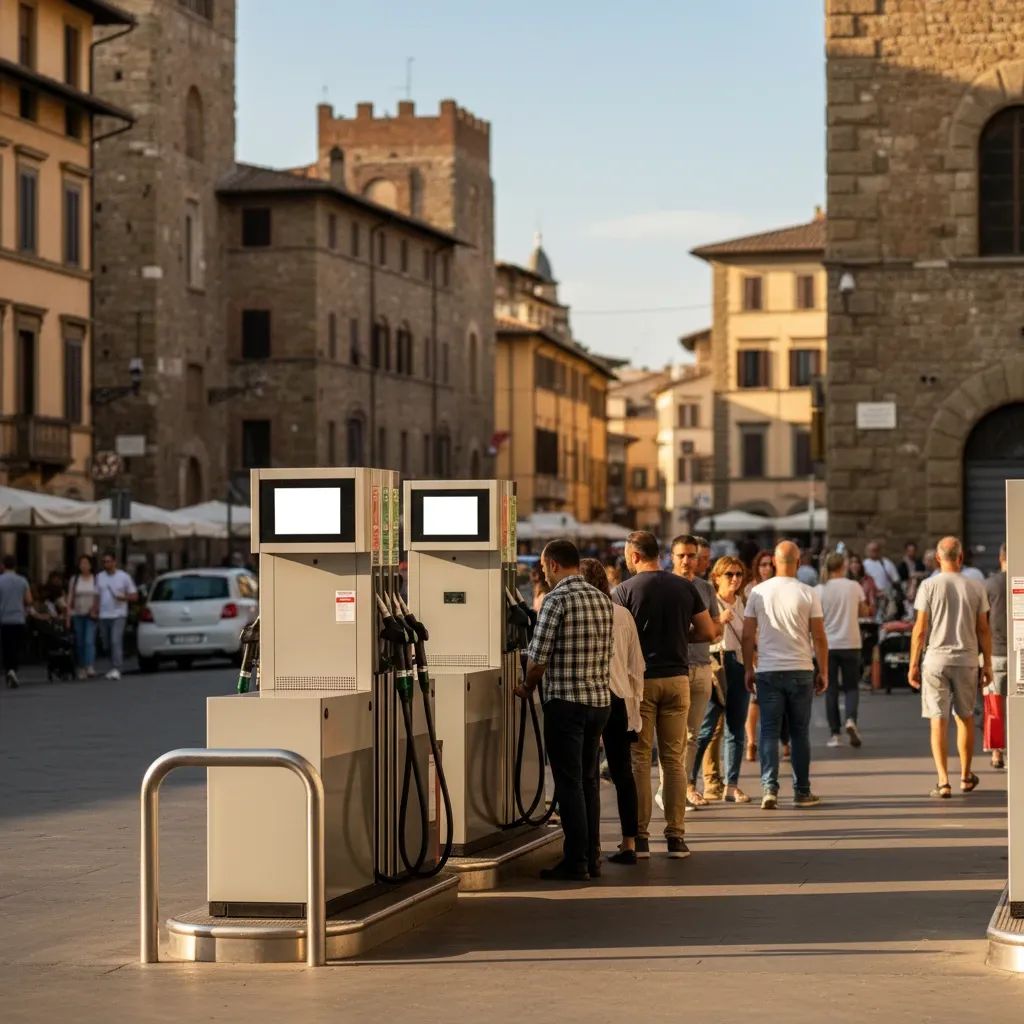
Immediate financial impact: Fuel prices at Italian pumps, which climbed to €1.95 per liter for gasoline and €1.90 for diesel in March, have stabilized this week. If a permanent accord emerges, expect a drop of 10–15 cents per liter over the next month. Conversely, a return to hostilities could add another 10 cents, pushing diesel above €2 and squeezing logistics firms that operate on thin margins.
Broader cost of living: Energy accounts for roughly 8% of the average Italian household budget. A sustained spike in oil and gas feeds directly into electricity tariffs—already among Europe's highest—and indirectly into food prices via transportation and fertilizer costs. The Italy National Institute of Statistics estimates that every €10 increase in the price of a barrel of crude adds roughly 0.3 percentage points to annual inflation.
Investment portfolios: Italian savers holding equity funds tied to European indices should brace for volatility. The luxury sector—home to iconic names like Hermès and Burberry—has been hit hard by the Middle East conflict's drag on high-end tourism and retail. LVMH, Europe's largest luxury conglomerate, reported a first-quarter revenue decline attributed to fewer shoppers in Gulf capitals. Milan-listed fashion and accessories stocks are likely to mirror that weakness if geopolitical uncertainty lingers.
Mortgage and loan rates: With the European Central Bank widely expected to raise its deposit rate twice more in 2026 to combat energy-driven inflation, borrowers with variable-rate mortgages will see monthly payments climb. A 50-basis-point cumulative increase translates to roughly €30 extra per month on a €200,000 loan.
Italian Government Bonds Hold Steady
Despite the turbulence in equities and commodities, Italian sovereign debt has remained remarkably calm. The spread between Italy's 10-year BTP and Germany's Bund widened slightly to 77 basis points, with the Italian yield at 3.79% and the German at 3.02%. That's only a modest uptick from yesterday's 76 points, suggesting bond investors still trust Rome's fiscal discipline and see the eurozone as a relatively safe haven amid global uncertainty.
Luxury Rout, Tech Resilience
The day's sharpest moves came in consumer discretionary. Kering, parent of Gucci and Saint Laurent, plunged 9% after reporting first-quarter sales that missed analyst forecasts by a wide margin. Management cited weaker demand in Asia and disrupted travel flows from the Gulf. Hermès also slid, and Burberry fell 1.6%. The sector's 2.2% decline underscores how Middle Eastern shoppers—once the lifeblood of European luxury boutiques—are staying home or cutting back.
On the flip side, chipmakers and software firms provided ballast. ASML's upbeat quarterly results and confident guidance lifted the entire tech complex, reminding investors that not all earnings stories are hostage to oil prices.
Currency and Alternative Assets
The euro weakened to $1.1781 against the dollar, reflecting safe-haven demand for greenbacks amid geopolitical noise. Gold climbed 0.8% to $4,806 per ounce, a fresh all-time high, as investors hedge against inflation and currency volatility. Bitcoin, often touted as "digital gold," barely moved, slipping 0.1% to $74,052, suggesting crypto markets are decoupling from traditional risk-on/risk-off dynamics.
What Happens Next
All eyes are on the April 21 ceasefire expiration. If negotiators reconvene before then—Trump hinted talks could resume "in the next two days," meaning as early as today—markets may rally on headlines alone. But seasoned analysts caution that the gap between U.S. and Iranian positions remains enormous. A 20-year versus five-year enrichment freeze is not a rounding error; it's a chasm that reflects fundamentally different visions of regional power.
Should diplomacy fail, the United States has signaled it will not renew sanctions waivers for Iranian or Russian oil, tightening global supply further. Iran, for its part, retains the ability to disrupt tanker traffic with mines, drones, or proxies, even if it stops short of a full blockade. Either scenario would send Brent back above $100, likely triggering a fresh wave of inflation across Europe and forcing the ECB to choose between price stability and economic growth.
The Bigger Picture
For Italians navigating daily budgets, the stakes are concrete: cheaper fuel and stable heating bills if peace breaks out, or a summer of rising costs if the standoff drags on. For investors, the lesson is clear—geopolitical risk is no longer an abstract variable confined to emerging markets; it's a primary driver of returns in developed Europe. And for policymakers in Rome and Brussels, the crisis underscores the continent's enduring vulnerability to energy shocks, despite years of effort to diversify supply chains and boost renewables.
In a landscape defined by two-week truces and last-minute deal-making, the only certainty is uncertainty. Markets will continue to swing on every headline, and Italian households will keep one eye on the pump and the other on the news from the Gulf.


