
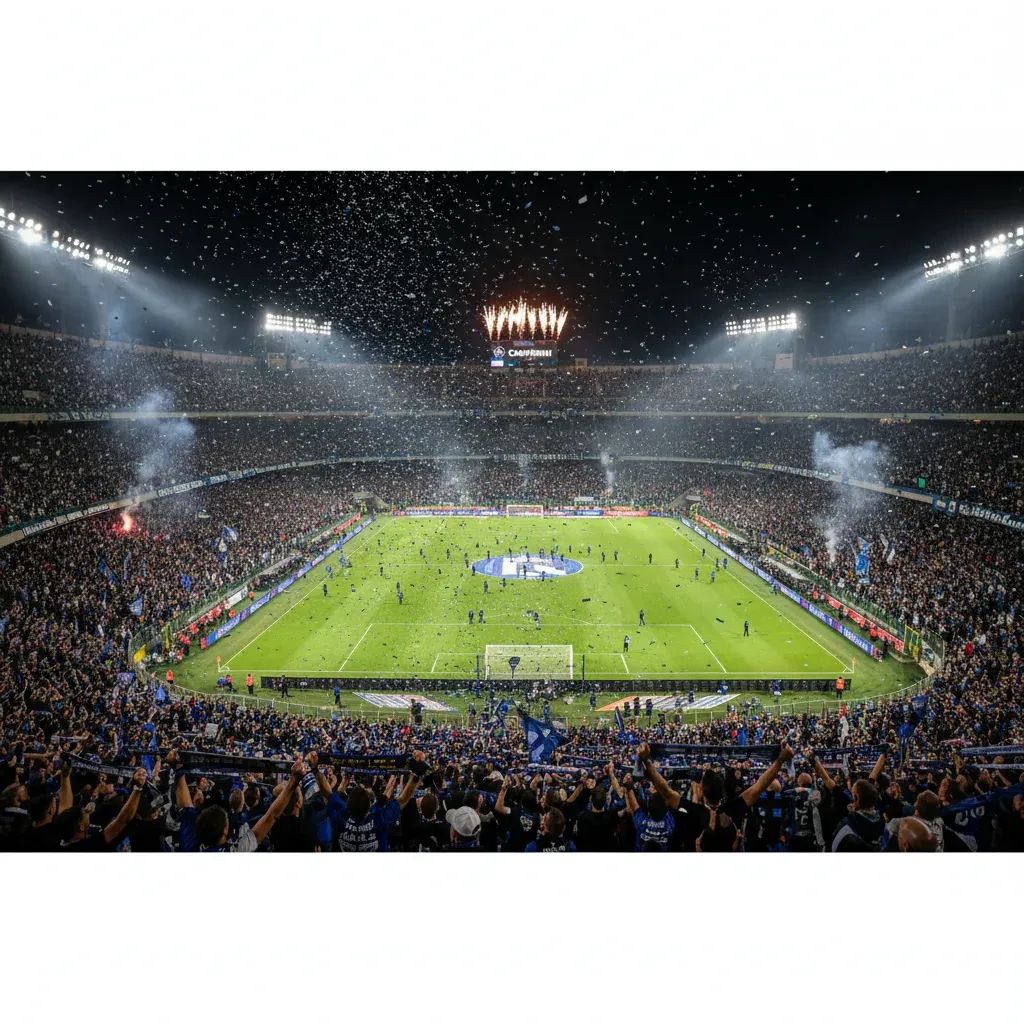
Inter Milan has locked in head coach Cristian Chivu through June 2028 with a substantial pay rise, cementing his role as the architect of a generational shift designed to blend academy graduates with proven champions. The Romanian manager, who guided the club to a domestic double this season, is now the central figure in a strategic rebuild that prioritizes youth integration over wholesale roster turnover.
Why This Matters:
• Chivu's contract extension signals continuity — no managerial upheaval despite major roster changes ahead
• Four veteran starters exit in June as free agents (Acerbi, Mkhitaryan, Sommer, Darmian), opening roster spots
• Targeted reinforcements planned for the transfer window, focused on young talent entering their prime
• Blueprint for sustained success that mirrors Real Madrid's academy-plus-experience model
President Giuseppe Marotta outlined the philosophy after Inter's Coppa Italia triumph over Lazio: "We won't see a revolution. There will be gradual insertion of young players mixed with experienced winners. You don't win with only youth — you need veterans who've lifted trophies." That balance defines every move planned for the transfer window, as Inter attempts to retain its stranglehold on Italian football while future-proofing the squad.
Chivu's Elevation From Youth Coach to Dynasty Builder
The 44-year-old's promotion from the Primavera ranks wasn't a gamble — it was a calculated bet on institutional memory. Chivu spent six years coaching Inter's Under-14, Under-17, Under-18, and Under-19 sides before taking the first-team reins, giving him an unmatched database of homegrown talent ready for senior minutes. His public stance? "Inter can improve without buying new players by launching the young ones."
That conviction is now policy. Vice President Javier Zanetti celebrated the club's 10th Coppa Italia on social media with a pointed message: "A season of real teams, real men. The joy completes a wonderful season, looking to the future together." The reference to "futuro insieme" (future together) is no accident — it's a mission statement for a club historically reliant on expensive imports.
Inter's headquarters in viale della Liberazione now displays a single word on its digital billboard: "Double." But behind the celebration, the front office is evaluating strategic changes. Four defenders and midfielders on expiring contracts will depart, while Alessandro Bastoni — once rumored for Barcelona — now appears likely to stay, providing the continuity Marotta demands.
Summer Transfer Strategy: Defensive Focus and Youth Development
Goalkeeping Options
Guglielmo Vicario, Tottenham's Italian shot-stopper, remains under evaluation as a potential successor to the departing Yann Sommer. Inter continues monitoring options in the goalkeeping market. If external acquisitions don't materialize, the club will consider promoting Josep Martínez, the current backup who has climbed internal depth charts.
Defensive Reconstruction
With Francesco Acerbi, Stefan de Vrij, and Matteo Darmian all leaving, Inter has reached personal agreements with defensive targets:
• Tarek Muharemovic (Sassuolo): Five-year deal worth €2.2M per season through June 2031. Juventus holds involvement in any potential transaction.
• Oumar Solet (Udinese): Personal terms finalized with the young defender. AC Milan, Juventus, and Newcastle have also inquired, but Solet is understood to prioritize Inter.
Both defenders fit the profile Marotta described: athletically elite, technically refined, and young enough to anchor the backline for a decade.
Midfield Considerations
Filip Stanković, on loan at Club Brugge, is expected to return to Inter via existing contractual arrangements this summer. The 23-year-old's versatility makes him part of the club's long-term planning.
If departures occur among the midfield contingent, Inter will likely accelerate evaluation of available talent in Serie A and European markets. The club remains active in monitoring young midfielders whose playing styles align with Chivu's tactical approach.
Attack: Building Depth
Inter's front office has identified a need for additional attacking depth to provide new tactical options. The current forward roster lacks certain profile variations capable of breaking down defensive schemes. The club is understood to be monitoring potential targets, though no specific signings have been confirmed.
Europe's Blueprint: How Madrid, Milan, and Juve Manage the Youth-Experience Tightrope
Inter's strategy mirrors tactics deployed by continental rivals:
Real Madrid targets players aged 17-21, amortizing transfer costs across longer contracts while molding them into the club's philosophy. The La Fábrica academy supplies both first-team talent and transfer revenue through sell-on clauses. Veterans like David Alaba and Antonio Rüdiger arrived on free transfers, preserving capital for youth investments.
AC Milan emphasizes patient roster construction and Settore Giovanile development, reducing reliance on external signings. Experienced mentors like Olivier Giroud stabilize dressing rooms while youngsters mature. The club prioritizes Italian-speaking profiles who understand Serie A's tactical demands.
Juventus shifted from galáctico signings to academy infrastructure, launching Next Gen (a competitive bridge between Under-19 and the first team) and J College, which combines elite training with university coursework. Players like Giorgio Chiellini, who earned two degrees during his career, exemplify the program's dual focus.
Inter's model synthesizes these approaches: youth development depth (Chivu's Primavera network), free-agent departures creating space, and strategic evaluation of players entering their prime years.
What This Means for Football Fans in Italy
For Inter supporters and Italian football enthusiasts, the shift signals medium-term ambition rooted in sustainable development rather than speculative spending. Fans should expect:
• Rotating lineups as Chivu tests academy products in various fixtures
• Youth integration into regular Serie A competition
• Continuity in tactical approach — no philosophical overhaul, just personnel adjustments
• Measured transfer activity focused on specific positional needs
The club hosts its Scudetto parade on Sunday at San Siro before facing Verona, then pivots to a summer that could define the next competitive cycle. Zanetti's emphasis on "a real team" suggests the front office believes squad cohesion and coaching quality are as important as individual acquisition strategies.
Chivu's two days of rest for the squad end Saturday, when preparations resume. By then, the real work — constructing a roster that maintains Inter's competitive edge while investing in sustainable development — will accelerate.


