
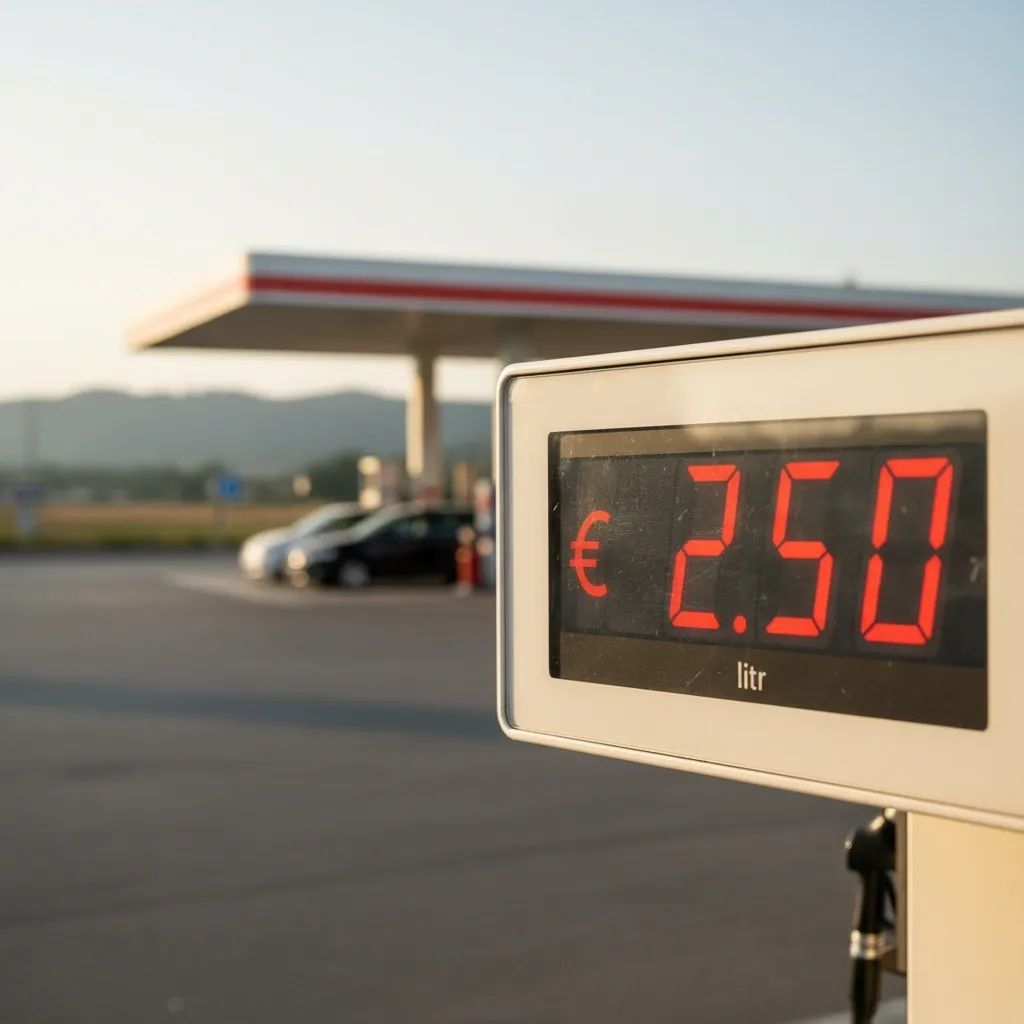
The US Treasury Department has signaled a tactical rollback of sanctions targeting Iranian oil already held in tankers at sea, a short-term intervention designed to calm crude markets that spiked above $119 per barrel amid escalating conflict in the Middle East and the closure of the Strait of Hormuz. The move, disclosed by US Treasury Undersecretary Scott Bessent on March 20, immediately triggered a retreat in crude futures, pulling both Brent and WTI below $98 per barrel.
Why This Matters
• Price Relief (But Temporary): Bessent's announcement cut the crude rally short, but analysts warn prices remain vulnerable to further spikes if Strait of Hormuz disruptions persist—some project Brent could hit $150–$200 per barrel if supply losses continue.
• Strategic Reserve Drawdown: The US Strategic Petroleum Reserve (SPR) is releasing 172 M barrels as part of a coordinated 400 M barrel global release led by the International Energy Agency, pushing US reserves to their lowest level since 1982.
• Sanctions Lifted Only on "Floating Inventory": This is not a broad sanctions rollback. The US is unlocking roughly 130–140 M barrels of Iranian crude already loaded in tankers, a 10–14 day supply boost intended for physical markets, not futures trading.
Crude Markets Retreat After Bessent Statement
After touching intraday highs of $119 per barrel, Brent crude settled at $97.70, up 1.43%, while WTI closed at $97.19, gaining 0.92%. By the following morning, WTI had dipped further to $94.39 (down 1.21%) and Brent to $107.81 (down 0.77%), reflecting the market's expectation of increased near-term supply. The volatility underscores the fragility of global oil markets amid the Hormuz closure, which normally channels 20% of global oil demand.
According to international energy reports, the US is prepared to release 260 M barrels from emergency reserves, though official statements confirm a 172 M barrel drawdown as part of the IEA-coordinated action. The Strategic Petroleum Reserve, currently holding 415 M barrels (58% of capacity), will drop to approximately 243 M barrels—the lowest inventory since the early 1980s—once the release concludes over the next 120 days.
Iran's "Floating Fleet" and the Hormuz Crisis
Bessent clarified that the sanction relief applies exclusively to Iranian oil already in transit, a tactical decision to flood physical markets without rewarding Tehran's future exports. The Treasury Undersecretary framed this as a 10–14 day measure to stabilize supply, not a policy reversal. Yet critics inside and outside the administration have labeled the move a potential "windfall for Tehran," especially given that the Trump administration had previously tightened sanctions on Iran's "shadow fleet" of tankers used to evade oil embargoes.
Understanding the background is essential for Italian residents: according to international reports, Iran launched attacks on energy infrastructure in Qatar, Saudi Arabia, Kuwait, and the UAE, and effectively closed the Strait of Hormuz, triggering a global energy supply shock. Saudi Arabia's Foreign Ministry declared trust with Tehran "completely destroyed" and reserved the right to respond militarily if strikes continue. The kingdom has ramped up production, as reported by energy analysts, by roughly 500,000 barrels per day (bpd) in anticipation of the conflict, while the broader OPEC+ group, including Russia, agreed to modest production increases for April—widely viewed as insufficient given the scale of disruption.
What This Means for Residents
For anyone living in or doing business with Italy, the implications are immediate and multifaceted:
• Fuel and Energy Costs: Italy, which imports the vast majority of its oil and gas, is acutely exposed to Brent crude pricing. Even with the SPR release and Iranian oil unlock, domestic fuel prices are likely to remain elevated. The Italian government participates in the IEA emergency reserve release, contributing to the global effort, but sustained crude above €90 per barrel translates directly into higher pump prices, heating costs, and industrial input expenses.
• Inflation and ECB Policy: The European Central Bank (ECB) faces renewed inflationary pressure from energy costs. Analysts warn that persistent crude prices above $95 per barrel could delay or reverse rate cuts, keeping borrowing costs elevated for Italian households and businesses.
• Supply Chain Vulnerability: Italy's manufacturing and logistics sectors, heavily reliant on imported energy, are particularly sensitive to Middle East supply disruptions. The Hormuz closure affects roughly one-third of China's oil imports and a significant portion of Europe's, creating ripple effects in global shipping and industrial production timelines.
• Geopolitical Realignment: The US-Iran conflict and Saudi Arabia's military posture are reshaping energy security strategies across Europe. Italy's energy ministry has signaled renewed focus on diversifying supply routes, accelerating LNG terminal expansions, and prioritizing renewable energy investments to reduce dependence on volatile Middle Eastern oil.
OPEC+ and Saudi Arabia's Delicate Balancing Act
Saudi Arabia's response highlights the complexity of the current crisis. Despite suffering direct Iranian attacks on its oil facilities, Riyadh is constrained by its dependence on Russia within the OPEC+ framework to stabilize markets—even as Moscow supplies arms to Tehran. The kingdom has increased production and coordinated with the UAE and Kuwait on defense strategies, but production adjustments reflect limited spare capacity and reluctance to flood the market at a time of geopolitical uncertainty.
The reimposition of UN sanctions against Iran in recent months had already tightened restrictions, yet Bessent's announcement signals a pragmatic, if controversial, willingness to bypass those restrictions in the interest of price stability. The Treasury Undersecretary had previously taken a hardline stance on Iran policy, yet the current intervention suggests economic realities are tempering ideological commitments.
The Bigger Picture: Energy Security and Transition
Beyond immediate price impacts, the March 2026 crude shock has accelerated debates over energy independence and renewable transition across Europe and Asia. China, which sources a significant portion of its gas and oil through Hormuz, is doubling down on solar, wind, and domestic nuclear capacity. Italy's energy transition roadmap, already ambitious under EU mandates, is gaining urgency as policymakers recognize the strategic liability of fossil fuel dependence.
Historical precedent offers limited comfort: earlier strategic reserve releases have shown modest impact on consumer prices, but the current release—though substantial—faces a severe supply disruption. If Hormuz remains closed beyond the near term, the coordinated reserve drawdown will prove insufficient to offset potential supply losses, setting the stage for a prolonged energy crisis.
For now, crude markets have taken a breather. But the relief is fragile, the geopolitical risks unresolved, and the strategic reserves dwindling. Italy's exposure to these dynamics—through energy imports, inflation, and industrial costs—makes this a story worth watching closely in the weeks ahead.


