
Multiple drone strikes have hit critical oil refining infrastructure across the Gulf this week, driving crude prices above $110 per barrel and raising alarm over energy security for European markets heavily dependent on Middle Eastern oil. The Saudi Arabian Defense Ministry confirmed that a drone crashed into the Samref refinery in Yanbu, a strategic Red Sea export hub, while Kuwait reported fires at two separate refineries following similar attacks.
Why This Matters:
• Oil prices surge: Brent crude has climbed past $109-115 per barrel, with analysts warning it could reach $120-150 if disruptions continue.
• Export bottleneck: Yanbu port has suspended crude loading, choking one of the primary export arteries for Gulf oil destined for Asia and Europe.
• Regional escalation: These strikes are part of a broader military confrontation involving Iran, following joint US-Israeli operations against Iranian targets in late February 2026.
• Insurance costs soar: Shipping and cargo insurance premiums have skyrocketed, effectively freezing maritime transport and compounding supply chain stress.
Yanbu Strike Targets Joint Saudi-American Asset
The Samref refinery, a joint venture between Saudi Aramco and ExxonMobil's Mobil Yanbu Refining Company, sits in Yanbu's sprawling industrial zone on the Red Sea coast. Saudi defense officials initially reported intercepting a ballistic missile aimed at the port before confirming that a drone had successfully struck the facility. Damage assessment is ongoing, but the immediate consequence has been a halt to loading operations at the port—a choke point that normally channels millions of barrels daily toward international markets.
Yanbu is not merely a refinery town; it represents a critical node in the alternative export corridor Saudi Arabia has built to bypass the vulnerable Strait of Hormuz. The kingdom's east-west pipeline can push up to 7 M barrels per day to Red Sea terminals, but this infrastructure has now proven susceptible to aerial attack, undermining the redundancy it was designed to provide.
Kuwait's Dual Refinery Hits
Within hours of the Yanbu incident, Kuwait's Ministry of Information reported that an operational unit at the Mina Abdullah refinery had been targeted by a drone, igniting a fire on-site. This followed an earlier strike on the Mina Al-Ahmadi refinery, also managed by the Kuwait National Petroleum Company (KNPC). Emergency teams contained both blazes, and Kuwaiti authorities emphasized that no casualties were recorded.
Mina Al-Ahmadi is one of Kuwait's largest refining complexes, and its dual targeting alongside Mina Abdullah signals a coordinated effort to disrupt the emirate's refining capacity. Kuwait has been on heightened alert throughout March, with its armed forces reporting interceptions of 7 drones on March 18 alone and a combined missile-and-drone barrage on March 8. The Ali Al Salem air base, which hosts both US and Italian military contingents, has been hit multiple times this month, prompting partial evacuations and the accelerated delivery of Italian Skynex anti-drone systems originally scheduled for October.
Iran Cited as Prime Actor
While Yemen's Houthi movement has been implicated in disruptions across the Red Sea shipping lanes, multiple intelligence assessments attribute the refinery strikes in Saudi Arabia and Kuwait specifically to Iranian forces. These attacks are widely interpreted as retaliation for an Israeli raid on Iran's South Pars gas field and subsequent US-Israeli joint operations in late February 2026.
Iran's strategy appears focused on energy infrastructure rather than purely military targets, aiming to leverage the Gulf states' economic vulnerabilities and signal Tehran's capacity to disrupt global oil flows. The Strait of Hormuz, through which roughly 20% of the world's petroleum passes, remains the ultimate pressure point, and the recent attacks underscore Iran's willingness to strike alternative export routes as well.
Market Shock and Supply Cuts
The immediate economic fallout has been stark. Brent crude climbed from the mid-$90s to above $109, with some trading desks seeing spikes toward $115. West Texas Intermediate (WTI) has crossed $98. Analysts at Citi have warned that sustained disruptions could push Brent to $120, factoring in potential supply losses of 11-16 M barrels per day if the conflict broadens or if the Strait of Hormuz is blockaded.
Middle Eastern producers—primarily Saudi Arabia, Iraq, the UAE, and Kuwait—have already slashed output by an estimated 6.7 M barrels daily, roughly one-third of their collective capacity, as a consequence of logistical bottlenecks and security concerns. The combination of physical infrastructure damage, port closures, and skyrocketing maritime insurance premiums has created a perfect storm for supply tightness.
European refiners, many of whom rely on Gulf crude for their feedstock, are scrambling to secure alternative supplies or tap strategic reserves. Italy, with its significant refining sector concentrated in Sicily and along the Adriatic, is particularly exposed to disruptions in Mediterranean-bound shipments from the Red Sea corridor.
What This Means for Residents
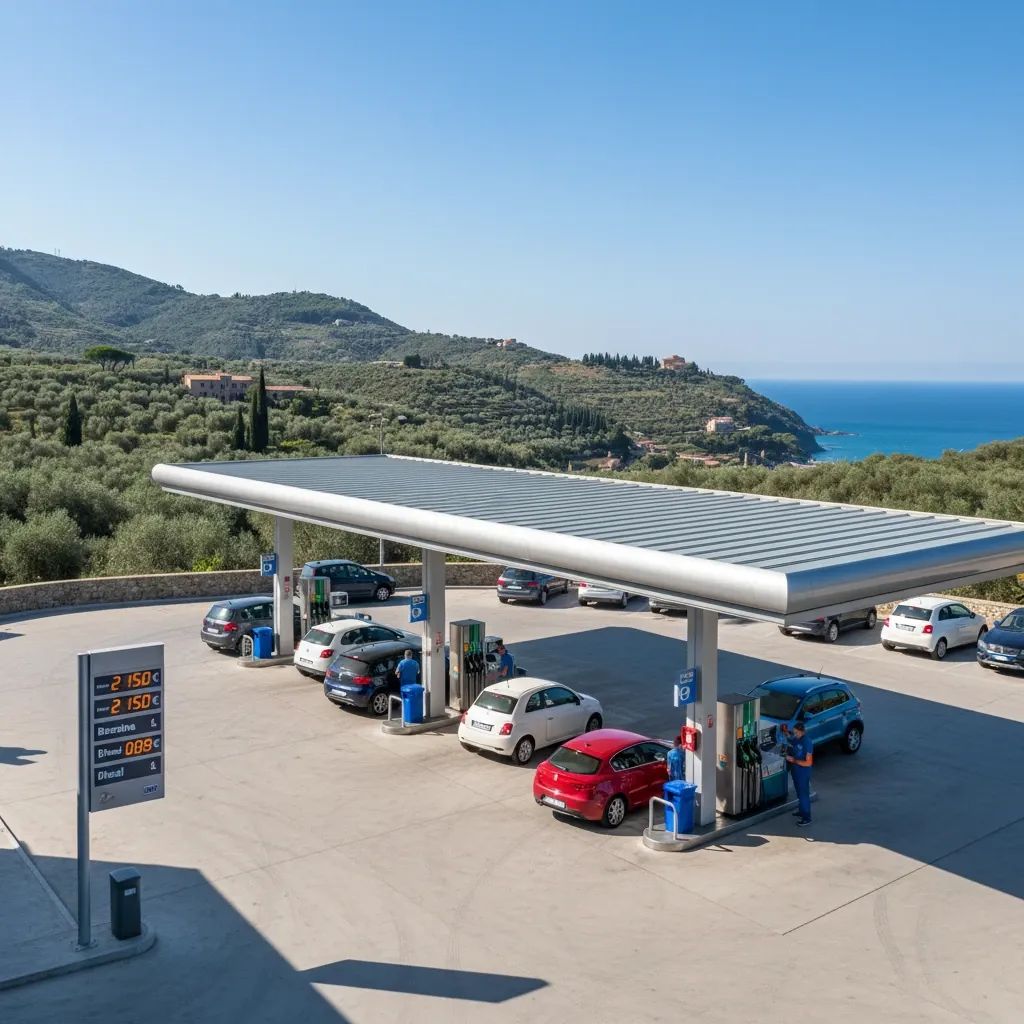
For anyone living in Italy, the ripple effects of these attacks will likely manifest in higher fuel prices at the pump and increased costs for heating oil and diesel over the coming weeks. Italy imports a substantial share of its crude from the Middle East, and any sustained spike in Brent crude translates directly to retail energy costs.
Beyond gasoline, expect knock-on effects in shipping and logistics. Container freight rates are climbing as insurers price in Gulf risk, which will eventually filter through to consumer goods prices. Agricultural inputs, particularly fertilizers derived from natural gas, are also vulnerable to price volatility given the region's role in global petrochemical supply chains.
The Italian government, along with EU partners, is monitoring strategic petroleum reserves and may coordinate releases if prices breach critical thresholds. In the meantime, Italian energy companies are exploring accelerated purchases from non-Gulf suppliers, including North African producers and potential spot cargoes from the Americas.
Defense Posture Ramps Up
Both Saudi Arabia and Kuwait have escalated their air defense readiness. The Saudi Royal Air Force deployed MIM-104 Patriot PAC-3 batteries and Rheinmetall 35mm anti-aircraft artillery to counter the onslaught of drones and ballistic missiles. In February, the US approved a potential sale of 730 PAC-3 MSE missiles to Riyadh to bolster its integrated missile defense.
Kuwait's military, meanwhile, has leaned heavily on coalition support. The Italian Air Force contingent at Ali Al Salem—already reduced following drone strikes that destroyed an MQ-9A Reaper and damaged two Eurofighter Typhoons—is now operating with skeleton crews. Italy is expediting delivery of the Skynex Twin Gun Oerlikon system to provide Kuwait with enhanced counter-drone capability.
The US State Department has ordered non-emergency personnel to leave both Kuwait and Saudi Arabia, and embassies in Kuwait City have temporarily closed, underscoring the seriousness with which Washington views the current threat environment.
Outlook: Volatility and Vulnerability
The coordinated nature of the strikes, coupled with Iran's stated determination to retaliate for perceived aggression, suggests this is not a one-off episode. Energy analysts are pricing in sustained volatility through at least the second quarter of 2026, with $120-150 per barrel Brent scenarios no longer considered implausible if additional infrastructure is hit or if the Strait of Hormuz sees major disruption.
For Italy and the broader European Union, the lesson is clear: energy diversification remains a strategic imperative. The conflict in the Gulf is not a distant geopolitical abstraction—it directly impacts household budgets, industrial competitiveness, and economic stability across the Mediterranean. As March draws to a close, the question is not whether oil will get more expensive, but how much more, and for how long.


