
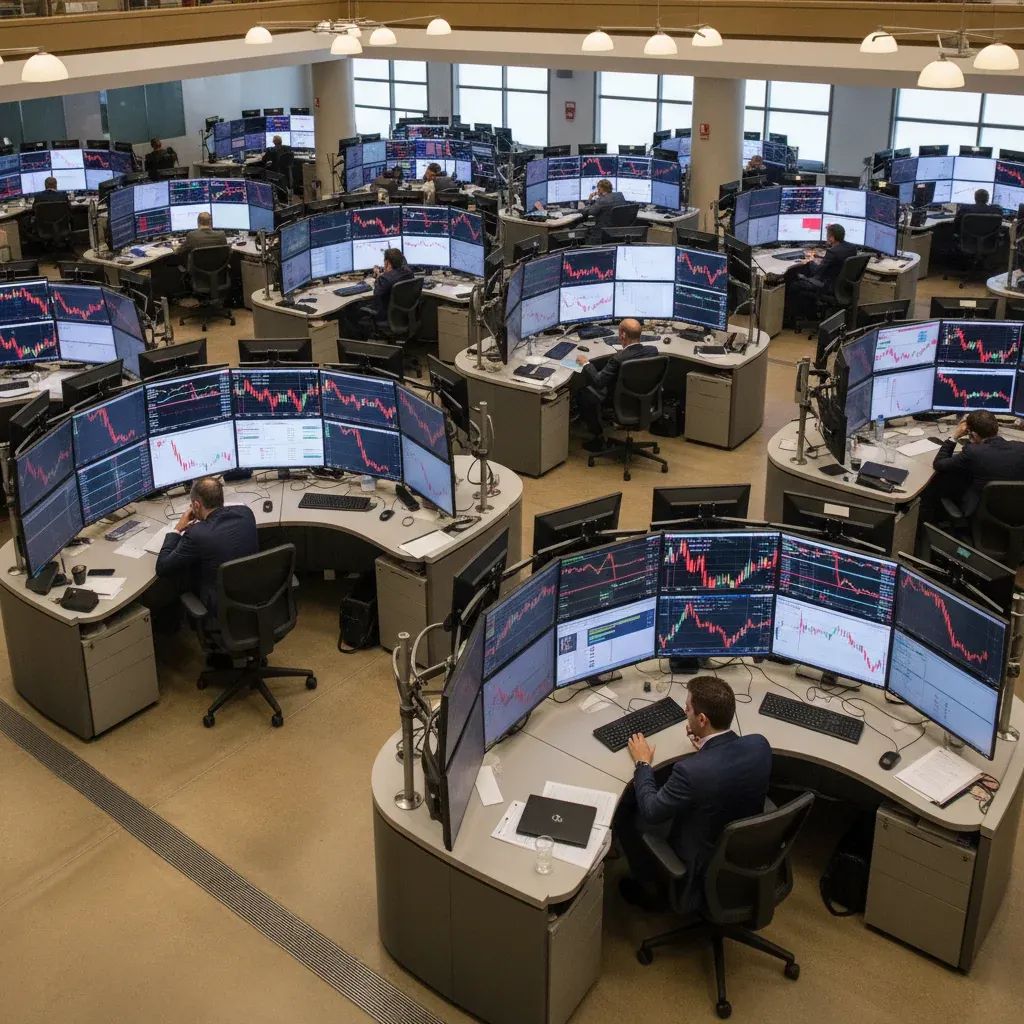
The Italian Cabinet is scrambling to contain fuel price volatility after crude oil surged as much as 5% amid escalating Middle East tensions, a development that threatens to add pressure to household energy bills and reignite inflation concerns just as the European Central Bank begins to ease monetary policy.
Why This Matters:
• Pump prices rising fast: Gasoline now averages €1.856/liter on standard roads nationally, with higher prices on highways—a notable spike driven by geopolitical uncertainty.
• Geopolitical risk premium: Attacks on Iranian energy facilities sent Brent crude to $108/barrel and WTI to $98.45/barrel, reversing earlier declines.
• Government intervention imminent: Prime Minister Giorgia Meloni and Finance Minister Giancarlo Giorgetti held emergency talks at Palazzo Chigi to evaluate the fuel-pricing situation and consider potential policy responses.
Crude Whiplash Rattles Markets
Oil futures reversed sharply on news that the United States and Israel targeted Iranian petroleum and gas infrastructure. The West Texas Intermediate (WTI) benchmark, which had dropped more than 3% in early trading, snapped back to higher levels before climbing to $98.45—a significant gain by midday. Brent crude, the global benchmark, spiked 5% to touch $108/barrel as Tehran vowed retaliation for strikes on its energy assets.
The reversal caught traders off guard. Crude had been sliding on expectations of weakening demand and rising U.S. inventories, but the sudden supply-side shock reintroduced the so-called geopolitical risk premium that had largely evaporated in recent weeks. The Strait of Hormuz, through which roughly one-fifth of global oil supply transits, is now back in focus as a potential chokepoint should tensions escalate further.
European equity markets felt the tremors. Milan's FTSE MIB and Paris's CAC 40 erased morning gains and hovered near flat by early afternoon, while broader European indices slipped as investors priced in higher input costs and renewed inflation pressures.
Italy's Fuel Dilemma: Prices Climb Amid Geopolitical Shock
For Italian motorists, the crude spike adds to an already painful situation. According to the Ministry of Environment and Energy Security, the national average for self-service gasoline on standard roads reached €1.856/liter, up from €1.819/liter the previous week. On highways, the figure climbs higher.
Diesel prices have also risen significantly, compounding concerns for commercial transport and rural communities where diesel fuel remains essential for operations. The combination of geopolitical shocks and existing energy market pressures has sparked widespread concern about the cumulative impact on household budgets and business operations.
What This Means for Residents and Businesses
For the average Italian household, higher fuel costs translate directly into elevated inflation. Energy costs affect not only direct fuel purchases but also indirect effects on electricity and heating bills. Small businesses and logistics operators face particular headwinds, as road freight is acutely sensitive to fuel price spikes. Industry observers warn that sustained high costs could force carriers to pass expenses onto customers, triggering a secondary wave of price increases across sectors from food distribution to e-commerce fulfillment.
Italy's heavy dependence on imported energy magnifies the vulnerability. Geopolitical shocks in the Middle East or disruptions along key supply routes hit Italian consumers harder and faster than many of their European counterparts, given the nation's reliance on fossil fuel imports to meet energy needs.
Government Eyes Speculation and Policy Response
Aware of the political risk, Prime Minister Meloni and Finance Minister Giorgetti convened an urgent meeting at Palazzo Chigi to review the fuel-pricing situation. Officials are examining the potential for market speculation and considering possible policy responses to support Italian households and businesses during this volatile period.
The Italian Antitrust Authority (AGCM) is reportedly considering enhanced monitoring of fuel-station margins and pricing practices to ensure fair competition in the market.
The Road to Energy Independence: Context and Challenges
The crisis has injected fresh urgency into Italy's renewable energy agenda and broader energy security concerns. Diversifying away from fossil fuel imports remains a long-term priority, though fossil fuels still dominate the primary energy mix, underscoring the scale of the transition challenge. Achieving true energy autonomy will require significant investment in renewable capacity, grid infrastructure, storage, and demand-side efficiency measures.
For now, Italian drivers and businesses must navigate a volatile and expensive fuel market, with little immediate relief in sight. The government's next moves will shape both consumer wallets and Italy's broader energy trajectory in the months ahead.


