
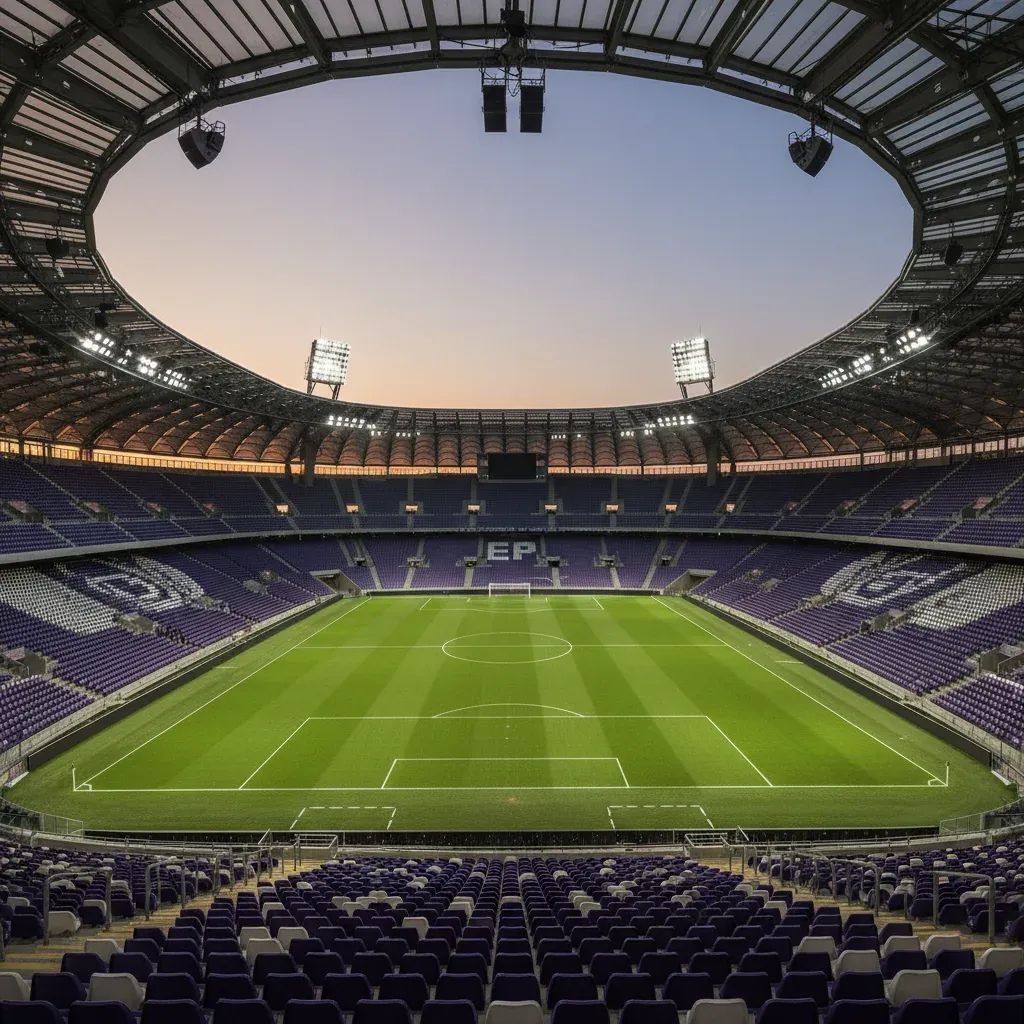
ACF Fiorentina has secured its place in the Conference League quarter-finals after a gritty 2-1 comeback victory over Polish side Raków Częstochowa on Thursday evening, clinching the tie 4-2 on aggregate. The result sets up an April showdown with England's Crystal Palace, who are making their debut in major European competition this season.
Why This Matters:
• Quarter-final dates confirmed: First leg on 9 April, return leg on 16 April 2026.
• Fiorentina's Serie A struggles continue: The club sits 16th in Serie A with just 28 points from 29 matches, yet thrives in European play.
• Crystal Palace debuts: The London club eliminated Cypriot side AEK Larnaca to reach their first-ever European quarter-final.
• Italian football's European landscape: Fiorentina's progression reflects a broader trend for Serie A clubs leveraging the Conference League pathway, crucial for maintaining Italy's UEFA coefficient standing amid competition from other leagues.
The Match That Mattered
Playing at neutral ground in Sosnowiec rather than Raków's home stadium in Częstochowa, Fiorentina faced an immediate setback just 22 seconds into the second half. Polish midfielder Struski collected possession inside the penalty area, executed a clever feint, and fired a sharp shot past goalkeeper Christensen at the near post. The goal stemmed from a careless giveaway by Ndour, who appeared unprepared for the pressing intensity.
Rather than collapse under pressure, Raffaele Vanoli's side dug in. The Italian manager made decisive substitutions in the 60th minute, withdrawing Fazzini and Moise Kean—the latter visibly unhappy with the decision—and bringing on Gosens and Piccoli. The tactical shift paid dividends almost immediately. Gosens whipped in a cross that Piccoli met with a header, striking the base of the post and signaling the momentum swing.
At the 68-minute mark, Fiorentina drew level. Parisi drove down the right flank, cut inside past a defender, and squared the ball to the edge of the box. Piccoli cushioned it back to Ndour, whose first-time effort deflected crucially off a defender and beat Zych in the Raków goal. The deflection was the difference, transforming what might have been a routine save into a leveling strike.
Controversy and the Decisive Strike
With the tie finely balanced, the drama intensified in the 85th minute. Raków forward Brunes burst into the penalty area and went down under a challenge from Christensen. Portuguese referee Artur Soares Dias pointed to the spot, only to be summoned to the pitchside monitor by the VAR team. The replay revealed a clear simulation. The penalty was overturned, and Brunes was booked for diving—a pivotal call that preserved Fiorentina's lifeline.
Deep into stoppage time, Marin Pongračić delivered the coup de grâce. The Croatian center-back intercepted possession in his own half, glanced up, and spotted Zych off his line. From nearly 60 meters out, Pongračić launched a precise, low drive that rolled into the unguarded net, sealing a 2-1 victory and sparking jubilant celebrations on the touchline.
Tactical Nuances and Player Performances
Fiorentina's first-half performance in Sosnowiec was disjointed. Kean came close in the 2nd minute, driving in from the left only to be denied by Svarnas. But for long stretches, the Viola struggled to impose their tempo, allowing Raków to dictate play through set pieces and quick transitions. Christensen was forced into a sharp save from Ivi López's free kick, and only a last-ditch clearance by Ranieri prevented an embarrassing defensive lapse.
The second half saw Fiorentina occupy higher territory, even before the equalizer. Parisi repeatedly found space on the flanks, while Fagioli tested Zych with a low drive that the Polish keeper handled comfortably. The introduction of Gosens and Piccoli added directness and physicality, qualities that had been absent in the opening exchanges.
Vanoli's decision to stick with a narrow midfield and rely on wide overlaps paid off in the critical moments. Ndour, despite his early error, redeemed himself with the equalizer, while Pongračić's audacious finish from distance showcased the kind of opportunism that defines knockout football.
What This Means for Fiorentina Supporters
This European run represents a lifeline for a club struggling domestically. With 6 wins, 10 draws, and 13 defeats in Serie A, Fiorentina currently occupies the 16th position, just five points above the relegation zone. The team's goal difference of -9 (34 scored, 43 conceded) paints a bleak picture of inconsistency. Recent league form has been erratic: a commanding 4-1 win over Cremonese on 16 March was preceded by a goalless draw against Parma and a dismal 3-0 loss to Udinese.
Yet in Conference League, Vanoli's men have found clarity and confidence. Across 10 European matches, they have posted 6 victories and 4 defeats, with Albert Guðmundsson leading the scoring charts with 3 goals. The contrast is stark and raises questions about rotation policy, player motivation, and the psychological toll of fighting on two fronts.
The Bigger Picture for Italian Clubs
Fiorentina's progression underscores the complex relationship Italian clubs have with European competition. While the Champions League remains the ultimate prize, the Conference League represents the third tier of UEFA's club competition hierarchy, offering a realistic pathway to silverware for clubs beyond Europe's elite. Prize money, coefficient points, and the prestige of lifting a UEFA trophy are all incentives that resonate with clubs battling mid-table obscurity at home. For Italy's coefficient rankings, every deep run in continental competition contributes crucial points in the race against other major leagues.
For supporters in Italy, the dual identity of domestic struggle and European ambition is both frustrating and exhilarating. The club's ability to perform on Thursday nights while faltering on Sundays suggests issues beyond tactics—perhaps mental fatigue, squad depth limitations, or simply the burden of expectation.
The Crystal Palace Challenge
Fiorentina will face a Crystal Palace side sitting 14th in the Premier League. The Eagles, managed by a familiar tactical pragmatist, have navigated their maiden European campaign with resilience if not flair, scraping past AEK Larnaca in the previous round. For Palace, this is uncharted territory; for Fiorentina, it is the fourth consecutive season in the Conference League, a competition that has become both salvation and distraction.
The first leg on 9 April will take place in Florence, giving Fiorentina the advantage of hosting with the Stadio Artemio Franchi crowd behind them. The return leg in London on 16 April promises to be a tense affair, with both clubs eyeing a semi-final berth and the prospect of silverware in a competition increasingly valued by mid-tier clubs seeking redemption from domestic struggles.
As Fiorentina prepares for Crystal Palace in April, the question is whether this European adventure can galvanize a late-season surge in Serie A, or if the energy expended on the continental stage will further erode their league standing. Either way, the quarter-finals represent a tangible achievement in an otherwise turbulent campaign.


