
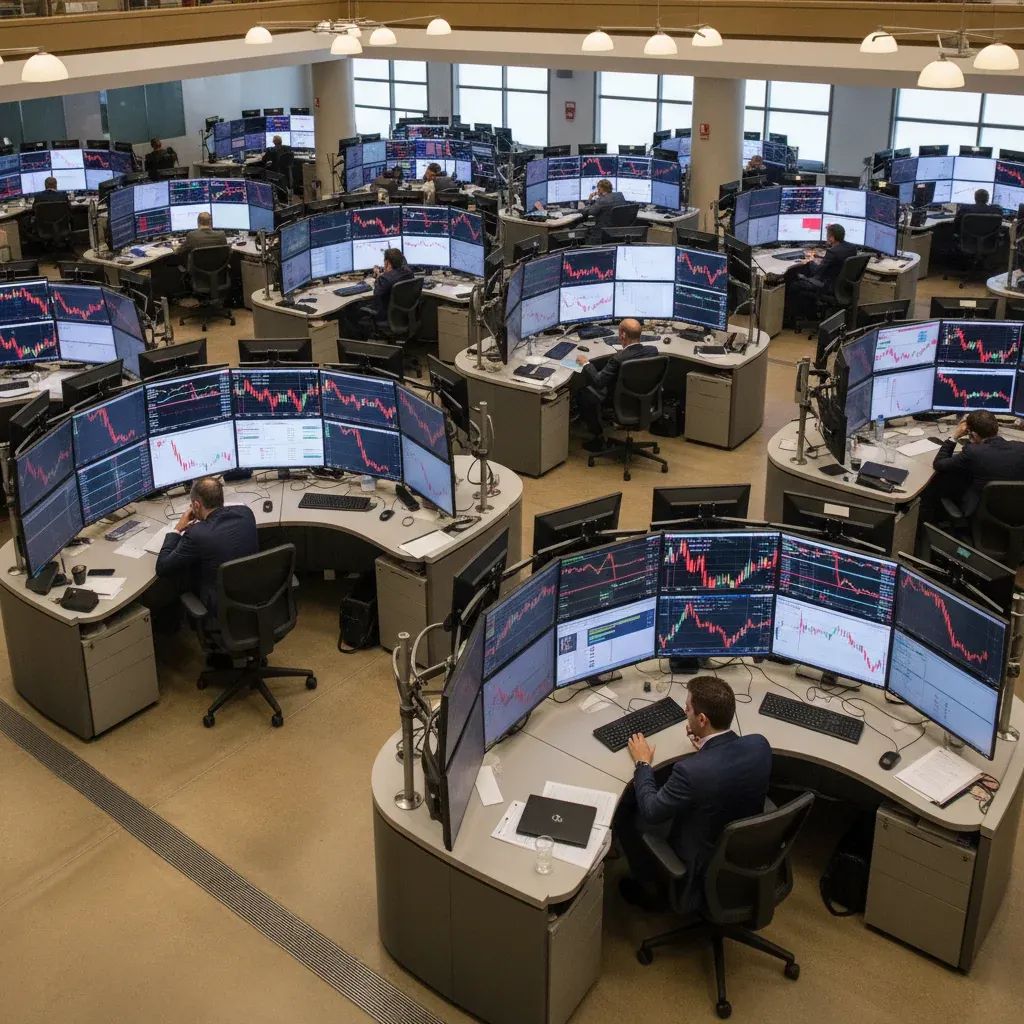
European equity markets have lost €1.162 trillion in market capitalization over the past two weeks, a direct consequence of escalating military conflict in the Middle East that has sent energy prices soaring and triggered a continent-wide flight from risk assets. The Stoxx 600 index, which tracks the largest publicly traded companies across Europe, has declined 6% to 595.85 points, with the broader market shedding €90 billion in a single trading session. For investors, pensioners, and anyone with exposure to European equities—including countless Italians holding mutual funds or retirement accounts—the impact has been significant.
Why This Matters:
• Pension portfolios affected: Italian pension funds and retail investors with European equity exposure are experiencing paper losses as market values decline.
• Energy shock: Rising oil and gas prices threaten to reignite inflation concerns across the Eurozone, complicating monetary policy decisions.
• Broader European decline: Major European exchanges have experienced substantial losses amid the geopolitical uncertainty.
The Market Decline
The Stoxx 600 index has declined 6% over the past 15 days to 595.85 points. On a single trading day, the pan-European benchmark closed down 0.5%, erasing another €90 billion in market value. The cumulative loss stands at €1.162 trillion—roughly equivalent to the entire annual GDP of Spain.
The escalating military conflict in the Middle East has been the primary driver of the market decline, with investors retreating from equities amid heightened geopolitical tension and energy market volatility.
Energy Concerns and Economic Impact
At the heart of investor anxiety lies concern about potential disruptions to global energy supplies. Rising oil and gas prices are reviving concerns about inflation pressures that Europe experienced in previous years.
For Italy—which imports the vast majority of its energy—any sustained spike in fossil fuel costs translates directly into higher utility bills, elevated transport expenses, and increased production costs for manufacturers. Energy price pressures could affect household budgets and business operating costs across the country.
Inflation concerns have prompted discussion within policymaking circles about the appropriate monetary policy response. The European Central Bank will need to carefully balance support for economic growth with concerns about potential price pressures.
What This Means for Italian Investors
For residents of Italy with retirement savings or investment portfolios, the recent market decline has direct implications. Most Italian pension funds maintain significant allocations to European equities, meaning the recent losses have affected the value of retirement accounts. While market declines can be recovered if prices rebound, sustained volatility can create uncertainty for investors.
Retail investors who hold European equity positions are experiencing paper losses in their portfolios. Those nearing retirement—and therefore with less time to recover from market downturns—may face particular challenges. Financial advisers across Italy are likely fielding questions from clients about managing their investments during this period of uncertainty.
The broader economic environment, including potential shifts in interest rate policy, will also affect borrowing costs for Italian households and businesses planning investments or refinancing existing obligations.
Institutional and Policy Response
Institutional investors are reassessing their strategies in response to the market decline. The sudden surge in energy prices and geopolitical tension is prompting consideration of defensive positioning and safe-haven assets among many market participants.
The European Central Bank faces important considerations in setting monetary policy. Policymakers must weigh support for economic growth against emerging inflation concerns related to energy prices. The tone and guidance from the ECB in coming communications will be closely watched by markets for signals about future policy direction.
Path Forward
The trajectory of European markets will depend substantially on developments in the Middle East conflict. De-escalation could support market recovery as energy prices normalize and risk appetite returns. Conversely, any expansion of hostilities or further disruptions could deepen market pressures.
Analysts note that market volatility may remain elevated as investors assess the situation, and confidence in European risk assets may take time to fully recover.
The Bottom Line for Italy
For those living in Italy, this market decline is not an abstract financial story—it touches retirement accounts, insurance products, and personal investments. Energy price pressures feed directly into household budgets and business operating costs. Economic uncertainty affects financial planning and investment decisions.
In the near term, Italian investors should consider their portfolio allocations, maintain adequate diversification, and avoid making reactive decisions based on short-term market movements. Those with long time horizons and well-balanced portfolios are positioned to weather periods of market volatility. However, anyone dependent on near-term liquidity or approaching retirement should consider discussing their situation with a qualified financial adviser.
The broader question for European policymakers and the international community is whether diplomatic efforts and policy coordination can help stabilize the situation and restore confidence in European markets and economic stability.


