
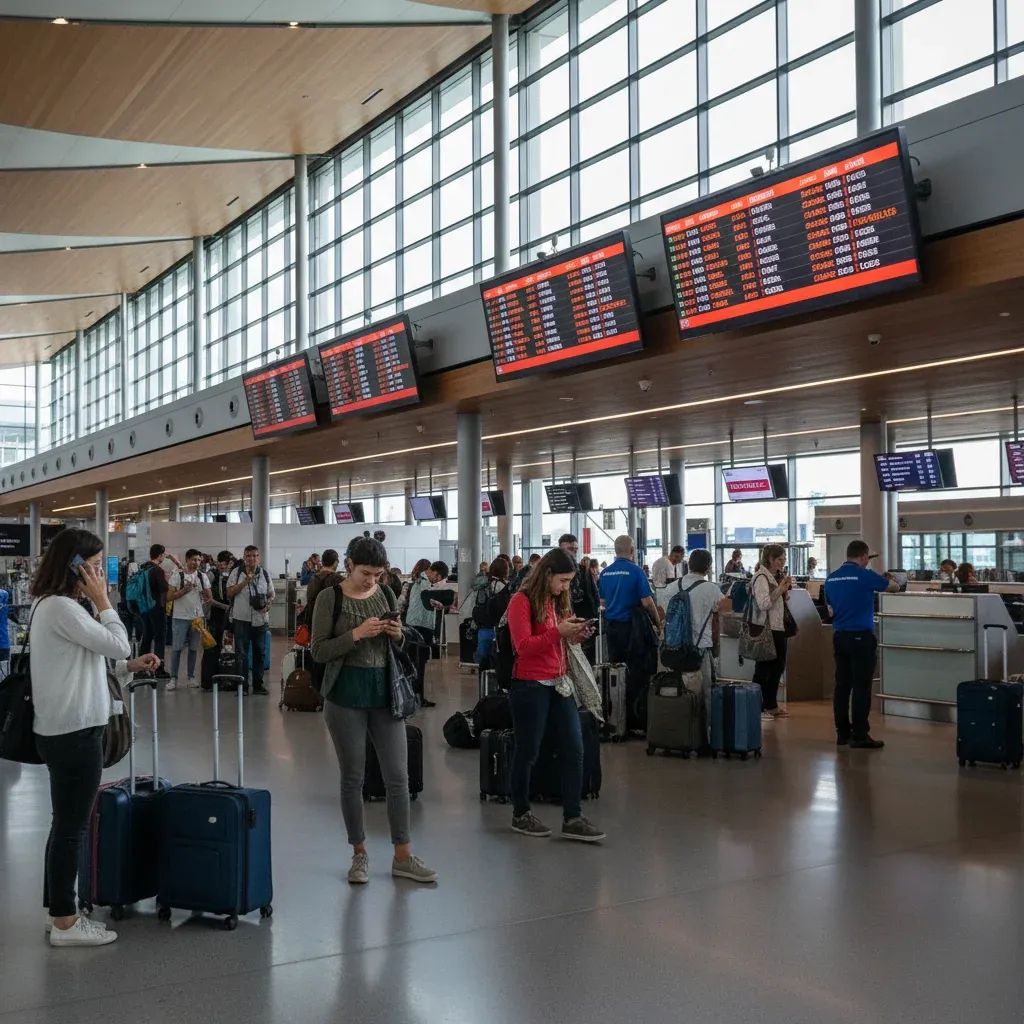
Italy's air transport sector ground to a halt today as a nationwide 24-hour strike crippled operations at major hubs, leaving thousands of passengers stranded and forcing airlines to cancel approximately 160 flights at Milan's airports alone. The coordinated action—spanning EasyJet cabin crew, ground handlers, and air traffic controllers—underscores mounting tensions over expired contracts and deteriorating work conditions across the aviation industry.
Why This Matters
• Travel disruption: About 140 flights cancelled at Malpensa and 20 at Linate; passengers face rebooking headaches and potential hotel costs.
• Contract deadlock: EasyJet's crew contract has been expired for 10 months (since September 2025); ground handlers' national agreement has been overdue for more than six months.
• Escalation risk: Unions threaten indefinite strikes unless employers return to the negotiating table with concrete proposals.
EasyJet Cabin Crew Walk Out Over Stalled Renewal
The Italy-based cabin crew and pilots of EasyJet staged a full-day stoppage after Uiltrasporti, the national transport union, reported "strong participation" in pickets at Milan, Rome Fiumicino, and Naples airports. The union says the protest reflects "profound discontent" among flight attendants and pilots who have been operating under an expired collective agreement since last autumn.
At the heart of the dispute is the stalled renewal of the company-level contract, which lapsed in September 2025—meaning crew have been working under expired terms for nearly a year. Crew members are demanding wage adjustments to reflect rising inflation, better work-life balance measures to address what they describe as "punishing shift patterns," and improved industrial relations with management. Union representatives argue that while EasyJet has expanded its Italian operations and maintained high safety and service standards thanks to crew dedication, the airline has failed to recognize that effort with updated terms.
"Workers have carried the company's growth in Italy on their shoulders, delivering safety and professionalism every day," Uiltrasporti stated. "It is only right that they receive fair recognition through a renewed contract."
The union emphasized its willingness to resume talks immediately, provided the airline demonstrates "genuine listening, mutual respect, and a real commitment to finding effective solutions." Absent progress, Uiltrasporti warned it is prepared to launch rolling strikes that could stretch into the peak summer travel season.
Ground Handlers Strike Over Six-Month Contract Vacuum
Parallel to the EasyJet action, Cub Trasporti—a more militant grassroots union—called out airport ground staff nationwide, targeting handlers employed under the Assohandling agreement. That contract, which governs check-in clerks, baggage loaders, and gate agents, expired more than six months ago without replacement.
The strike hit Milan hardest: Sea, the company that manages Malpensa and Linate, confirmed that passengers had been notified in advance and that remaining flights departed without major delays. Yet the disruption was substantial, particularly at Malpensa, where intercontinental and European connections were severed.
Cub Trasporti is demanding salary increases to offset an estimated 20% loss in purchasing power due to inflation, formal recognition and pay premiums for Sunday work, and enforcement of court rulings on issues such as paid leave and employer-provided laundering of work uniforms. The union's national secretary, Antonio Amoroso, accused employers of ignoring judicial precedents "all the way up to the Supreme Court" and called for improved workplace safety protections, including adequate provision of personal protective equipment.
"Companies are stubbornly refusing to adapt, despite clear court decisions," Amoroso said. "We need to bring conditions in line with both legal requirements and basic dignity."
What This Means for Residents
If you live in Italy or frequently travel through Italian airports, expect recurring disruptions through the summer. The country has already witnessed 15 separate aviation strikes in the first seven months of 2026—averaging more than two per month—and today's action signals little prospect of a quick settlement.
Your rights as a passenger remain robust under EU Regulation 261/2004. You are entitled to a full refund or rebooking on the next available flight at no extra charge if your service is cancelled or delayed beyond a threshold. If the airline cannot provide meals, hotels, or ground transport during extended waits, keep receipts for reasonable expenses; you can claim reimbursement afterward. In cases where the strike involves the airline's own employees (as with EasyJet today), you may also qualify for cash compensation up to €600, depending on flight distance and delay length.
Airlines and airport operators have learned to pre-empt the worst: both EasyJet and Sea informed affected passengers in advance, and Italy's aviation authority published lists of guaranteed flights during protected time slots from 07:00 to 10:00 and 18:00 to 21:00. Still, forward planning is essential—check your flight status the evening before departure and consider travel insurance that covers labor disputes.
Broader Contract Battles Across Italian Aviation
Today's strike is part of a turbulent contract season that has touched nearly every segment of Italian aviation. On July 4, unions reached a tentative deal for the national airline crew contract, covering ITA Airways and other carriers, with average pay increases of 30% and a one-time bonus of around €2,000. That agreement—subject to worker ratification—also introduces limits on punishing rosters and expands paid leave, health insurance, and pension contributions.
Air traffic controllers at ENAV, who manage Italy's skies, secured a separate three-year deal in April that delivers 1.5% annual raises, new allowances, and phased increases for weekend and overtime shifts. The accord also caps monthly working hours and phases out a controversial "low traffic" employment tier by 2033.
Yet ground handling remains the glaring exception. While pilots, cabin crew, and controllers have either won new terms or are close to doing so, the handlers—who physically move baggage, marshal aircraft, and process passengers—are stuck in limbo. Cub Trasporti estimates that over 85% of handlers walked out during a February strike, a participation rate that dwarfs most other labor actions and underscores the depth of frustration.
Economic Toll on Passengers and Airlines
The frequency of stoppages is imposing measurable costs. Passengers face cascading expenses: missed hotel bookings, forfeited car rentals, lost tour deposits, and rebooked connecting flights. Even when airlines fulfill their legal obligation to provide meals and accommodation, travellers lose time and peace of mind.
For carriers, the arithmetic is brutal. ITA Airways cancelled roughly 55% of scheduled services during a February strike—more than 200 flights in a single day. Today's action wiped out a similar proportion at Milan's hubs. Each cancellation means not only lost ticket revenue but also the logistical cost of re-accommodating passengers, staffing call centers around the clock, and managing reputational damage that can depress future bookings.
EasyJet and other low-cost carriers operate on thin margins; repeated strikes erode the predictability that budget-conscious travelers prize. For legacy airlines like ITA, industrial strife complicates efforts to project stability as the government explores partial privatization options.
How Italy's Aviation Labor Market Compares
Across Europe, cabin crew conditions vary sharply by business model and national labor law. Lufthansa and British Airways—full-service carriers—typically offer permanent contracts, comprehensive pension schemes, and detailed collective agreements negotiated with powerful unions. Lufthansa recently raised base pay for new cabin crew by more than 17% and introduced flexible part-time rostering.
Ryanair, historically reliant on third-party employment agencies and fixed-term contracts, has grudgingly signed union recognition deals in several countries, including Italy, yielding modest wage gains. EasyJet occupies a middle ground: it employs crew directly under company-level agreements, but those pacts are shorter-term and more vulnerable to breakdown when economic pressures mount.
The Italian case is distinctive because multiple contracts expire simultaneously, creating a synchronized bargaining cycle that amplifies leverage on both sides. Unions can coordinate strikes across carriers and ground services, while employers face a united front of frustrated workers whose real wages have been eroded by inflation.
What Comes Next
Uiltrasporti has left the door open for immediate talks with EasyJet, provided management arrives with substantive offers rather than procedural delays. Cub Trasporti, meanwhile, shows no sign of backing down on the handlers' front, having already demonstrated its ability to mobilize large majorities in previous walkouts.
The Italian government has so far refrained from invoking emergency arbitration powers, a step that could impose a temporary settlement but risks inflaming unions further. Instead, regulators at ENAC—the national civil aviation authority—are focused on ensuring minimum service levels during strikes and publishing clear passenger-rights guidance.
For travelers, the message is simple: if your itinerary touches an Italian airport in the coming weeks, build in buffer time, monitor airline apps obsessively, and keep documentation of any out-of-pocket costs. The contract disputes that triggered today's chaos show little sign of quick resolution, and the summer travel peak—when traffic volumes and union leverage both rise—lies directly ahead.


