
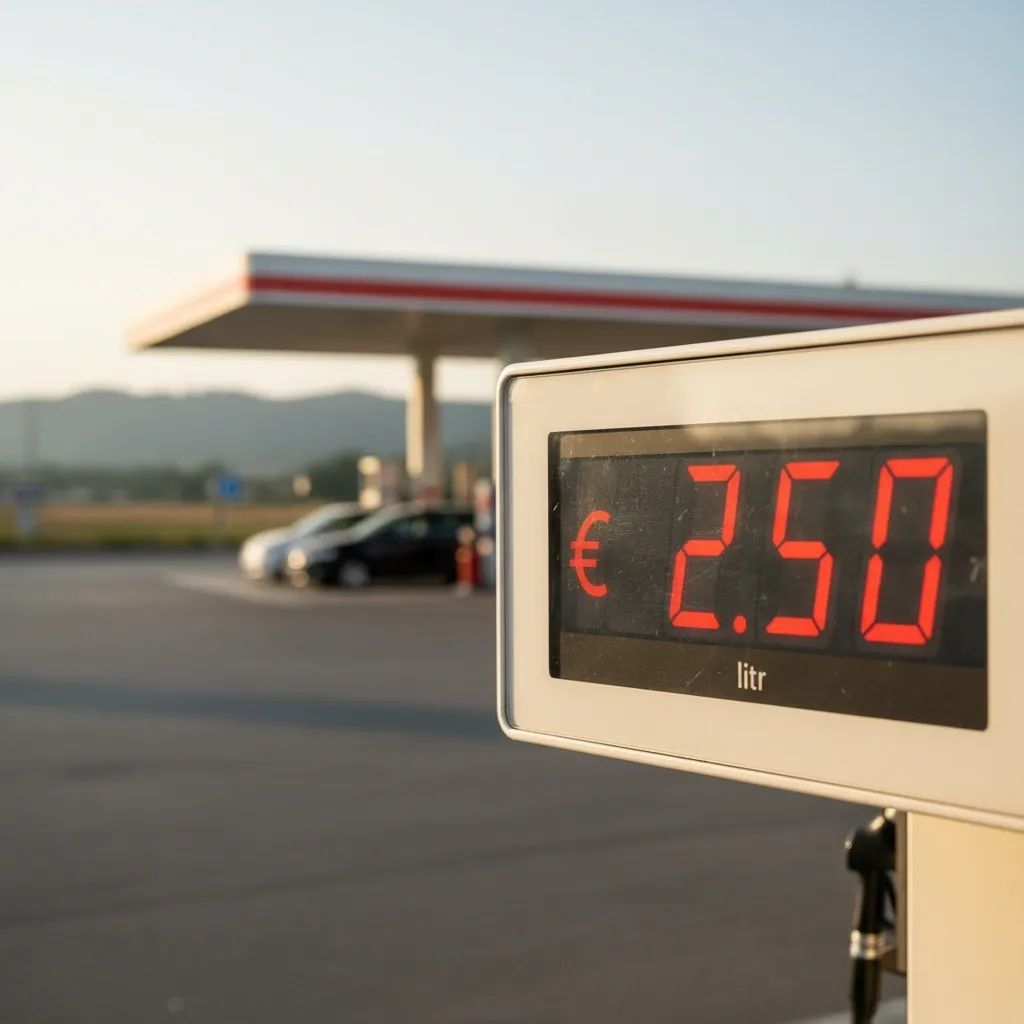
Italy's Ministry of Business and Made in Italy has confirmed that highway diesel prices have crossed the €2.00/liter threshold for the first time since the government's temporary fuel tax relief expired on July 3. Self-service diesel on the autostrada network now averages €2.004 per liter, marking a symbolic—but financially meaningful—shift for Italian motorists and logistics operators.
Why This Matters
• Immediate cost impact: A standard 50-liter fill-up now costs approximately €3.05 more than it did 48 hours ago, when the 5-cent excise reduction (€0.061 with VAT) was still in effect.
• Tax burden restored: Italy's excise duty on both gasoline and diesel has returned to €0.6729 per liter, bringing the total tax component (including VAT) to roughly €1 per liter—among Europe's highest.
• Highway diesel breaches €2: The psychological and practical barrier of €2/liter on toll roads signals a new cost environment for freight operators, especially those under 7.5 tons who receive no fuel rebate.
• Diesel now pricier than gasoline: For the first time in three years, diesel consistently costs more at the pump due to January's equalization of excise rates.
How Prices Moved Over 48 Hours
Italy's national fuel price observatory, run by the Ministry of Business and Made in Italy (MIMIT), tracks a clear two-day escalation since the excise cut lapsed:
Standard road network (self-service):
• Gasoline: €1.841/liter (up from €1.820 on Saturday, €1.803 on Friday)
• Diesel: €1.922/liter (up from €1.899 on Saturday, €1.882 on Friday)
Highway network (self-service):
• Gasoline: €1.932/liter (up from €1.907 on Saturday)
• Diesel: €2.004/liter (up from €1.978 on Saturday)
The leap reflects the full restoration of excise duties, which had been reduced by decree on June 5, 2026, with an original expiration date of July 3.
The Rationale Behind Letting the Cut Expire
The Italian government opted not to extend the temporary relief, citing two principal arguments: a decline in international crude prices—Brent crude dropped from approximately $95 to $70.80 per barrel during the discount period—and the fiscal strain on public coffers. Officials argued that lower global oil markets justified letting the subsidy lapse, though consumer groups note that pump prices fell by only about 6% despite the 26% drop in Brent.
The temporary cut had been in place since March 2026 and had been extended multiple times. However, the government now says it will "monitor geopolitical developments" and evaluate future interventions only if external market conditions deteriorate sharply.
What This Means for Freight Operators and Logistics
Italy's trucking sector is absorbing the brunt of the increase. Diesel accounts for 25%–30% of operating costs for road freight companies, and the excise restoration hits different segments unevenly:
Heavy freight (above 7.5 tons):Operators with Euro V or higher vehicles are eligible for quarterly excise rebates on commercial diesel. While they eventually recoup part of the tax, they must first front higher costs at the pump, straining working capital. The reimbursement lag can create cash-flow bottlenecks, especially for smaller fleet operators.
Light and medium freight (under 7.5 tons):Urban logistics, last-mile delivery, and smaller haulers receive no rebate. For these businesses—many of them small and medium enterprises—the price jump is immediate and permanent. Tight margins and fierce competition make it difficult to pass the increase along to clients, squeezing profitability further.
Adding pressure, Italy's highway toll rates rose 1.5% on average at the start of 2026, indexed to inflation. Meanwhile, a new tax credit for the March–May 2026 period, funded with €100 million, has been criticized by industry associations as insufficient compared to past support measures.
Impact on Consumers and Inflation
Consumer advocacy groups warn of a "cascade effect" as higher transport costs ripple through retail supply chains. Goods that rely on road logistics—food, construction materials, household products—are expected to see incremental price increases over the coming weeks.
Italian households, already grappling with elevated living costs, now face an additional burden at the pump. Annual driving costs for a typical family car (10,000 km/year) are projected to rise by:
• €127 for gasoline vehicles
• €208 for diesel vehicles
Retail sales data for early 2026 show a troubling pattern: spending is up in nominal terms, but volumes are down, meaning Italians are paying more but buying less. Analysts forecast that headline inflation for 2026 could reach 2.9%, partly driven by energy and fuel price volatility.
Italy's Fuel Tax Burden in European Context
Even with the temporary reduction expired, Italy's fuel taxation remains among the heaviest in the European Union. The excise duty of €0.6729 per liter, plus a 22% VAT rate, means that roughly half the pump price is tax.
Italy's tax structure is further complicated by the January 2026 equalization reform, which aligned gasoline and diesel excise duties at the same rate for the first time. This policy, designed to phase out "environmentally harmful subsidies" and reflect diesel's higher particulate emissions, resulted in:
• A 4.05-cent reduction (with VAT) per liter of gasoline
• A 4.05-cent increase (with VAT) per liter of diesel
The reform inverted the traditional price relationship, making diesel the more expensive option—unusual in a country where diesel engines dominate both passenger and commercial fleets.
What Comes Next
The government has signaled no immediate plans to reinstate fuel subsidies, emphasizing fiscal discipline and the "normalized" global oil environment. However, ministers have left the door open to "evaluate further measures" if geopolitical shocks—such as supply disruptions in the Middle East or sudden crude price spikes—materialize.
For now, drivers and businesses must adjust to the new baseline. Industry associations continue to lobby for structural reforms, including lower base excise rates and faster reimbursement cycles for commercial operators.
The Ministry of Business and Made in Italy updates its fuel price observatory daily. Motorists planning long-distance highway travel are advised to compare pump prices using official apps and consider refueling on standard roads, where diesel remains below €2 per liter.
With Italian transport costs now higher, summer holiday travel and logistics-dependent sectors face a leaner margin environment—one where every cent per liter compounds across millions of kilometers driven each day.


