
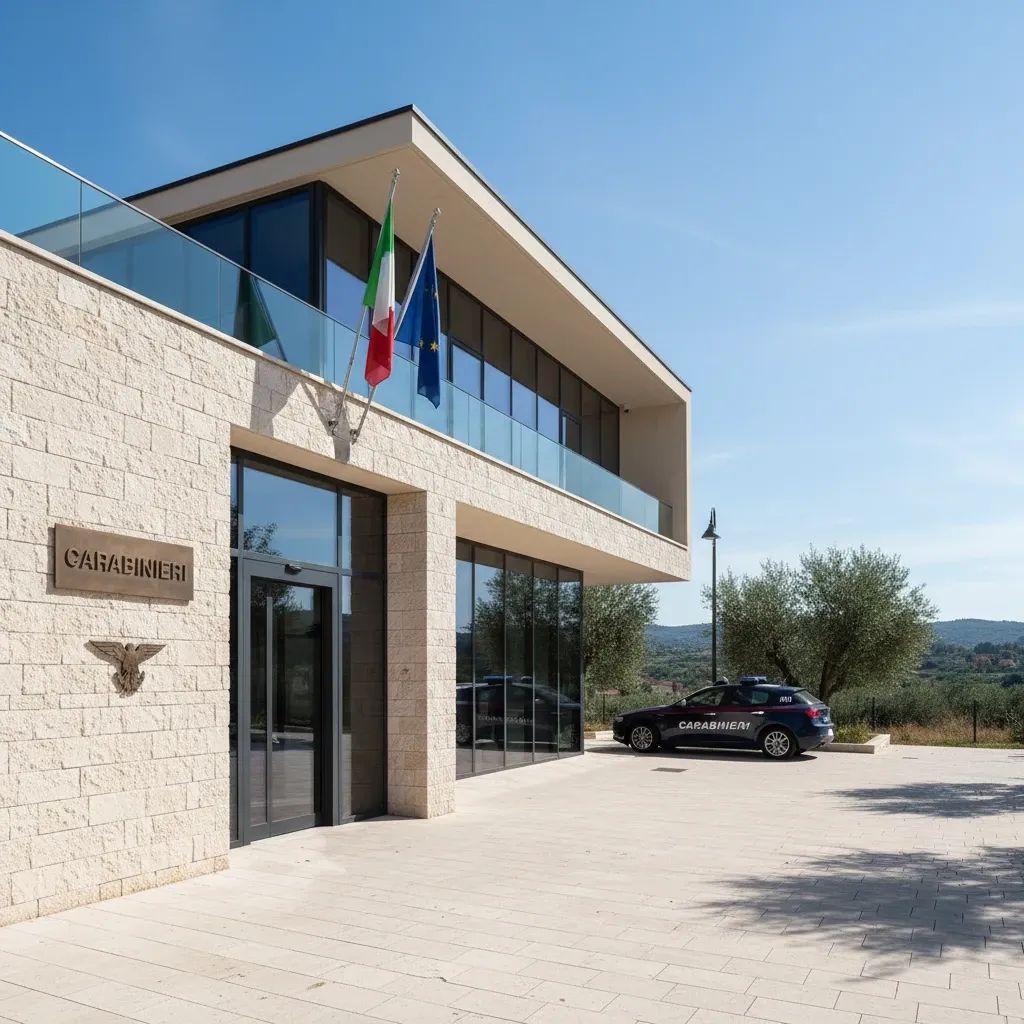
A 45-year-old neighbor has been arrested and charged with voluntary homicide following a fatal arson attack that killed a disabled pensioner in Lomazzo, a town in the province of Como, Italy. Giovanni Amenta, 74, died from smoke inhalation after his apartment door was deliberately set ablaze in the early hours of June 25, 2026.
Why This Matters:
• Motive rooted in financial dispute: The suspect, Christian Lepore, allegedly acted in retaliation after Amenta filed a theft complaint against him.
• Evidence captured on camera: Surveillance footage shows Lepore purchasing fuel at a gas station hours before the fire.
• Maximum penalty at stake: Under Italy's Penal Code, voluntary homicide aggravated by arson can result in life imprisonment (ergastolo).
Swift Investigation Leads to Arrest
The Carabinieri's Investigative Unit in Como, working under the direction of deputy prosecutor Giulia Ometto, ruled out an accidental fire within hours of the blaze. The victim, a disabled resident of a state-subsidized ALER housing complex on via Somaini 50, was found dead inside his apartment after firefighters extinguished the flames shortly after 3 a.m.
Forensic teams discovered traces of gasoline on the doormat outside Amenta's front door, a critical clue that pointed investigators toward arson. Security cameras in the neighborhood recorded Lepore filling a fuel canister at a nearby service station the evening before the attack. The arrest took place on June 25, less than 24 hours after Amenta's death.
A Neighbor's Betrayal
According to investigative findings, the relationship between Amenta and Lepore had deteriorated over several months. The pensioner had become aware that his neighbor was repeatedly asking him for money and had used his credit card without authorization. Amenta eventually filed a formal complaint with authorities, accusing Lepore of theft.
Prosecutors believe this complaint triggered a desire for revenge. Lepore allegedly poured gasoline on the entrance to Amenta's apartment and ignited it, knowing the elderly man—who had limited mobility—would struggle to escape. The resulting fire filled the small apartment with toxic smoke, causing Amenta to suffocate before help could arrive.
Residents of the ALER building, a low-income housing project managed by the regional housing agency, described the victim as a quiet, solitary figure who kept largely to himself. Neighbors reported hearing raised voices between the two men in the weeks leading up to the attack, though none anticipated such a violent escalation.
Suspect Denies Involvement
During interrogation, Lepore denied all charges related to the fire and Amenta's death. He acknowledged past disputes with the victim but insisted he had no role in the deadly blaze. When questioned about the gasoline purchase captured on video, Lepore claimed he needed the fuel for engine cleaning work and alleged that the canister had been stolen from his home.
Investigators remain skeptical of this defense, citing the timing of the fuel purchase, the forensic evidence at the crime scene, and the documented financial conflict between the two men. Lepore is currently held in pre-trial detention at a facility in Como province, awaiting further legal proceedings.
What This Means for Legal Proceedings
Under Article 575 of Italy's Penal Code, voluntary homicide carries a baseline sentence of no less than 21 years. However, the use of fire as a murder weapon introduces aggravating circumstances that can elevate the penalty significantly. Italian courts have consistently treated arson-related killings as among the most serious offenses, particularly when the method employed poses risks to other residents or property.
The Corte d'Assise—Italy's specialized court for serious crimes, composed of professional judges and lay jurors—will handle the case if it proceeds to trial. In cases where the intent to kill is clear and the method involves "particularly insidious or cruel means," sentences can reach life imprisonment without parole. Recent precedents in arson homicides have seen convictions ranging from 30 years to ergastolo, depending on factors such as premeditation, vulnerability of the victim, and public danger created by the fire.
The preliminary investigation phase is ongoing, with forensic experts continuing to analyze evidence from the scene. Prosecutors will need to demonstrate that Lepore acted with deliberate intent to kill, rather than merely to intimidate or damage property. The presence of gasoline directly outside Amenta's door, combined with the suspect's knowledge of the victim's disability, strengthens the prosecution's case for premeditated murder.
Context: Arson Attacks in Social Housing
This incident highlights ongoing challenges in Italy's public housing sector, where financial stress, overcrowding, and interpersonal conflicts occasionally escalate into violence. ALER complexes, designed to provide affordable housing for low-income families and elderly residents, sometimes become flashpoints for disputes over shared resources, noise complaints, and boundary issues.
Social workers and housing advocates have long called for increased mediation services and mental health support in these communities, arguing that early intervention could prevent conflicts from spiraling out of control. In this case, the presence of a formal theft complaint suggests authorities were aware of tensions between Amenta and Lepore, though no preventive measures appear to have been implemented.
The Como prosecutor's office has not indicated whether additional charges—such as arson endangering public safety under Article 423 of the Penal Code—will be filed. That statute carries a separate penalty of 4 to 10 years and can be applied concurrently with homicide charges when a fire poses risks to multiple residents or structures.
Accountability and Next Steps
The swift arrest and detention of Lepore reflect the Italy justice system's approach to violent crimes involving vulnerable victims. The case will likely move to a preliminary hearing within the coming months, where a judge will assess whether sufficient evidence exists to proceed to full trial.
For residents of the Lomazzo ALER complex, the tragedy has left a community shaken. Local officials have promised increased security measures, including additional surveillance cameras and more frequent patrols by municipal police. Housing authority representatives have also pledged to review conflict resolution protocols and ensure that complaints involving financial abuse are treated with heightened urgency.
As legal proceedings unfold, the case serves as a stark reminder of how disputes among neighbors—particularly in economically stressed environments—can turn deadly when grievances remain unaddressed. The outcome will be closely watched by legal observers and housing advocates across Lombardy and beyond.


