
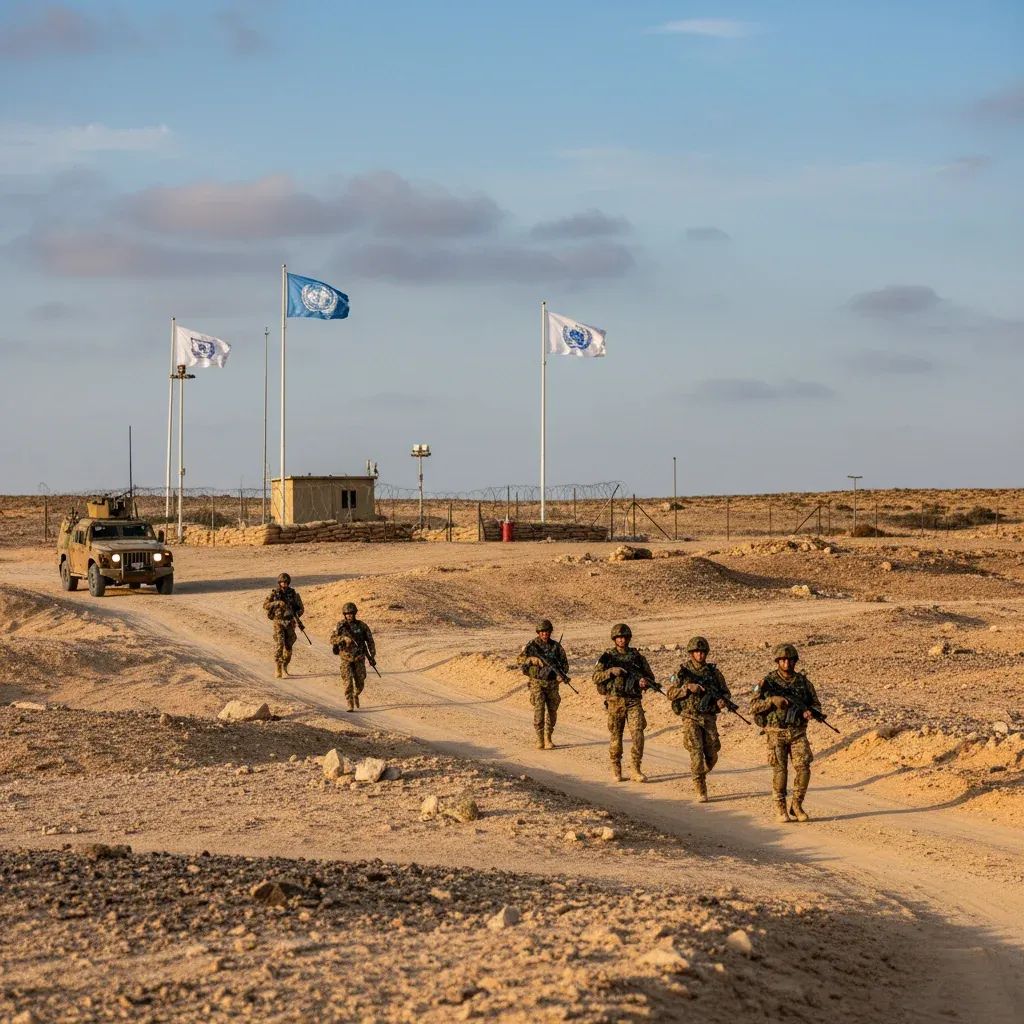
The Italian Government and France are moving to establish a multinational coalition to support Lebanon's security following the expected conclusion of the United Nations Interim Force in Lebanon (UNIFIL) mission. The initiative, publicly endorsed by Lebanese President Joseph Aoun, seeks to prevent a security vacuum in southern Lebanon and bolster the sovereignty of Beirut's government as the decades-old UN mission winds down.
Why This Matters for Italy
• Italy's strategic role in the Mediterranean is being formalized through this Franco-Italian coalition, with direct implications for military deployments and diplomatic leverage in Europe's near abroad.
• Italy currently contributes a significant contingent to UNIFIL under Operation Leonte and will likely maintain a military presence through any successor arrangement.
• Italian taxpayers should expect continued or increased military expenditure in Lebanon, with exact budgetary commitments to be negotiated with coalition partners.
• The coalition represents a diplomatic upgrade for Rome, positioning Italy as a co-architect of Mediterranean security policy alongside Paris—but also increasing Italy's exposure to regional instability.
The Antibes Announcement
Prime Minister Giorgia Meloni and French President Emmanuel Macron announced the coalition plan during a bilateral summit in Antibes on June 25. The proposal envisions a post-UNIFIL arrangement that would work alongside the Lebanese Armed Forces (LAF), with a revised mandate focused on institutional strengthening rather than traditional peacekeeping operations.
Both leaders emphasized the need to maintain an international military presence in southern Lebanon to monitor security and prevent the territory from becoming a flashpoint for renewed regional escalation. The coalition is expected to include multiple European partners and potentially countries from the region, though specific participants have not yet been named publicly. Coordination with the European Union's external action framework and the UN Security Council will be necessary to establish the legal basis for any new force.
What This Means for Italy
Italy's involvement in Lebanon is not new. The Italian Armed Forces have maintained a substantial presence in UNIFIL since its expansion following the 2006 Lebanon War, often contributing over 1,000 troops and holding leadership positions within the mission. The proposed coalition represents a strategic commitment that Rome will need to sustain through domestic political debate.
For Italian taxpayers, the coalition will likely entail continued military expenditure in Lebanon, though the exact budgetary commitment has not been disclosed. The Italian Ministry of Defense will need to negotiate mandate details, rules of engagement, and cost-sharing arrangements with coalition partners. The Italian Parliament will likely be asked to approve the deployment once the coalition's legal framework is established.
The coalition also carries strategic trade-offs. A more robust Italian role in Lebanon could enhance Rome's influence in Mediterranean diplomacy and European security policy. However, it also increases exposure to regional volatility. Lebanon remains deeply divided along sectarian lines, with non-state armed groups retaining significant military capability despite international pressure.
The Lebanese Perspective
President Joseph Aoun, who has been vocal about the need for continued international support, welcomed the Franco-Italian proposal as essential to avoiding a dangerous security void. Beirut's concern is straightforward: the Lebanese Armed Forces, while considered the most credible national institution, lack the resources and territorial control necessary to fully secure the southern border region without external backing.
The Lebanese government has long struggled with the presence of non-state armed groups that operate parallel military structures in defiance of international agreements. The proposed coalition aims to support the LAF's gradual assumption of full sovereignty, contingent on verified disarmament of militias and the dismantling of associated infrastructure.
International Military Presence in Lebanon: Historical Context
Lebanon has seen multiple waves of international military intervention. UNIFIL, established in 1978, has maintained a presence for nearly 50 years but has faced persistent criticism over its limitations. The mission currently fields approximately 10,500 peacekeepers from nearly 50 countries, with Italy providing one of the largest national contingents.
The planned withdrawal of UNIFIL marks the end of this nearly 50-year UN presence in southern Lebanon. The transition period will be complex, requiring orderly removal of personnel and equipment while simultaneously establishing the legal framework for the new coalition.
Legal and Operational Challenges
The coalition will require a formal mandate and a clear chain of command, likely negotiated through bilateral agreements with Lebanon. Unlike UNIFIL, which operated under a UN mandate, the new force may have different legal status and rules of engagement, though specifics remain to be determined.
Key questions remain unanswered: Will Italy increase defense spending to cover Lebanon operations? How will this coalition affect Italy's other international military commitments? Will domestic political support hold if the mission becomes costly or prolonged? These are questions Italian policymakers and citizens will grapple with in coming months.
Next Steps
An international summit is expected to be convened to finalize the coalition's composition and mandate. Prime Minister Meloni has indicated broader diplomatic engagement to rally support for Lebanon's stabilization.
The Italian Parliament will likely be asked to approve the deployment once the coalition's legal framework is established. Public debate in Italy over the mission's cost, duration, and strategic rationale is expected, particularly given the country's existing commitments to other international operations.
For now, the Franco-Italian proposal remains a work in progress, with critical details yet to be negotiated. What is clear is that Italy is positioning itself as a central player in Lebanon's security future—a role that carries both opportunity and risk for Rome's Mediterranean strategy and domestic priorities.


