
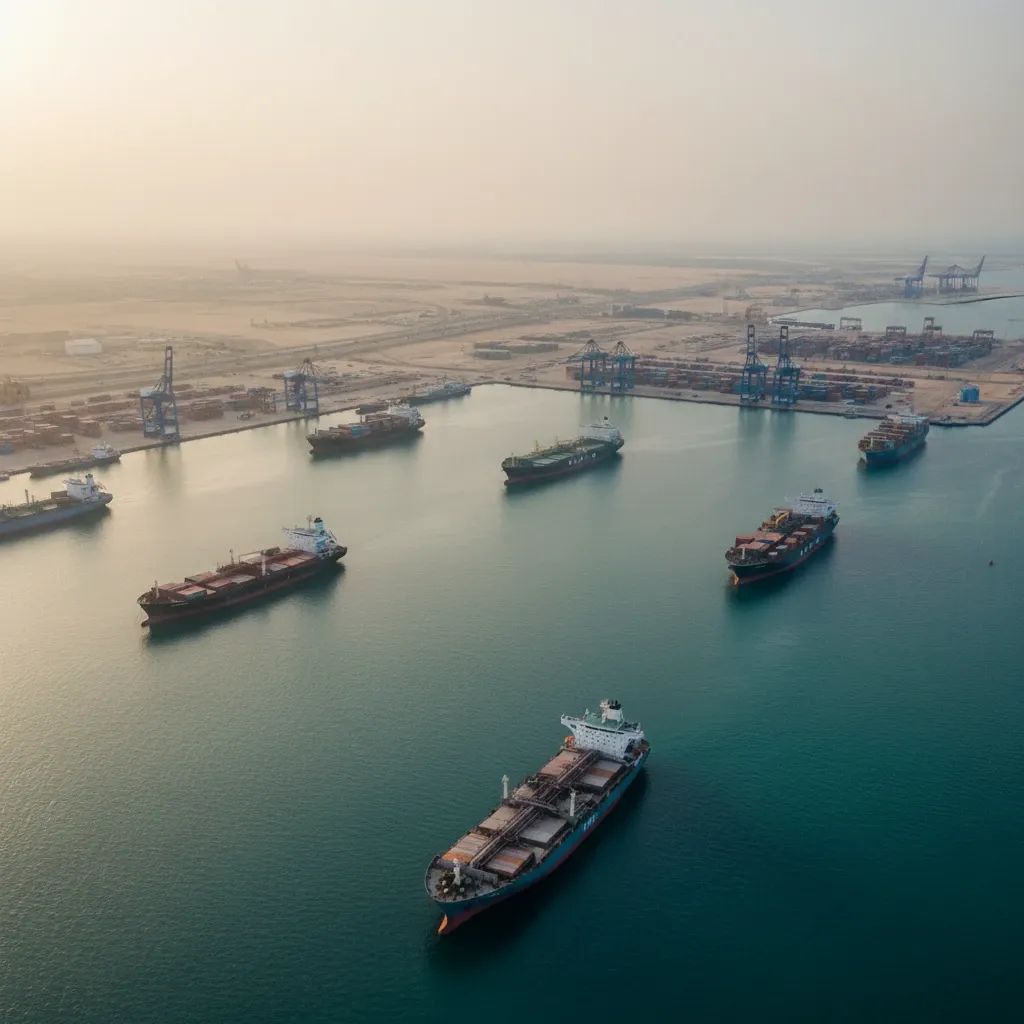
The Iranian Armed Forces have declared they will target American and Israeli vessels attempting to transit the Strait of Hormuz, a move that has effectively paralyzed one of the world's most critical energy arteries and sent global markets into turmoil. For residents and businesses in Italy, the consequences are immediate and severe: energy prices are already climbing, and the full impact on household costs and economic stability is only beginning to unfold.
The announcement by military spokesman Abolfazl Shekarchi on March 7, 2026, claims Tehran controls the chokepoint but stops short of declaring a formal closure—a legal distinction that has done little to ease the crisis now gripping international commerce and threatening Italy's economic recovery.
Why This Matters:
• Global energy lifeline severed: The Strait normally carries 20% of the world's oil supply; traffic has collapsed by over 98% since March 4.
• Insurance blackout: War-risk premiums have surged 500-1000%, making transit economically impossible for most commercial operators.
• Italy's exposure: Rising energy costs threaten stagflation across Europe, prompting Foreign Minister Antonio Tajani to prepare emergency support packages for Italian exporters.
• No safe passage guaranteed: Iran explicitly states it "cannot provide any guarantee" for the security of vessels from any nation due to the "state of war."
The Strait Becomes a War Zone
What began as military posturing has transformed into a commercial catastrophe. Between March 4 and 6, at least four incidents targeted commercial vessels in the Persian Gulf and the narrow waters connecting it to the Gulf of Oman. A container ship reported being struck by an unidentified projectile near Dubai, while a Maltese-flagged vessel sustained damage above the waterline. Iran's Revolutionary Guard allegedly deployed drones against the tanker "Prima," escalating fears that no vessel is immune.
By March 4, daily tanker transits through Hormuz dropped to zero—down from 37 crossings recorded on February 27. The Joint Maritime Information Center has elevated the threat level to "CRITICAL," indicating an attack is almost certain for any ship attempting passage. Approximately 1,000 vessels are now stranded in the region, with the combined value of hulls and onboard equipment exceeding $25B.
The Legal Fiction of an "Open" Strait
Shekarchi's statement that "all ships can cross" carries little weight when Tehran simultaneously warns that American and Israeli flagged vessels will be targeted and that Iran assumes no responsibility for incidents involving other nations. International maritime law, specifically the UN Convention on the Law of the Sea, prohibits arbitrary closure of international straits. Yet the practical effect of Iran's threats mirrors a blockade: major insurers have not lifted war-risk exclusions, and without coverage, commercial operators cannot legally or financially justify the voyage.
The distinction between a formal closure and a de facto deterrent is purely semantic. For ship owners, charterers, and cargo insurers, the result is identical—economic impracticability.
What This Means for Italy and Europe
Italy's energy security and export economy are directly in the crosshairs. The Italian Ministry of Foreign Affairs has already signaled "extreme concern" over the maritime security breakdown, and Antonio Tajani has publicly warned of "serious damage to the global economy" while fast-tracking relief measures for Italian businesses dependent on Gulf trade routes.
Europe imports a significant share of liquefied natural gas (LNG) from Qatar, much of which transits Hormuz. With shipments suspended, European gas futures have spiked roughly 30%, and daily LNG transport rates have climbed over 40%. The ripple effects extend beyond energy: 16-18% of global fertilizer exports pass through the Strait, threatening agricultural supply chains across the continent. Italy's chemical and manufacturing sectors, already strained by post-pandemic recovery, now face a fresh cost shock.
Economists project that sustained Brent crude prices above $100 per barrel—an increasingly likely scenario—could add 0.6-0.7 percentage points to global inflation. Some analysts warn of extreme scenarios pushing oil toward $300 if the standoff persists, a development that would crush consumer spending and industrial output across the Eurozone.
Italy's Energy Dependencies and Vulnerability
Italy's exposure to the Hormuz crisis is particularly acute due to the country's energy infrastructure. Approximately 12-15% of Italy's total LNG imports pass through the Strait of Hormuz, with the remainder sourced from alternative routes via the Suez Canal and direct suppliers. However, Qatar—Italy's largest LNG supplier and a key exporter through Hormuz—accounts for a critical share of Italian gas supplies, particularly during winter heating months.
Italy's strategic gas reserves can sustain domestic consumption for approximately 90-95 days at current usage levels, providing a modest buffer. Compared to other EU nations, Italy is more vulnerable than Germany (which has larger reserves) but somewhat better positioned than smaller Mediterranean economies. The Italian government maintains emergency reserves at storage facilities across Lombardy, Emilia-Romagna, and Abruzzo, but prolonged disruption would require rationing and demand reduction measures.
Italy's energy mix—approximately 40% natural gas, 30% renewables, 15% nuclear imports, and 15% other sources—makes it heavily dependent on imported gas, unlike countries with larger coal or nuclear capacity. This structural vulnerability means Italy faces steeper inflationary pressure than nations with more diversified energy sources.
What Italian Residents Should Expect
For households in Italy, the impacts will be felt across multiple fronts over the coming weeks and months. Energy analysts project Italian gas prices could rise by 15-20% if the crisis extends beyond two weeks, directly impacting heating costs for millions of homes still relying on winter heating. Gasoline prices at Italian pumps have already begun climbing, with further increases of €0.15-0.25 per liter anticipated if Brent crude remains above €95 per barrel.
Transportation costs will be among the first visible impacts. Express courier services and logistics companies have already begun implementing fuel surcharges, which will cascade into higher prices for e-commerce deliveries, restaurant food delivery services, and freight-dependent retail goods. Heating oil for homes not connected to the gas grid will see dramatic price increases, affecting rural and mountain communities particularly severely.
The ripple effects extend to food prices, as fertilizer disruption will increase agricultural input costs. While Italy produces substantial domestically-grown food, imported agricultural inputs and international supply chains will drive price increases for dairy, meat, and processed foods within 4-6 weeks. Electricity bills may also rise as natural gas represents a significant component of Italy's power generation mix during peak demand periods.
The Italian government is reportedly preparing emergency measures, including potential extensions of existing energy subsidies for low-income households and small businesses through the Ministry of Economy and Finance. Italian exporters dependent on Gulf markets—particularly in machinery, textiles, fashion, and luxury goods—face both shipping cost increases and demand disruption in key Asian markets like China, India, and Japan.
The broader inflationary pressure could delay anticipated interest rate cuts by the European Central Bank, potentially affecting mortgage rates and credit costs for Italian consumers and businesses through 2026. Small and medium enterprises (SMEs), which form the backbone of the Italian economy, may face margin compression as energy costs rise while customer demand potentially softens.
Geopolitical Trigger: The Aftermath of "Epic Fury"
The current crisis erupted in the wake of Operation Epic Fury, a joint U.S.-Israeli military strike conducted on February 28, 2026, which resulted in the death of Iran's Supreme Leader Ali Khamenei. Tehran's maritime strategy is widely interpreted as retaliation, a calculated effort to inflict economic pain on Western powers without triggering direct war.
U.S. President Donald Trump announced on March 3 that the American Navy could begin escorting tankers through the Strait, although naval analysts question whether sufficient resources are available for sustained convoy operations. At least two U.S. aircraft carriers—the USS Abraham Lincoln and USS Gerald R. Ford—are deployed to the region, representing the largest American naval concentration in the area since 2003.
Trump has also pledged that the U.S. Development Finance Corporation (DFC) will provide insurance and political risk guarantees to shipping companies, particularly in the energy sector, in an attempt to restore confidence. Meanwhile, the administration is coordinating with allies through the International Energy Agency (IEA) to signal readiness for a strategic reserve release if the blockage is not swiftly resolved.
Asia Scrambles for Alternatives
The crisis hits hardest in Asia, where China, India, Japan, and South Korea rely on the Strait for roughly 40-50% of their crude imports. Beijing has entered direct negotiations with Tehran to secure "safe passage" for Chinese-flagged vessels, a move that underscores the fracturing of global maritime norms. China has already ordered domestic refineries to halt fuel exports to preserve domestic supply.
Gulf producers face their own dilemma: storage capacity is nearing limits, and if exports remain blocked, they may be forced to curtail production, further tightening global supply and paradoxically harming their own revenues.
The Insurance Wall
Even if Tehran were to offer formal guarantees, the global insurance industry remains the ultimate gatekeeper. Major underwriters have declined to lift war-risk exclusions, rendering any transit uninsurable. Premiums for Very Large Crude Carriers (VLCC) have soared, and many policies have been canceled outright. Without coverage, ship owners face potential liability for crew safety, cargo loss, and hull damage that could run into hundreds of millions.
The U.S. Maritime Administration (MARAD) has issued Advisory 2026-001A, instructing American-flagged vessels to maintain at least 30 nautical miles distance from U.S. naval units and to stay as far as possible from Iranian territorial waters. The guidance advises verbal refusal of boarding attempts but explicitly warns against armed resistance.
Diplomatic Efforts and Military Posture
The European Union has expressed "extreme concern" but has yet to coordinate a unified naval response. France has deployed the carrier Charles de Gaulle to the Eastern Mediterranean and is exploring the formation of a multinational task force to protect commercial shipping. The Combined Maritime Forces (CMF)—a coalition including the United Kingdom, United States, and Saudi Arabia—have shifted focus exclusively to war-related operations.
Italy, through both NATO channels and direct bilateral talks, is actively engaging with Gulf states and European partners to explore alternative supply routes and emergency stockpile coordination. Italian naval assets are being evaluated for potential participation in international maritime security efforts, though the scope remains under negotiation with EU and NATO command structures. The stakes are clear: prolonged disruption could tip the Eurozone into recession, with Italy's export-driven economy particularly vulnerable.
The Road Ahead
As of today, no resolution is in sight. Iran shows no sign of backing down, and Western powers remain divided on the feasibility and wisdom of military escorts. The longer the Strait remains effectively closed, the deeper the economic fallout. For households and businesses in Italy, the immediate impacts are already visible at the pump and in utility bills. The broader consequences—supply chain breakdowns, inflation, and geopolitical realignment—are only beginning to unfold.
The message from Tehran is unambiguous: the Strait is open in name only, and the cost of passage may be unacceptably high. Italian residents and policymakers must prepare for sustained economic headwinds and increased government intervention in energy markets as this crisis evolves.


