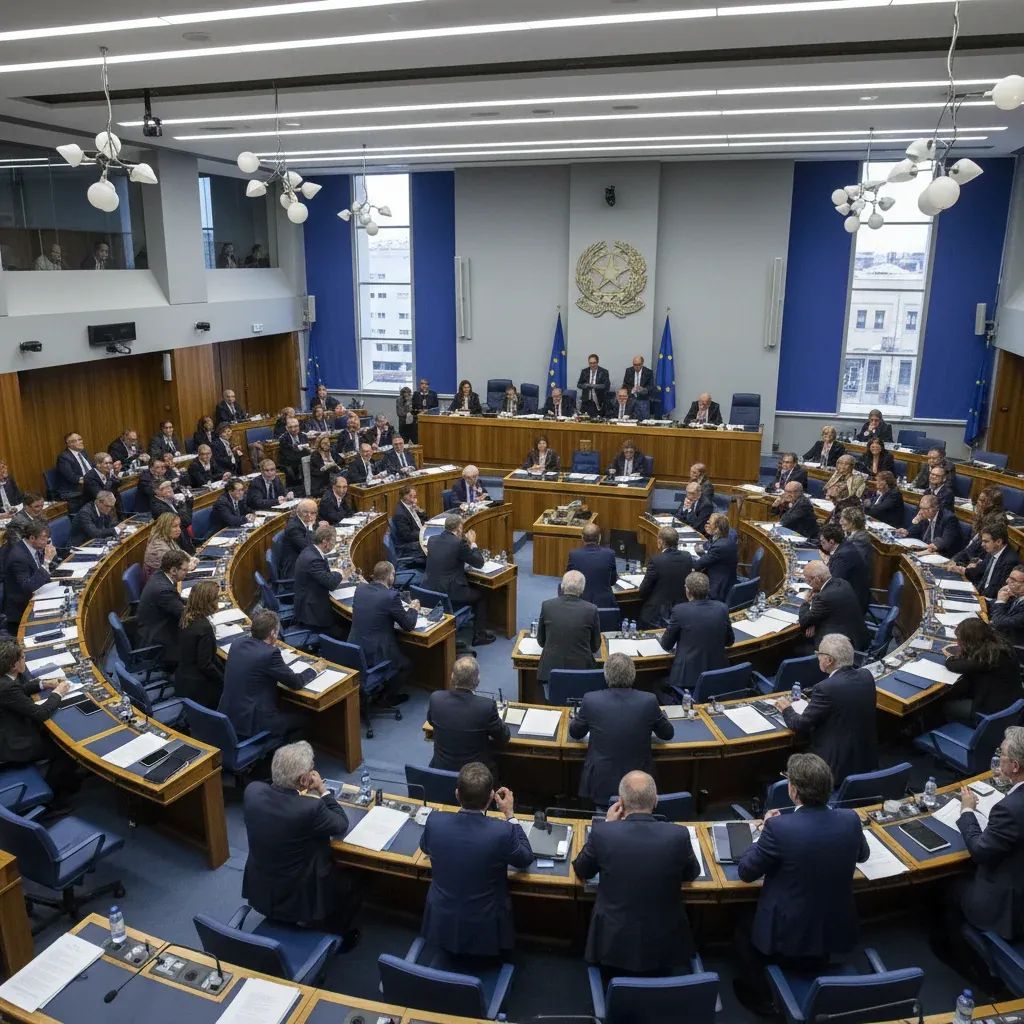
The Vatican has firmly denied rumors circulating in Catholic media this week, clarifying that no verdict has been reached in the canonical trial of former Jesuit priest Marko Ivan Rupnik, the renowned mosaicist accused by roughly 20 women of sexual, psychological, and spiritual abuse spanning over three decades. The Holy See Press Office issued a statement today categorically rejecting claims—published primarily by blogs such as Messa in Latino—suggesting the artist had been acquitted or that judges had reached any conclusion.
The tribunal appointed by the Dicastero for the Doctrine of the Faith remains actively engaged in reviewing documentation from multiple sources, including involved dioceses, the Society of Jesus, affected parties, and media reports. Vatican officials emphasized that the judicial process is ongoing and that premature leaks compromise both procedural integrity and the dignity of all parties involved.
Why This Matters
• Opacity and Silence: The case has been marked by a lack of transparency since allegations first surfaced, leaving survivors and their legal representatives in the dark about procedural timelines and outcomes.
• Historic Tribunal Composition: The Vatican's decision to include female judges on the panel represents an unprecedented shift for cases involving abuse of religious women.
• Artistic Legacy in Limbo: Rupnik's mosaics adorn churches, chapels, and Vatican properties worldwide, raising unresolved questions about whether and how the Church should handle his works if he is convicted.
The Accused and His Alleged Crimes
Marko Ivan Rupnik, a Slovenian theologian and artist whose liturgical mosaics have appeared in hundreds of religious sites across Italy and beyond, faces accusations from former nuns and "spiritual daughters" who describe systematic coercion within the Loyola Community he helped establish. The alleged abuses date back to the early 1990s and took place in both Slovenia and Italy.
Specific allegations include forced participation in "threesomes," pornographic acts, and what one survivor described as the loss of her virginity through coercion, despite her visible distress and revulsion. Canonical records show that in 2020, Rupnik was briefly excommunicated for the ecclesiastical crime of "absolving an accomplice"—a violation that occurs when a priest engages sexually with someone and then grants them absolution during confession. The excommunication was lifted within weeks, reportedly due to Rupnik's claim of repentance, though sources close to survivors dispute this narrative. Some accounts suggest Pope Francis may have personally intervened to have the penalty reversed, though the Vatican has never clarified the circumstances.
In 2023, after the Jesuit order deemed the accusations "very highly credible," Rupnik was formally expelled from the Society of Jesus for disobedience. That same year, the Dicastero for the Doctrine of the Faith launched a full judicial process, waiving the statute of limitations typically applicable to such cases under canon law.
What the Tribunal Is Evaluating
The judicial college currently examining the case has access to a wide array of materials: testimony and evidence compiled by diocesan authorities where alleged incidents occurred, internal records from the Jesuit leadership, statements from survivors and interested parties, and publicly available press documentation. Canon law experts note that this type of tribunal follows a judicial penal procedure, distinct from administrative processes, and can render a binding judgment on guilt or innocence under Church law.
It is critical to understand that canonical verdicts operate separately from civil or criminal proceedings. Even if the Vatican tribunal finds Rupnik guilty, he remains subject to the laws of Italy and Slovenia, where criminal statutes of limitations and evidentiary standards differ. Conversely, a canonical acquittal would not shield him from prosecution by state authorities if sufficient evidence emerged.
The Vatican's Historic Procedural Shift
One of the most significant developments in the Rupnik case has been the Vatican's appointment of women judges to the tribunal—a first for cases involving alleged abuse of female religious. This decision was hailed by advocacy groups as a "historic shift" and a move toward greater procedural independence and sensitivity. Previously, all-male panels adjudicated cases where the victims were overwhelmingly women, a structural imbalance that survivors and their supporters had long criticized.
The Dicastero for the Doctrine of the Faith, which oversees the Church's most serious canonical offenses (delicta graviora), retains ultimate jurisdiction. According to norms updated in the 2019 and 2023 revisions of the papal document Vos estis lux mundi, cases involving abuse of "vulnerable adults"—a category that includes nuns in hierarchical religious communities—must be handled with enhanced procedural rigor and victim support.
The Silence That Surrounds the Case
Despite these procedural reforms, the Rupnik case has been characterized by what survivors and their advocates describe as troubling opacity. As of April 2026, neither the alleged victims nor their legal counsel had received concrete updates on the status of the investigation or trial. The Vatican insists that confidentiality is necessary to protect the integrity of judicial proceedings and the privacy of all involved, but critics argue that this secrecy mirrors the institutional cover-ups that allowed abuse to persist for decades.
The removal of Rupnik's artwork from the Vatican's official website in June 2025 was viewed as a symbolic gesture by survivors, signaling at least a tacit acknowledgment that his legacy is now contested. However, his mosaics remain in situ in numerous churches and shrines throughout Italy and abroad, and Church leadership has yet to issue guidance on whether dioceses and religious communities should remove or cover them pending the trial's outcome.
What This Means for Residents and the Church in Italy
For Italy-based Catholics, particularly those in religious orders or lay movements, the Rupnik case is a litmus test of the Church's commitment to accountability. The country's legal framework recognizes canonical proceedings but does not subordinate civil justice to them. If survivors choose to pursue criminal complaints in Italian courts, they would need to navigate statutes of limitations that may have already expired for offenses dating to the 1990s, though recent legislative reforms have extended time limits for certain sex crimes.
The case also raises practical questions for parishes and dioceses. Should churches hosting Rupnik's mosaics provide context or disclaimers? What pastoral care is owed to parishioners who feel conflicted about the art? These questions have no uniform answer, and local bishops retain discretion.
More broadly, the trial's outcome will influence how the Italian Catholic community perceives Vatican reforms enacted under Pope Francis. If the tribunal delivers a transparent, evidence-based verdict and provides meaningful redress to survivors, it could bolster confidence in canonical justice. If the process remains opaque or ends in a verdict perceived as lenient, it risks deepening cynicism about institutional accountability.
The Broader Context of Canonical Justice
The disciplinary framework governing clerical abuse cases has evolved significantly since the early 2000s. The Motu Proprio Sacramentorum sanctitatis tutela (2001, updated in 2010 and 2021) established the Dicastero for the Doctrine of the Faith as the central authority for grave offenses. Subsequent reforms, including Vos estis lux mundi, have expanded definitions of vulnerable adults, mandated cooperation with civil authorities, and imposed penalties on bishops or religious superiors who fail to act on credible allegations.
Canonical penalties range from temporary suspension to the most severe sanction: dismissal from the clerical state. Appeals are heard by tribunals within the Dicastero, and the Pope retains the authority to intervene directly in exceptional cases. This layered system aims to balance justice, mercy, and the presumption of innocence, though critics contend it often prioritizes institutional reputation over survivor welfare.
In the Rupnik case, the tribunal's composition, the waiver of prescription, and the volume of documentation under review suggest the Vatican is treating the matter with unusual seriousness. Yet the lack of public communication leaves survivors and observers uncertain about timelines, standards of proof, and potential outcomes.
What Happens Next
The Vatican has not indicated when the tribunal will conclude its deliberations. Given the complexity of the case—spanning multiple jurisdictions, decades of alleged conduct, and numerous victims—a verdict may still be months away. Canon law does not impose strict deadlines for judicial processes, particularly when prescription has been waived.
For now, Rupnik remains a priest in good standing canonically, though he is prohibited from public ministry and has been expelled from the Jesuit order. His whereabouts are not publicly disclosed, and he has made no public statements since the allegations became widely known.
Survivors and their advocates continue to call for greater transparency, formal recognition of harm, and material reparations. Whether the tribunal can deliver those outcomes—and whether the broader Church in Italy and beyond will reckon with the institutional failures that enabled decades of alleged abuse—remains an open question.