
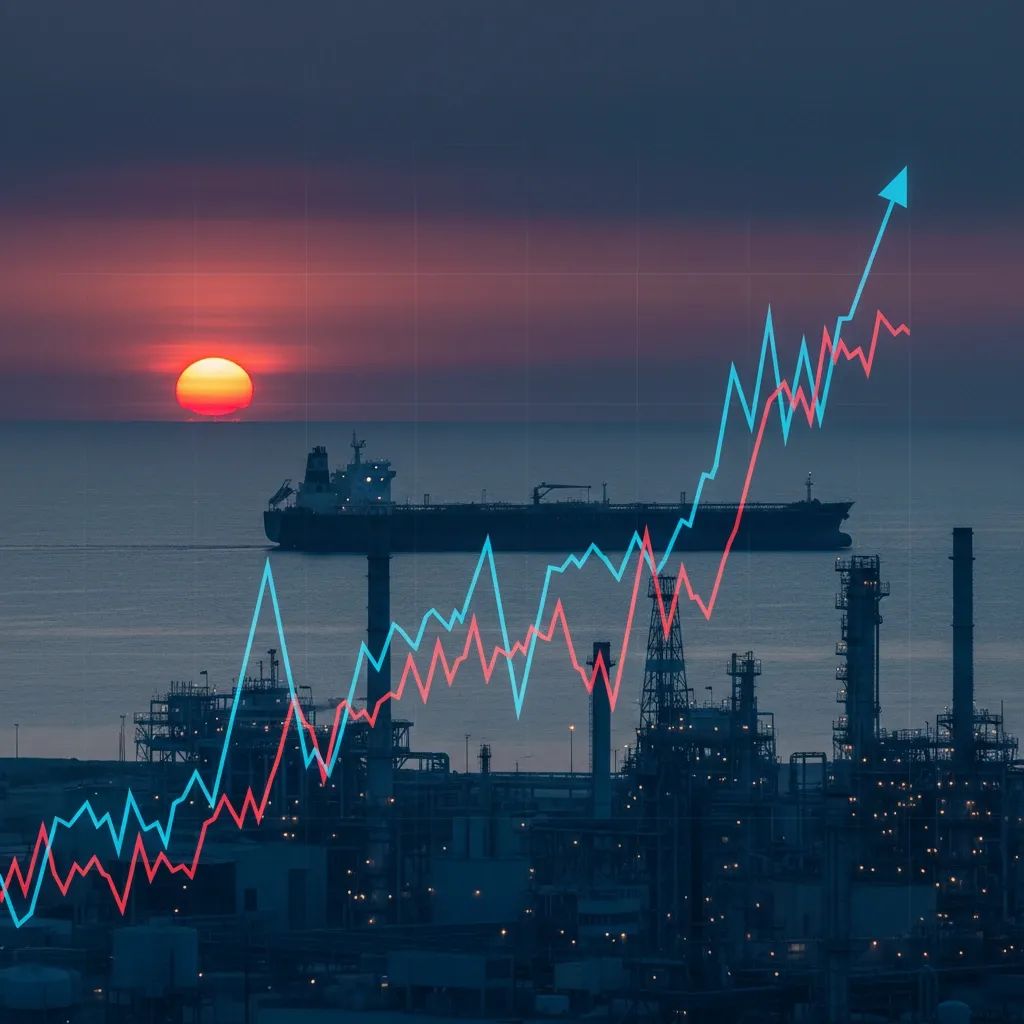
The Italy Stock Exchange surged sharply as geopolitical tensions suddenly eased, with the FTSE MIB index climbing 1.4% to 52,219 points at opening—a move fueled by a preliminary peace accord between Washington and Tehran that promises to reopen the Strait of Hormuz, a chokepoint responsible for roughly 20% of global oil and gas flows.
Why This Matters
• Energy relief: Italian households could save up to €212 annually on utility bills if crude and gas prices stabilize below recent crisis peaks.
• Stock winners: Shares in Stellantis, Ferrari, and luxury brands jumped as investors rotated into cyclical and high-beta names on easing geopolitical risk.
• Sector whiplash: Oil and gas stocks plunged—Eni lost 4.5%—as Brent crude tumbled more than 5% to $82.67 per barrel.
Peace Dividend Lifts European Bourses to Four-Month Highs
The Stoxx 600, which tracks the 600 largest companies across Europe, rose 0.9% to its highest level since February 27, reclaiming all losses sustained during the recent Strait of Hormuz closure. Frankfurt's DAX led the rally with a 1.76% gain, followed by Paris at 1.33% and London at 0.76%.
Market sentiment flipped overnight after the White House confirmed a framework agreement to end hostilities with Iran. The accord, set for formal signature in Switzerland on June 19, includes the "toll-free" reopening of the maritime corridor and the immediate lifting of the U.S. naval blockade on Iranian ports. A 60-day negotiation window will follow to address remaining disputes over Tehran's nuclear program and comprehensive sanctions relief.
The agreement effectively ends a 100-day standoff that began on February 28, when Iran closed the strategic waterway. At the height of the crisis in early May, Brent crude spiked to $126 per barrel, shipping container rates surged 45–75%, and global commercial transit through the strait collapsed to just 2% of normal volume.
Automobiles and Luxury Lead Milan Charge
Stellantis emerged as the star performer on Piazza Affari, rocketing 5.5–5.7% as investors piled into cyclical names sensitive to economic growth. The carmaker had posted a 5.5% increase in European sales in May versus the prior year, lifting its market share to 17.1%. Jefferies maintained its "Buy" rating on the stock, while Morgan Stanley recently raised its price target, signaling renewed confidence after a difficult February that saw a profit warning and dividend suspension.
Ferrari accelerated 4.3% following a pivotal upgrade from Morgan Stanley, which lifted its recommendation to "Overweight" from "Equal Weight" and raised its price target from €330 to €380 per share. The analyst cited improved global risk appetite and Ferrari's high-beta profile, meaning the stock is particularly responsive to bullish market swings. The Maranello-based marque also continued its multi-year share buyback program, repurchasing 30,899 ordinary shares on Euronext Milan in early June.
Luxury goods makers thrived on expectations of a tourism rebound in the Middle East and renewed consumer confidence. Brunello Cucinelli advanced 3.1–3.9%, and Moncler added 1.2%, even as some data showed intraday volatility. Cement producer Buzzi Unicem surged 6.3%, reflecting broader optimism around infrastructure and construction activity.
Banks Surge on M&A Activity and Rate Clarity
Italian financials rallied on a confluence of positive catalysts: reduced geopolitical risk, lower inflation fears driven by cheaper energy, and an active wave of domestic consolidation.
UniCredit jumped 2.3% after responding publicly to queries from Commerzbank regarding adhesion to its takeover offer. Banco BPM climbed 1.8%, while Intesa Sanpaolo—which launched a formal public tender for Banca Monte dei Paschi di Siena—rose 1.7%. MPS itself gained 1.5%. Indirectly involved in the reshaping of Italy's banking landscape, Mediobanca added 1.1% and Generali advanced 1.4%.
Lower bond yields added tailwinds. The spread between Italy's 10-year BTP and Germany's Bund narrowed to 70–71 basis points, with the Italian yield dropping to 3.65–3.66% and the German benchmark at 2.95%. Spanish and Greek debt also tightened, signaling improved confidence in Southern European fiscal positions.
Energy Stocks Hammered as Crude, Gas Collapse
The very catalyst that lifted equities punished the energy complex. With the Strait of Hormuz set to reopen, the geopolitical risk premium that had inflated oil prices evaporated.
WTI crude fell 5.5% to $80.18 per barrel, while Brent dropped 5.3% to $82.67—a 40–50% decline from the May peak near $126. Natural gas prices in Europe tumbled 6% to €44 per megawatt-hour, removing a key driver of inflation and easing cost pressures on manufacturers and households.
Eni, Italy's energy major, plunged 4.5%, making it the worst performer on the FTSE MIB. Pipeline and equipment firms Saipem and Tenaris each shed 2.2%. Utilities exposed to gas prices—Snam and Italgas—lost 1.3% and 1.1% respectively. Defense contractor Leonardo limited losses to 0.6%, supported by unrelated order book momentum.
Across Europe, the energy sub-index of the Stoxx 600 fell 4%, the steepest sectoral decline of the session.
What This Means for Residents
For Italians, the immediate consequence is tangible relief at the pump and on utility bills. If crude stabilizes in the $78–85 range forecast for the fourth quarter, diesel and gasoline prices should retreat from recent highs. The estimated annual household savings of €212 assumes no further supply shocks and successful implementation of the U.S.–Iran accord.
Businesses—particularly those in manufacturing, logistics, and hospitality—will benefit from lower input costs and more predictable budgeting. The normalization of shipping routes should ease the 45–75% container-rate surcharges that exporters have absorbed in recent months, though analysts caution that full supply-chain recovery could take until year-end.
On the investment front, the FTSE MIB's rally to 52,219 marks a fresh all-time high for the index, which first broke its previous record on June 12 at 51,497 points. Pension funds and retail portfolios with equity exposure will see mark-to-market gains, though the shift away from defensive assets like gold—up 3% to $4,338 per ounce—suggests investors are rotating into riskier positions.
Currency markets also moved: the euro strengthened to $1.1609 as the dollar weakened against major peers, making imports from the United States and dollar-denominated commodities cheaper for Italian buyers.
Uncertainties Linger Beneath the Surface
Despite the euphoria, substantial risks remain. The June 19 signing initiates only the first phase; the 60-day negotiation period must tackle thornier issues including Iran's nuclear enrichment program, the return of frozen Iranian assets, and the timeline for sanctions relief.
Shipping insurers and freight operators warn that demining operations in the strait and repairs to damaged port infrastructure could delay a return to full throughput. During the closure, hundreds of vessels were stranded, and alternative routes via the Cape of Good Hope added 12–14 days to Asia–Europe transit times.
Iran's capacity to ramp up oil exports quickly is uncertain. Sanctions had curtailed production for years, and reactivating dormant wells and export terminals requires capital and technical expertise. If Tehran's return to the market is slower than anticipated, the downward pressure on crude prices may prove temporary.
Financial analysts also caution that a sustained period of low fossil-fuel prices could dampen investment in renewables, potentially slowing Italy's energy transition goals under the EU's decarbonization framework.
Broader European Context
Milan's performance mirrored the broader European picture. The technology sector rose 1.4% on renewed optimism around artificial intelligence capital expenditure, while insurance stocks added 0.8%. The automobile sub-index led all sectors with a 3.2% gain, and luxury goods posted a 2% advance.
Madrid and Frankfurt each climbed 1.2%, Paris rose 1.1%, and London lagged at 0.2%, weighed by a stronger pound and exposure to energy majors.
Sovereign bond markets reflected the shift in inflation expectations. Beyond Italy, Spain's 10-year yield fell to 3.37% and Greece's to 3.61%, signaling that investors view peripheral eurozone debt as less risky in a lower-energy-cost environment.
Gold Surges as Hedge Demand Persists
Even as equities rallied, gold jumped 3% to $4,338 per ounce, a seemingly contradictory move. Analysts attribute the gain to lingering doubts about the durability of the U.S.–Iran accord and concerns that the 60-day negotiating window could collapse, reigniting tensions. The precious metal remains a favored hedge for tail risks, and its resilience suggests that not all market participants are ready to declare the crisis over.
Key Takeaway: The Italy Stock Exchange's robust opening reflects a sudden de-escalation of geopolitical risk, but the path from a preliminary accord to lasting stability is long. For now, Italian consumers and businesses stand to benefit from cheaper energy and stronger equity portfolios—provided the next 60 days of diplomacy hold.


