
The Swedish appliance giant Electrolux faces a standoff with Italy's government and unions over a restructuring plan that threatens nearly 1,700 jobs nationwide, with the Solaro plant near Milan emerging as a flashpoint for local resistance. On an evening in early June, the entire town rallied behind its 700 factory workers, marching through the streets before converging on a packed municipal assembly to demand the company withdraw its cost-cutting agenda.
Why This Matters
• 217 positions at risk in Solaro alone—roughly one-third of the workforce—including 106 permanent contracts and 111 temporary roles that won't be renewed.
• The 15 June ministerial deadline will determine whether Electrolux backs down or pushes ahead with dismissals across five Italian facilities.
• Women over 50 represent a disproportionate share of threatened jobs, compounding the social cost in a town where the dishwasher line anchors the local economy.
Factory Town Fights Back
The demonstration started at the factory gates and wound through Solaro under the leadership of Mayor Nilde Moretti, who joined rank‑and‑file employees at the head of the column. By the time the procession reached the municipal hall, regional politicians from the Metropolitan City of Milan and Regione Lombardia had taken seats alongside neighbouring mayors and vice‑mayors—a show of institutional solidarity rarely seen outside election cycles.
"We all share one goal: getting this unacceptable plan withdrawn," Moretti told the gathering. Workers on the floor told reporters the fight felt bigger than themselves. "We cannot win this alone," read placards carried through the streets.
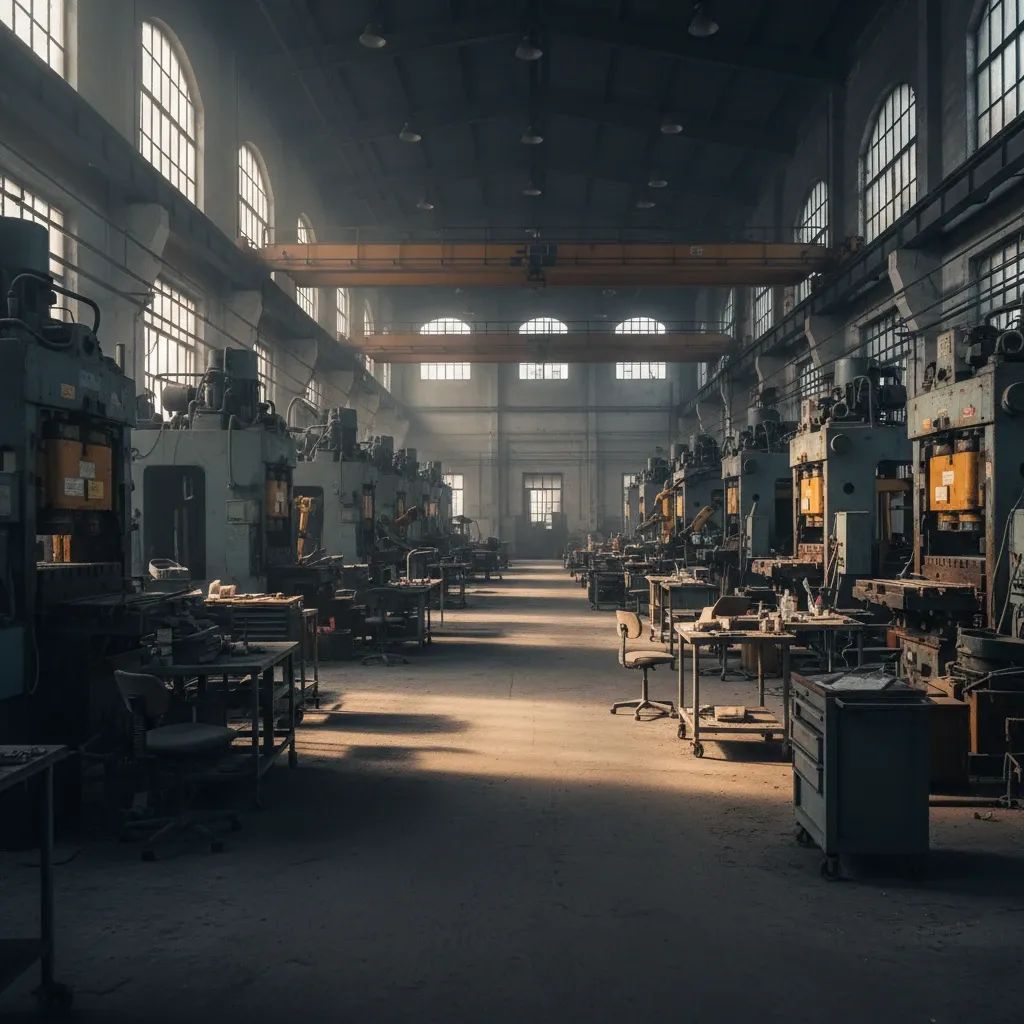
The plant in question specialises in dishwasher manufacturing for the European Union market and has operated in Solaro for decades. Under the restructuring blueprint unveiled on 11 May, Electrolux intends to dismantle two production units—doors and tubs—strip away shift patterns in favour of day‑only schedules, and sever all ties with the North American supply chain. Management maintains that focusing on fewer models at higher price points will restore profitability, yet union representatives contend the plan raises output targets while slashing headcount—a formula they brand "mathematically absurd."
What This Means for Workers and Residents
Should the cuts proceed, Solaro will lose not only direct wages but also the multiplier effect of factory payroll circulating through shops, schools, and service businesses. Many of the affected employees live in the Saronno area and surrounding municipalities, meaning the ripple will spread well beyond Solaro's administrative borders. The CGIL Milan chapter has called on the Metropolitan City to establish a Territorial Crisis and Active Labour Unit—a mechanism already operational in other Lombard provinces—to coordinate retraining and placement support.
For the 106 permanent staff facing termination, prospects hinge on negotiations between now and mid‑June. Temporary workers whose contracts expire will find themselves outside the formal bargaining process, left to navigate the regional labour market without a legal seat at the table.
National Picture: Five Sites, One Ultimatum
Solaro is one piece of a larger puzzle. Electrolux announced the closure of the Cerreto d'Esi plant in Ancona province, which employs 170 people building kitchen hoods. Meanwhile, the Porcia site in Pordenone will stop making washer‑dryer combos and shed 262 positions; Susegana in Treviso sees 310 cuts; and Forlì will discontinue gas hob production, costing 338 jobs. All told, the company's Italian workforce of roughly 4,500 shrinks by nearly 40%.
Unions—FIM, FIOM, and UILM—walked out of direct talks with management and declared permanent strike action after labelling the scheme a "dismantling blueprint" rather than an industrial renewal. On 25 May, workers across all five sites downed tools for an eight‑hour national stoppage timed to coincide with a ministerial meeting at the Ministry of Enterprise and Made in Italy. That session ended without agreement when Minister Adolfo Urso rejected the company's proposal as "unacceptable" and demanded a fresh industrial plan that safeguards both employment and output capacity.
Electrolux has committed to refrain from unilateral moves until the next round, scheduled for 15 June. Union leaders and regional officials view that date as a hard deadline: either the Swedish parent company tables a credible alternative, or the dispute escalates into legal and political terrain.
Financial Backdrop: Global Pressures, Local Fallout
Electrolux closed 2025 with net sales of 131.3 billion Swedish kronor—down from 136.2 billion SEK the year before—but lifted operating profit to 3.66 billion SEK by trimming 4 billion SEK in costs. Fourth‑quarter cash flow after capital expenditure reached 5.2 billion SEK, and the debt‑to‑EBITDA ratio improved from 3.4× to 3.0×. Investors rewarded the quarterly report with a 20.5% share‑price jump, though the stock remains roughly 75% below its 2021 peak owing to weak consumer demand and fierce competition.
For 2026, management forecasts flat or slightly negative market conditions in Europe and warns that manufacturing appliances on the continent has become "economically unsustainable." The company cites higher steel, labour, and energy costs relative to Asian competitors—notably Midea, Haier, and Hisense—which undercut European factories on price. A strategic tie‑up with China's Midea to serve the North American market has heightened union concerns that Solaro and its Italian peers are being relegated to a shrinking slice of the premium European segment.
Critics point out that Electrolux received nearly €3 million in research grants from the Italian government and a €200 million loan from the European Investment Bank in recent years. Both trade unions and politicians argue the firm is taking public money with one hand while axing jobs with the other.
Government and Regional Response
Minister Urso has signalled he will ask the European Commission to designate home appliances a strategic sector and develop a pan‑European action plan against what he terms "unfair competition." At the regional level, Simona Tironi, Lombardy's assessor for education, training, and labour, has attended ministerial tables and criticised the shift from continuous shifts to single‑shift operation as a productivity retreat. The regional council's Industry, Education, Training, and Employment Committee faces calls from Movimento 5 Stelle, Partito Democratico, Alleanza Verdi e Sinistra, and Patto Civico for an urgent hearing that would bring Electrolux executives, union officials, and Mayor Moretti into the same room.
A protest rally outside Regione Lombardia headquarters is slated for 11 June, four days before the ministerial ultimatum expires. Organisers hope the timing will amplify pressure on both the company and Brussels ahead of any final decision.
What Happens Next
Between now and mid‑month, the Swedish board must decide whether to revise its Italian footprint or dig in. Should Electrolux present a substantively different proposal—one that preserves more jobs and invests in automation or higher‑margin product lines—talks may resume. If the company holds firm, unions have promised to escalate strikes and explore legal avenues under Italy's anti‑dismissal statutes, which require collective redundancies to pass ministerial scrutiny.
For Solaro's residents, the stakes are personal. A third of the plant's workers are women aged 50 and above, a demographic that struggles to re‑enter the labour market even in buoyant times. Younger employees face geographic mobility pressures, potentially forcing families to leave a town where roots run deep. Local businesses—from the bar that opens at dawn to serve the early shift to the after‑school care that aligns with factory schedules—calibrated their models around a stable industrial anchor. Remove that anchor, and the entire social fabric frays.
The assembly that followed the march ended without concrete promises but with a shared resolve. Neighbouring mayors pledged to lobby regional and national representatives; workers vowed to sustain mobilisation through June; and union delegates promised to carry Solaro's case into every ministerial corridor. Whether that collective energy can move a multinational balance sheet remains the open question as the calendar ticks toward 15 June.


