
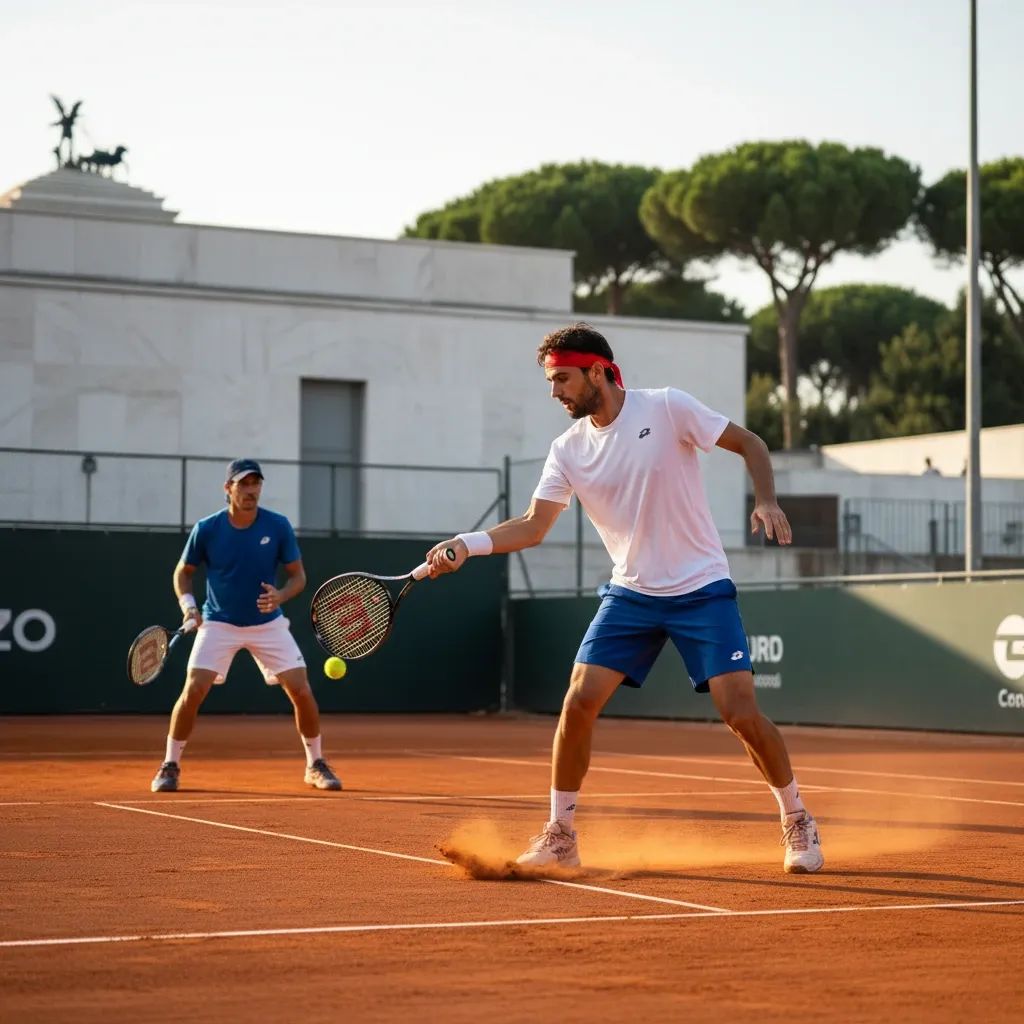
The Italian Tennis Federation (FITP) has declared its 2026 Internazionali BNL d'Italia a resounding success, shattering attendance records with over 400,000 paying spectators and generating more than €1B in economic impact for Rome. Jannik Sinner's victory—the first Italian men's singles title in 50 years—and Simone Bolelli and Andrea Vavassori's doubles triumph highlighted a historic fortnight for Italian tennis, though weather disruptions during the semifinals and finals reminded organizers of the venue's vulnerability to extreme conditions.
Why This Matters
• Historic Italian wins: Jannik Sinner became the first Italian man in 50 years to win the Rome singles title (the last Italian victor was Adriano Panatta in 1976); Simone Bolelli and Andrea Vavassori claimed the doubles crown, the first Italian pair to do so since 1960.
• Tourism and business boost: The tournament injected more than €1B into the local economy, reinforcing Rome's position as a global sports destination and supporting hospitality workers, taxi drivers, and small business owners during the shoulder season (late April through May).
• Infrastructure upgrade coming: Construction on a €60M retractable roof for the Foro Italico's Centro Centrale begins June 2026, with completion targeted for the 2028 edition, enabling Rome to host year-round indoor events.
• Capacity expansion ahead: The new covered stadium will increase seating from 10,500 to 12,500, with 2,000 square meters of panoramic terraces, improved accessibility, and facilities capable of hosting 18 different sports disciplines.
Four Goals Achieved—Despite Weather
Angelo Binaghi, president of the Italian Tennis Federation, told Rai Radio 1's Radio Anch'io Sport that organizers had set three ambitious targets for the 83rd edition: surpass 400,000 paying spectators, generate an economic impact exceeding €1B, and win the men's singles title for the first time in half a century. They achieved all three—and added an unexpected fourth with the men's doubles victory.
But Binaghi was quick to note the one variable that nearly derailed the spectacle: rain. Thunderstorms and downpours interrupted semifinal and final matches, causing delays and suspensions that frustrated fans and slowed ticket turnover. "The bad weather was the only negative element, but this actually gives us further room for growth," Binaghi said. "Next year, with better weather, we can grow even more in terms of numbers."
Pre-tournament ticket sales had already exceeded 300,000 by the time the first ball was struck on May 5—a 33% increase over the 2025 total. Daily sales peaked at more than 40,000 tickets, driven largely by Italian talent across both singles and doubles draws. The tournament ran for 13 days, hosting over 300 matches across 21 courts at the Foro Italico, including the newly constructed Supertennis Arena with 3,000 seats.
Sinner's Scare and a Manager's Call
Binaghi admitted he was "terrorized" in the days leading up to the tournament when Sinner's manager phoned him—an ominous sign, given the manager typically only calls "once every two years, and only when there are problems and Jannik can't play."
"Right after the Madrid final, he called me," Binaghi recalled. "I was resigned. I thought the call was a joke at first: he was only asking if Jannik could play his first match on Saturday instead of Friday. I told him, 'I'll let you play on the Moon as long as you come to Rome.'"
Sinner not only showed up but won, defeating Casper Ruud in the final. The victory ended a 50-year drought for Italian men at their home tournament, a feat last achieved when Adriano Panatta won in 1976.
In the doubles, Simone Bolelli and Andrea Vavassori delivered a parallel triumph, becoming the first Italian duo to win in Rome since 1960. The women's singles title went to Ukraine's Elina Svitolina, who defeated Coco Gauff in the final, while Mirra Andreeva and Diana Shnaider took the women's doubles.
What This Means for Residents
The economic windfall from the Internazionali ripples far beyond the gates of the Foro Italico. The €1B+ impact includes hotel bookings, restaurant receipts, transport services, and retail spending concentrated in Rome's historic center and peripheral districts. For hospitality workers, taxi drivers, and small business owners, the two-week event in late April through May—the shoulder season between Easter crowds and peak summer tourism—represents a vital revenue spike.
The tournament also brought tennis directly into Rome's neighborhoods. A temporary court installed in Piazza del Popolo hosted free pre-qualifying matches and practice sessions, bringing thousands of residents and tourists a taste of world-class tennis without a ticket. Traffic congestion and street closures in central Rome required advance planning by residents and commuters, though public transport was supplemented with additional shuttles to the Foro Italico. Some residents reported elevated prices at nearby restaurants and hotels during the tournament period, a common dynamic during major sporting events.
But the longer-term benefit may be infrastructure. The €60M modernization project launching in June will transform the Centro Centrale into a year-round, multi-sport venue with a retractable roof, enabling Rome to host indoor events even during winter months. Construction is scheduled to pause during the 2027 Internazionali and resume immediately afterward, with the goal of unveiling the completed facility by May 2028.
Diego Nepi Molineris, CEO of Sport e Salute, the state-owned company managing the project, told attendees at the "Sport e Innovazione Made in Italy" event at the Farnesina that the new stadium will be capable of hosting 18 different sports disciplines, along with concerts and international conferences. "The Foro Italico must represent the future of excellence, also at a technological level," he said. "If we can talk about this project today, we have to thank the 2009 World Aquatics Championships and president Barelli—otherwise this central court couldn't even be imagined."
Capacity will jump from 10,500 to 12,500 seats, and new panoramic terraces, elevators, and accessible pathways will improve the experience for visitors with reduced mobility. Sport e Salute projects the upgraded facility will host events for 150 days per year, significantly increasing revenue and positioning Rome alongside Paris, London, and Madrid as a European sports capital.
A Venue in Flux, a City on Display
The Internazionali has evolved rapidly since 2023, when organizers reconfigured the event into a "mini Slam" format with extended playing hours and more courts. The 2025 edition set a record with 393,051 paying spectators, but 2026's pre-sales momentum suggested an even larger crowd—until the weather intervened.
Rain delays are not new to the Foro Italico. In 2024, evening session cancellations forced organizers to issue refunds and reschedule matches. But the frequency of downpours in 2026—particularly during the semifinals and finals—highlighted the vulnerability of an open-air venue in a climate increasingly prone to extreme weather events. The retractable roof project is a direct response to this challenge, designed to guarantee play regardless of conditions.
Milan-Cortina, America's Cup, and the Sports Economy
Nepi also used the Farnesina event to emphasize Italy's broader sports strategy. He cited the upcoming Milan-Cortina 2026 Winter Olympics, the 2027 America's Cup in the Bagnoli district of Naples—a long-neglected industrial area now slated for redevelopment—and the 2028 Foro Italico unveiling as pillars of a national push to leverage sports for economic growth and international visibility.
"A major event is promotion of Made in Italy but also a showcase for many Italian companies that can grow and develop globally," Nepi said. The Internazionali, in his vision, should serve as a template: world-class athletes, cutting-edge infrastructure, and Italian brands working in concert to project excellence abroad.
For Angelo Binaghi and the FITP, the message is clear: the ceiling is higher than anyone thought. If rain couldn't stop the 2026 edition from breaking records, imagine what a sunny forecast—and a covered stadium—could accomplish in 2028.


