
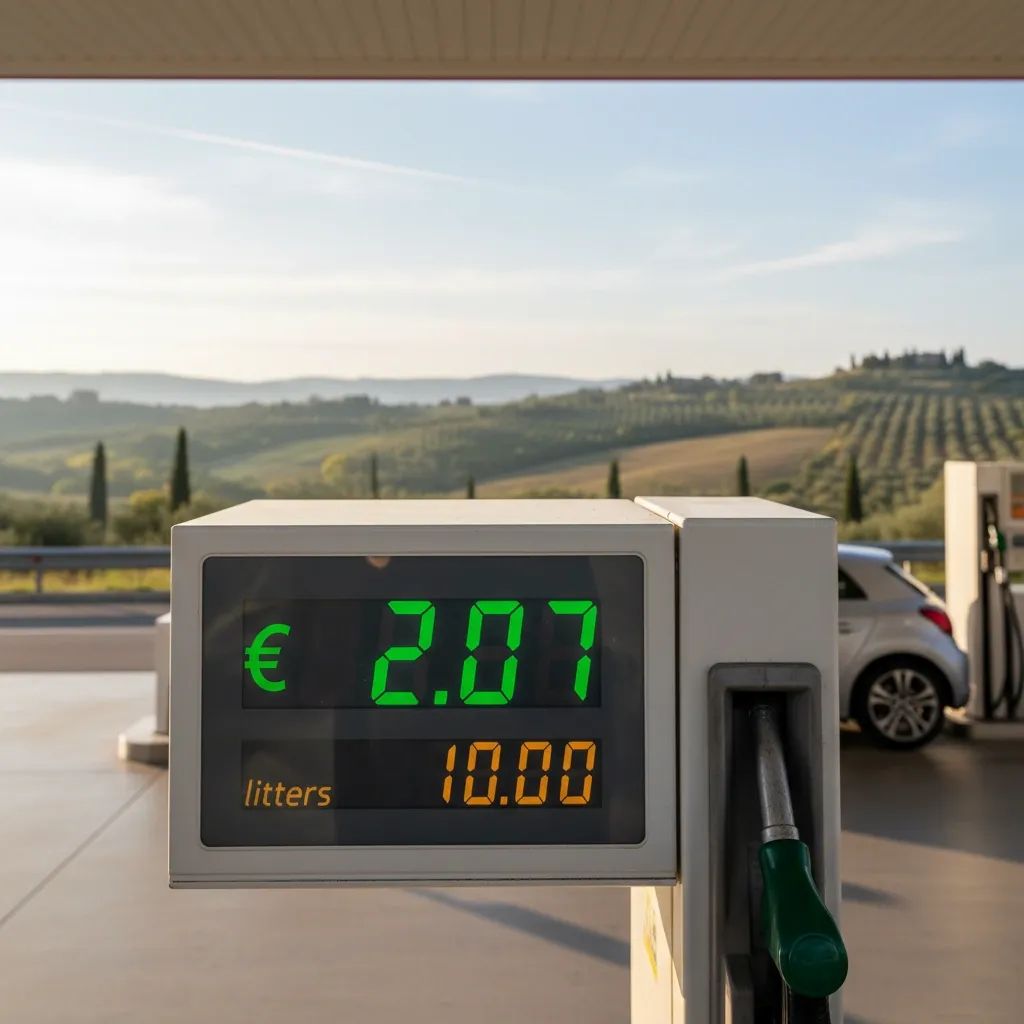
Fuel Relief's Unequal Impact: Diesel Holds Ground as Petrol Drivers Absorb the Squeeze
The Italy Cabinet has extended fuel tax relief through May 22, 2026, but the real story lies in how the burden falls differently across fuel types. Diesel holders keep their full 20-cent-per-liter discount. Petrol drivers face a significant reduction—from 24.4 cents to just 5 cents per liter. For most Italians, this disparity reveals how government policy prioritizes certain economic sectors over others.
Key Takeaways
• Diesel protected, petrol slashed: The differential cut shows government priority: supply chain stability takes precedence over relief for everyday commuter fuel costs.
• Three-week runway: Excise relief expires May 22, 2026; the haulage sector has threatened a five-day strike starting May 25 without expanded support.
• Funding sources: Antitrust penalties and VAT surplus finance this round; available resources are finite with each extension.
The Economics of Selective Relief
Recent weeks have seen significant price movements. According to government data, diesel prices have risen substantially compared to February baselines, while petrol has experienced more moderate increases. The Italy government has concentrated relief where it believes pressure is greatest: commercial transport networks that move everything from groceries to medicines depend on diesel. When a trucking company's fuel bill rises sharply, that cost ripples into delivery fees, which consumers encounter in supermarket aisles and restaurant menus within days.
By contrast, petrol users—primarily private motorists—receive a smaller subsidy. An average 50-liter fill-up nets them approximately 2.50 euros under the current relief scheme. It represents genuine savings but falls short of being economically transformative for most household budgets. The government's approach is clear: protect the supply chain, manage higher consumer pump prices in less price-sensitive segments, and preserve fiscal capacity for negotiation with the transport sector.
This 21-day extension represents the latest in a series of interventions, each typically following as its predecessor expired. Previous rounds of relief have required substantial government expenditure. This current extension, while concentrated and shorter in duration, will still demand significant resources, straining the Italy Treasury's ability to fund parallel programs.
How the Subsidy Gets Paid
The Italy Ministry of Economy and Finance is avoiding another direct assault on departmental budgets. Instead, funding sources include: antitrust fines (penalties imposed on companies violating EU competition law) and surplus VAT receipts (revenue gains from increased consumption). The method is creative but finite. Antitrust penalties are unpredictable in timing and amount; VAT surpluses depend on sustained economic activity.
Energy analysts tracking Italy's fiscal position note a genuine constraint: if this pattern of repeated extensions continues through summer, the government faces difficult choices between fuel relief and other spending priorities. Infrastructure investment, education, and healthcare budgets already stretched after earlier emergency interventions may require further reductions. The subsidy model essentially depends on reallocating available revenues.
The European Commission has permitted member states to offer temporary relief under its Temporary Aid Framework, allowing coverage of extraordinary fuel cost overruns through end-2026. Italy remains within those parameters, but the financial runway for additional extensions is becoming tighter.
What Drivers Pay at the Pump
Despite relief measures, Italy remains a relatively expensive fuel market within Europe. According to available retail data, current prices vary by region and retailer. Without the current relief, analysts project Italy fuel prices would rise significantly by late May 2026. For small businesses—corner shops, delivery services, taxi operators—such price levels would create operational stress that forces cost increases to maintain viability. Geographic disparities also remain significant; fuel costs represent different percentages of total operating costs depending on business type and location.
The Transport Sector's May 25 Deadline
The road haulage industry remains skeptical despite the relief extension. Unatras, the federation representing national trucking associations, confirmed a five-day strike from May 25–29, citing insufficient government support for fuel surcharge costs. Transport Minister Matteo Salvini stated on April 29 that "everything will be done to prevent the blockade," describing strike prevention as a government priority.
The government has offered: a tax credit covering fuel cost overruns calculated against February baselines. Unatras argues this covers only a fraction of actual sector losses. Salvini indicated the government is negotiating expanded relief targeting larger portions of excess fuel costs, though Thursday's cabinet session produced no formal announcement. The follow-up decree addressing trucking will involve negotiations with industry bodies—a process typically extending into early June. The calendar pressure is significant: a nationwide transport halt would disrupt supermarket deliveries, hospital supplies, and construction operations within hours.
The government has also flagged parallel measures: the Nuova Sabatini program offering favorable financing for truck purchases, ZES (Special Economic Zones) tax incentives in southern Italy, and accelerated depreciation for low-emission vehicles. These structural tools address long-term fleet modernization but do not address immediate fuel cost pressures.
Europe's Fragmented Response
Italy's situation mirrors broader European policy challenges. Several European nations have implemented temporary excise reductions or price mechanisms. Others, navigating tighter fiscal positions, have favored targeted support for specific sectors over universal fuel subsidies. The G7 has signaled readiness to coordinate strategic petroleum reserve releases if supply tightens further, but no unified European strategy has emerged. Each nation calibrates subsidy capacity against its own political timeline and budgetary constraints.
Geopolitical tensions and regional conflicts remain underlying volatility drivers. Most European governments view the crisis as temporary rather than structural, influencing their deployment of finite resources.
The Long-Term Critique
Policy experts and economists have raised concerns about temporary excise cuts as a policy approach. Such interventions may fail to address underlying causes and can create counterproductive economic incentives. Meanwhile, renewable energy and infrastructure investment compete with crisis spending for limited budgets. The fundamental vulnerability—dependence on volatile global oil markets and exposure to geopolitical shocks—remains unaddressed by price relief measures alone.
Enforcement also remains a concern. Consumer protection authorities have periodically documented instances where retailers captured tax benefits rather than passing them fully to consumers. Enforcement remains inconsistent, and consumers have limited recourse when prices fail to decline proportionally to tax cuts.
The Housing Initiative Running Parallel
The same Thursday cabinet meeting advanced a substantial housing regeneration program designed to deliver 60,000 refurbished social housing units plus more than 100,000 total affordable dwellings within 10 years. Initial allocation: 970M euros, supplemented by funds from EU cohesion programs through 2030. A dedicated tranche will unlock housing support for separated or divorced parents.
Premier Meloni framed the dual agenda—immediate fuel relief plus long-term housing access—as evidence the government is "working on Italians' most pressing problems." The initiatives represent the government's approach to both immediate energy cost relief and longer-term housing affordability.
The Countdown to May 22, 2026
As this relief window closes, the government faces real constraints. Summer travel season overlaps with the threatened haulage strike. Political pressure for a fourth extension will likely emerge. But the funding formula has visible limits.
Expect the next policy phase to narrow focus: fewer broad excise cuts, more targeted support for transport operators and strategically important sectors. Discussions around expanding vehicle renewal initiatives are gaining traction, though budget constraints impose realistic ceilings.
For diesel drivers accustomed to relief, a transition to lower or eliminated support will create operational friction. For petrol-dependent commuters, the 5-cent cut provides limited household budget relief. For trucking operators watching May 25 approach, this extension represents a holding pattern rather than a comprehensive solution.
The immediate relief is tangible. A broader, longer-term resolution remains to be developed.


