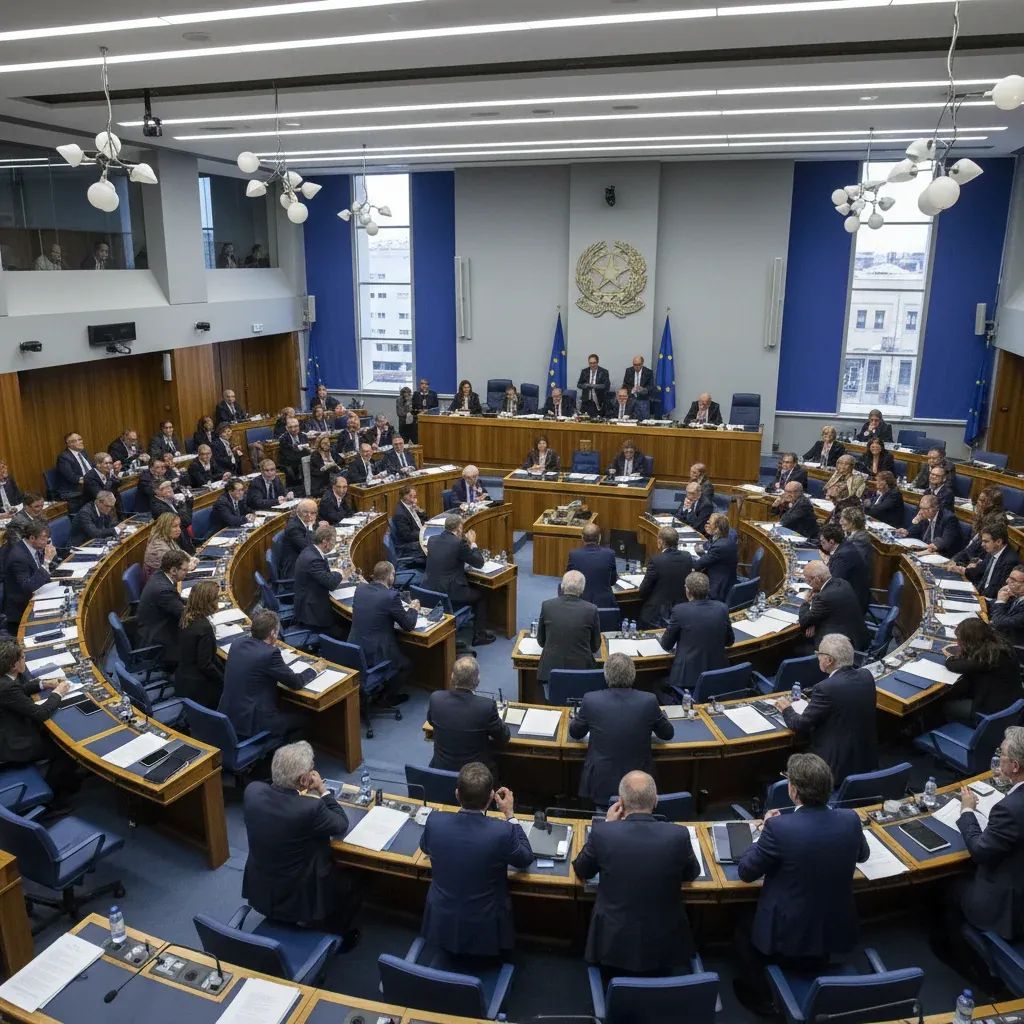
Italy's Chamber of Deputies has blocked prosecutors from accessing private messages between a Fratelli d'Italia deputy and a convicted restaurateur tied to an organized crime investigation. The decision, finalized today by the lower house's immunities committee, triggered protests in the Senate and sets up a final showdown in the full assembly that could determine whether parliamentary privilege shields political figures from judicial scrutiny in mafia-linked probes.
Why This Matters
• Prosecutors investigating the Senese crime clan wanted chat records between deputy Andrea Delmastro and restaurateur Mauro Caroccia to verify money laundering allegations.
• Delmastro is not formally under investigation, but prosecutors believe the communications are relevant to understanding a restaurant's ownership structure and connection to alleged organized crime proceeds.
• The case tests Article 68 of Italy's Constitution, which grants lawmakers special protections over their correspondence and communications.
• The Senate was suspended today after Five Star Movement senators occupied government benches waving "Release the Chats" placards.
The Parliamentary Shield Goes Up
The Giunta per le autorizzazioni a procedere — the Chamber's committee tasked with evaluating judicial requests involving deputies — voted against allowing the Rome Prosecutor's Office to acquire WhatsApp and text message exchanges between Delmastro and Caroccia. Committee rapporteur Pietro Pittalis of Forza Italia argued the request was too broad, lacked specificity, and amounted to what he called a "trawling documentary search" that violated standards of necessity and proportionality.
According to parliamentary sources, the decision rests heavily on a 2023 Constitutional Court ruling that classified messages already received and stored on a device as correspondence under Article 68, thereby requiring parliamentary authorization before law enforcement can access them. Since Delmastro holds a seat in the Chamber, prosecutors needed explicit permission — and the committee just said no.
The matter now advances to the full Montecitorio assembly, where deputies will cast the binding vote. Under Chamber regulations, if no counter-proposal is signed by at least 20 deputies, the committee's recommendation will be tacitly approved. If opposition lawmakers rally enough support for a competing motion, a floor debate and roll-call vote will follow.
The Investigation Behind the Request
The Rome Prosecutor's Office is pursuing a money laundering probe linked to the Senese clan, a camorra network with deep roots in the capital. Mauro Caroccia, the restaurateur at the center of the chat request, was definitively convicted in prior proceedings for fictitious asset ownership and mafia-aggravated money laundering. Investigators view him as a front man for the Senese organization.
Prosecutors suspect communications between Delmastro and Caroccia contain information relevant to the money laundering investigation. Delmastro himself is not named as a suspect in the case, a point emphasized by Pittalis in his committee report. Yet the overlap between his business dealings and a convicted mafia associate has placed him within the investigation's scope.
What This Means for Residents
For ordinary Italians, the case underscores the tension between judicial independence and parliamentary immunity. Article 68 was designed to protect lawmakers from politically motivated prosecutions, but critics argue it has morphed into a shield that delays or obstructs legitimate criminal inquiries.
Andrea Delmastro, a criminal defense attorney and Fratelli d'Italia deputy first elected to the Chamber in 2018, has held a prominent role in his party's parliamentary faction. He previously served as Undersecretary of Justice in Prime Minister Giorgia Meloni's government.
For investors and expats monitoring Italy's rule-of-law climate, the affair raises questions about the enforceability of anti-mafia statutes when they intersect with political elites. The European Union and rating agencies frequently cite organized crime and corruption as systemic risks to Italy's economic stability; high-profile cases that stall in parliamentary procedure can reinforce perceptions of impunity.
Opposition Erupts in the Senate
Minutes after the committee decision leaked, Five Star Movement senators staged a dramatic protest in the Palazzo Madama, occupying the government benches and brandishing signs reading "Fuori le chat" ("Release the chats"). Senate President Mariolina Castellone, herself a Five Star member, suspended the session to restore order.
The Democratic Party and smaller left-wing factions have echoed the protest, accusing the governing majority of using procedural privilege as a political weapon. Opposition lawmakers argue that if Delmastro has nothing to hide, he should waive immunity and allow prosecutors unrestricted access to the messages.
Supporters of the committee's decision counter that prosecutors have not demonstrated a compelling evidentiary need specific to Delmastro. They note that the chat request spans a broad time frame and that acquiring group chats involving other political figures could expose legitimate communications to judicial scrutiny. Committee members raised concerns about the scope and specificity of the prosecutors' request.
What Happens Next
Under Chamber rules, the Giunta's recommendation must be scheduled for a plenary vote. No fixed timeline governs how quickly the assembly acts, but if the request involved arrest or house arrest, the law would mandate a vote within 60 days. Because this concerns only document seizure, leadership has discretion over scheduling.
If the assembly ratifies the committee's denial, prosecutors will have exhausted their avenue for obtaining the chats through legal channels. They could still proceed with the money laundering case against Caroccia and other suspects using alternative evidence, but the messages — which investigators argue are relevant to the investigation — would remain off-limits.
Should the assembly reverse the committee and grant authorization, the Rome Prosecutor's Office would gain access to Delmastro's correspondence with Caroccia, potentially opening new lines of inquiry. Even if Delmastro is never charged, the contents could be cited in proceedings against co-defendants.