
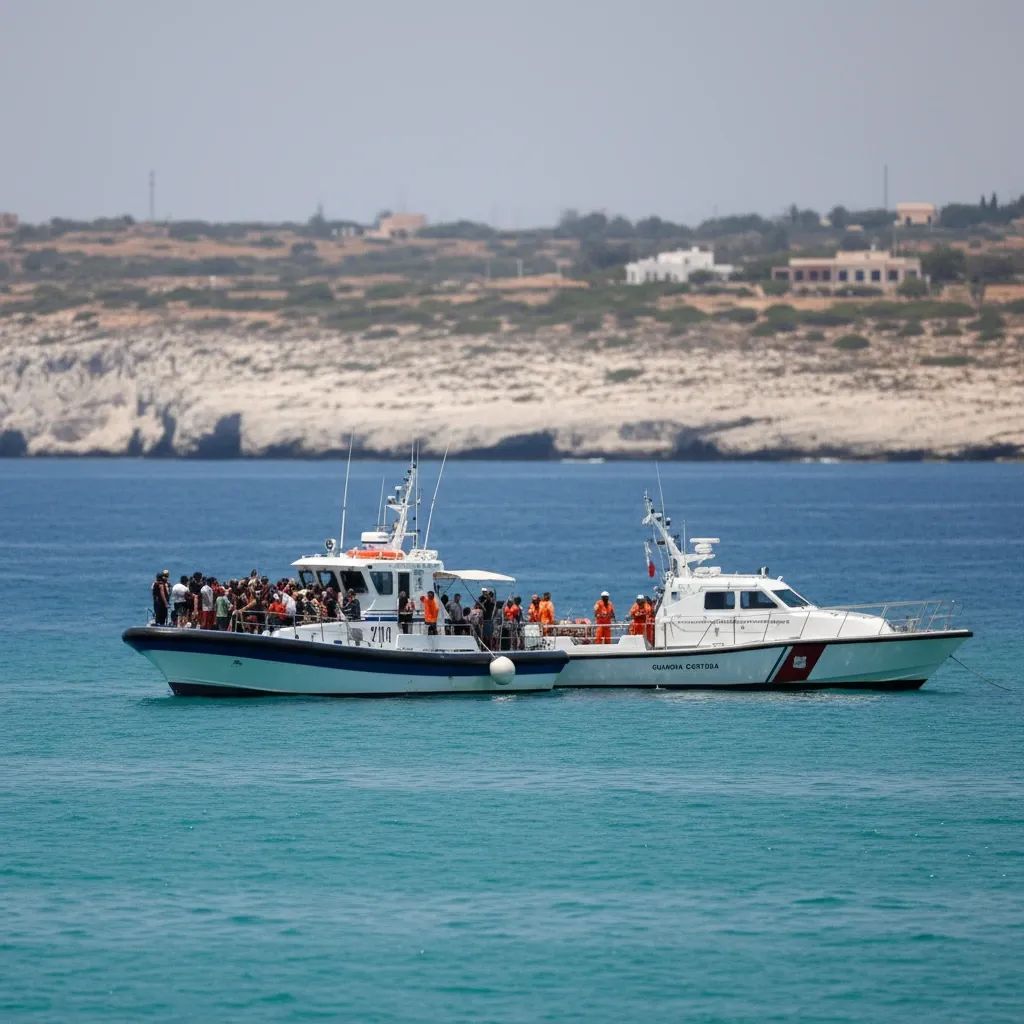
The Italian Coast Guard has recovered 18 bodies and brought five critically injured migrants—including a child—to shore at Lampedusa following a catastrophic shipwreck off the island's coast. The patrol vessels encountered what survivors and officials described as "hellish" conditions when they reached the vessel drifting in international waters south of the Pelagie Islands. The five survivors in critical condition were rushed to the island's Poliambulatorio medical facility, while the grim task of disembarking the deceased continues at Molo Favarolo.
Why This Matters
• Death toll climbing rapidly: This incident adds to at least 831 deaths or disappearances in the Mediterranean since January, making early 2026 the deadliest start to a migration year in a decade.
• Children among the victims: Two minors were confirmed dead in earlier April shipwrecks, with a child now fighting for life after this latest tragedy.
• Central Mediterranean route remains the most lethal: Despite declining overall crossings, fatalities have more than doubled compared to the same period in 2025.
• New EU migration pact launches June 2026: Italy is implementing accelerated asylum procedures and stricter border controls as part of continent-wide reforms.
The Broader Crisis Unfolding at Italy's Southern Gateway
Lampedusa, the Italian island closer to Tunisia than Sicily, has become the epicenter of Europe's most harrowing migration crisis in recent memory. The International Organization for Migration (IOM) confirmed that through April 4, roughly 900 people have died or vanished attempting Mediterranean crossings this year alone. The first two months saw 655 fatalities—a figure that eclipses the 287 recorded during the same window in 2025.
This week has been particularly brutal. Between April 1 and 3, another shipwreck caused 19 deaths from hypothermia after a vessel departed Libyan shores in deteriorating weather. Rescue teams pulled 58 survivors from frigid waters, many suffering fuel poisoning and severe cold exposure. The bodies were transferred to the Cala Pisana cemetery morgue, while survivors were processed at the Imbriacola hotspot on Lampedusa.
Today's tragedy compounds that toll. Then, just hours after the 18 bodies arrived at Favarolo pier, news broke of yet another catastrophe: the Italian Coast Guard rescued 32 migrants from a capsized boat in the Libyan Search and Rescue (SAR) zone and recovered two additional corpses. Survivors reported the vessel originally carried 110 people—primarily from Pakistan, Bangladesh, and Egypt—leaving approximately 80 still missing and presumed dead. The boat had set sail from Tripoli.
Impact on Italian Communities and Infrastructure
For Italians living in Sicily and on Lampedusa itself, the relentless wave of arrivals and deaths has strained local infrastructure and emergency services. The island's Poliambulatorio clinic, designed for a population of roughly 6,000, now handles critical trauma cases nearly daily. The Imbriacola reception center, meant as a temporary transit facility, operates perpetually above capacity.
The tragedies also deepen political friction within Italy. Rome is under EU pressure to implement the New Migration and Asylum Pact by June, a framework that includes accelerated screening procedures, designation of "safe third countries" for deportation, and tighter criteria for family reunification under the revised Consolidated Immigration Act. Advocates warn these measures prioritize deterrence over humanitarian obligation, while government officials argue they are necessary to manage irregular flows and dismantle smuggling networks.
Economically, the crisis affects tourism perceptions and public spending. Lampedusa's economy relies heavily on visitors, yet recurring headlines about mass drownings complicate the island's image. Meanwhile, national budgets allocated for Frontex cooperation, SAR operations, and hotspot management continue to grow, diverting funds from other social services. For Italian taxpayers, these expenditures represent significant public investment in border management and humanitarian response—costs that intersect with broader debates over regional governance and how the EU's burden-sharing mechanisms actually function in practice.
The Lethal Geography of the Central Mediterranean
The Central Mediterranean route—stretching from Libya and Tunisia to Italian shores—has earned the grim distinction of being the world's deadliest migration corridor. Despite an overall decline in irregular crossings to the EU in early 2026, this passage accounts for a disproportionate share of deaths.
Several factors converge to make these waters so treacherous:
Extreme weather patterns have intensified. Cyclone Harry, which battered the region in mid-February, generated towering swells and icy temperatures that turned flimsy boats into death traps. Hypothermia has become the leading cause of migrant fatalities this year, overtaking drowning.
Unseaworthy vessels and overcrowding remain endemic. Smuggling networks in Libya and Tunisia pack passengers—sometimes exceeding 100 per boat—onto rubber dinghies and aging fishing craft never designed for open-sea voyages. Passengers pay upwards of €2,000 to €5,000 per person for these journeys, depleting life savings for a gamble on survival.
Rescue coordination gaps persist. Humanitarian groups and researchers cite delays in SAR response and jurisdictional confusion between Libyan, Maltese, and Italian authorities as contributing factors. The Libyan Coast Guard, supported by EU funds, has faced accusations of violent interceptions and forced returns to detention centers where abuse is documented.
Border hardening policies inadvertently push migrants onto longer, more clandestine routes. Italy's agreements with Libya and Tunisia aim to prevent departures, but evidence suggests they drive smugglers to launch from more remote coastlines, farther from patrol zones. As legal pathways shrink, desperation and dependence on criminal networks grow.
Italy's Policy Response and the EU Pact
The Italian government is drafting legislation to align with the New Migration and Asylum Pact, set to take effect across the EU in June 2026. Key provisions include:
Accelerated asylum processing at border hotspots, with decisions rendered within weeks rather than months. Applicants from designated "safe countries" face expedited rejection and deportation.
Externalization of border control through partnerships like the Italy-Albania Protocol, which establishes repatriation centers outside EU territory. Critics argue this offshores legal responsibility and undermines asylum protections.
Enhanced Frontex deployment with expanded surveillance technology and rapid-reaction teams. The EU agency's budget for 2026 includes provisions to bolster presence in the Central Mediterranean.
A solidarity mechanism within the pact requires member states to share responsibility through migrant relocation or financial contributions. Italy, alongside Greece, Cyprus, and Spain, is eligible for relief funds given its frontline status.
Digitalization of migrant data via the reformed Eurodac database, enabling faster identification and tracking of asylum seekers and irregular arrivals.
Human rights organizations, including Save the Children and the IOM, have condemned elements of the pact as prioritizing enforcement over protection. They call for expanded legal migration pathways, humanitarian corridors, and robust SAR commitments to prevent further deaths.
The Human Cost Behind the Numbers
Each statistic represents an individual story. Among the 18 bodies brought ashore at Lampedusa were people who fled war zones, persecution, and poverty, often traveling thousands of kilometers across the Sahara before reaching the Libyan coast. The child now hospitalized in critical condition may have embarked on this journey with family members now lost at sea.
The IOM acknowledges its fatality counts are likely underestimates. "Ghost shipwrecks"—vessels that disappear entirely without survivors or witnesses—go unrecorded. Families in origin countries may never receive confirmation of their loved ones' fates.
Lampedusa's residents, accustomed to the ebb and flow of arrivals, express a mix of compassion and exhaustion. Local volunteers provide clothing, food, and comfort to survivors, but the emotional toll of witnessing recurring tragedies weighs heavily on the small community.
Looking Ahead
As Europe prepares to implement its most comprehensive migration overhaul in decades, the waters off Lampedusa remain a barometer of policy effectiveness. Whether the June pact will reduce deaths or simply push them into less visible corners of the Mediterranean remains an open question.
For now, the Italian Coast Guard continues its patrols, the Poliambulatorio treats the injured, and the Cala Pisana morgue makes room for more bodies. The 80 missing from today's capsized boat join hundreds of others whose final resting place is the sea itself—a grim reminder that for many, the dream of safety in Europe ends not at a border checkpoint, but beneath the waves.


