
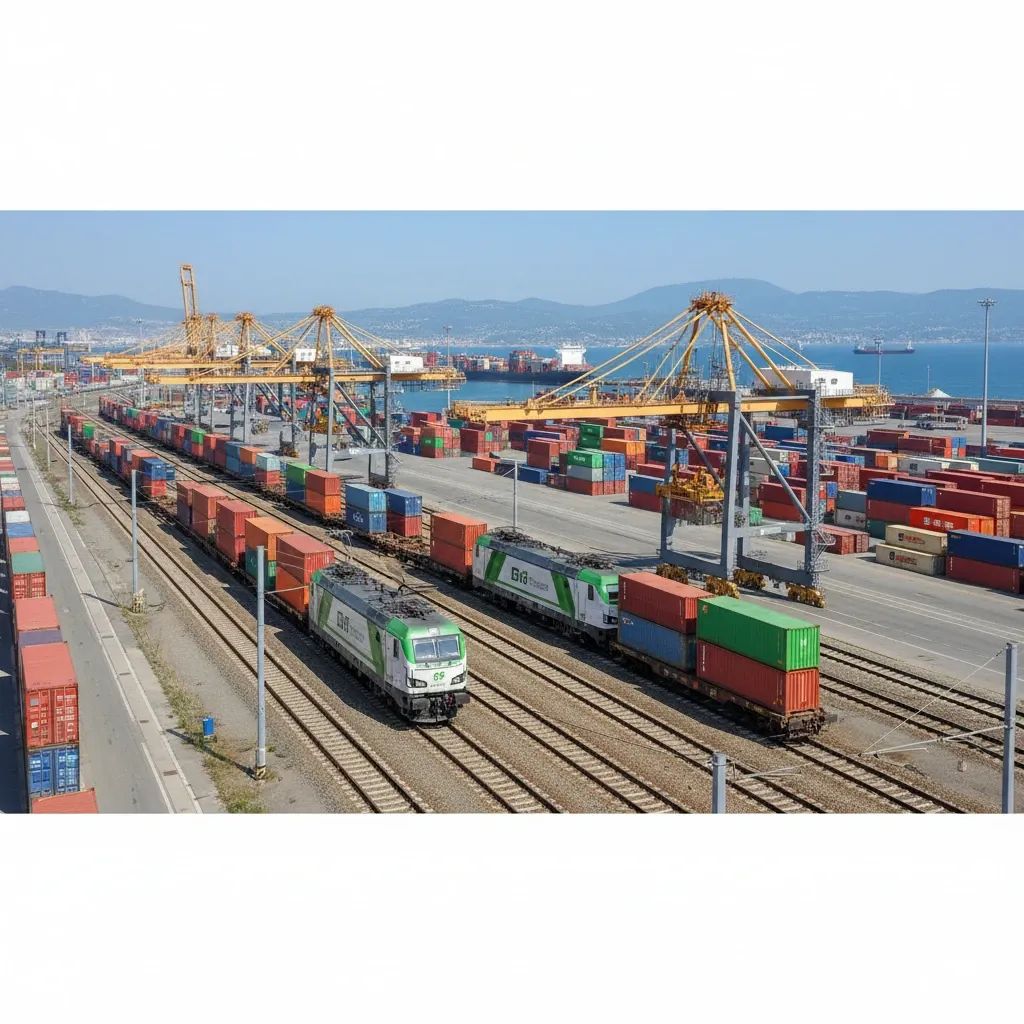
Italy's FS Logistix has acquired a 30% stake in Compagnia Ferroviaria Italiana (CFI), a rail freight operator controlled by FHP Group, in a move that positions the state-owned logistics arm to expand capacity and challenge road transport dominance. The deal, finalized on April 22, 2026, represents a strategic pivot toward intermodal rail freight and marks a concrete step in Italy's effort to meet European modal shift targets and slash carbon emissions across the logistics chain.
Why This Matters:
• Market consolidation: Italy's rail freight sector is seeing its first major equity partnership between the dominant state player and a private infrastructure fund.
• Operational boost: The transaction is expected to enhance fleet capacity and operational efficiency through closer coordination between FS Logistix and CFI.
• Regulatory hurdle: The deal remains subject to approval from Italian competition and transport authorities, expected in the coming months.
• Environmental alignment: The partnership directly supports the EU goal of shifting freight from road to rail, which currently accounts for only 11% of Italian freight movement compared to 62% by truck.
The Deal Architecture
Under the agreement signed this week, FS Logistix—the logistics division of Italy's state railway group Ferrovie dello Stato Italiane—will hold a minority stake in CFI, with F2i SGR and FHP Group retaining majority control. F2i is Italy's largest infrastructure fund, and FHP specializes in port and rail logistics, operating terminals and intermodal hubs across the country.
CFI itself focuses on bulk cargo and has undergone recent consolidation. In 2025, FHP Group integrated CFI with another operator, Lotras, and acquired control of additional port terminals, building out a network designed to compete with road haulage on efficiency and cost.
The partnership allows FS Logistix to leverage CFI's terminal access and operational footprint without the capital expense of building parallel infrastructure. For FHP Group, the deal brings technical expertise, regulatory clout, and access to FS Logistix's broader European network ambitions.
What This Means for Residents and Businesses in Italy
For businesses, logistics operators, and consumers in Italy, this deal has several practical implications:
Cost improvements for shippers: Rail freight has historically struggled with reliability in Italy due to network congestion and infrastructure work disruptions. By combining forces, FS Logistix and CFI aim to improve service consistency and reduce operational costs. Companies shipping goods from northern manufacturing centers to southern ports or across the country may see more reliable delivery schedules and, over time, potentially lower freight costs as the combined operation achieves better efficiency. However, any tangible pricing changes are likely to emerge gradually as the partnership integrates operations—expect to see concrete impacts within 12-18 months as operational improvements take effect.
What to expect in your region: If your business ships goods domestically or to European destinations, this partnership will gradually make rail freight more competitive as an alternative to road transport. The timeline for noticeable service improvements depends on regulatory approval (expected in coming months) and subsequent operational integration. Companies in regions with major intermodal terminals may see benefits sooner than those in peripheral areas.
Environmental and regulatory pressure: The European Union is pushing member states to shift freight from trucks to trains to meet climate targets. Italy significantly lags behind, with rail capturing just 11% of freight traffic versus the EU average of closer to 18%. Expect regulatory incentives to accelerate this shift—higher tolls on heavy goods vehicles or stricter emissions standards—which could gradually increase rail freight use and make it a more attractive option for your shipping needs.
Employment and local impact: The expansion of rail freight services typically generates job opportunities in terminal operations, logistics planning, and related services. Regions hosting major intermodal hubs are likely to see sustained hiring and economic activity in the logistics sector as volumes shift from road to rail.
Industry Context and Competitive Landscape
Italy's rail freight market has been liberalized since 2004, but fragmentation remains a defining feature. Several operators compete to serve Italy's freight needs, with FS Logistix's operating arm, Mercitalia Rail, holding a significant market position. CFI ranks among the larger independent operators, alongside international players like DB Cargo Italia and SBB Cargo Italia, as well as regional specialists.
This fragmentation has made it difficult to achieve the scale economies necessary to compete with road transport. The FS Logistix-CFI partnership is an attempt to consolidate operational capacity without a formal merger, sidestepping regulatory scrutiny while gaining immediate access to CFI's terminal network and bulk cargo expertise.
Sabrina De Filippis, CEO of FS Logistix, framed the deal as essential to the company's growth strategy: "This operation opens new prospects for industrial development to respond more effectively to market needs. Entry into CFI's capital and the concrete actions provided by the contract allow us to expand our operational capacity and improve service efficiency—a fundamental piece of our growth strategy in intermodal logistics."
The European Dimension
The agreement aligns with broader European Commission objectives to reduce transport-related CO2 emissions by 55% by 2030 and achieve carbon neutrality by 2050. Rail freight emits roughly one-fifth the CO2 per tonne-kilometer compared to road transport, making modal shift a critical lever in decarbonization plans.
Italy's geography complicates this transition. The country's mountainous spine and congested northern industrial corridor create bottlenecks that favor the flexibility of trucks. But recent investments—including high-capacity freight corridors under the Trans-European Transport Network (TEN-T)—are designed to reduce these disadvantages. The FS Logistix-CFI deal positions both parties to capitalize on these upgrades as they come online.
FHP Group's ambition to become a pan-European logistics operator also fits this picture. By tying FHP's terminal network to FS Logistix's international connections, the partnership could facilitate seamless freight movement from Italian ports to destinations in Germany, Austria, and beyond—critical for manufacturers dependent on just-in-time supply chains.
Regulatory and Financial Hurdles
The transaction is not yet final. Regulatory approval from Italy's competition authority and transport ministry is required, and given the involvement of a state-owned entity, scrutiny will focus on whether the deal distorts market competition or unfairly advantages FS Logistix over smaller private operators.
The deal reflects a broader trend in Italian infrastructure: private capital partnering with state entities to accelerate projects that neither could execute alone. F2i has been a serial investor in Italian logistics and transport assets, and this transaction extends its portfolio into rail operations—a higher-risk, higher-return segment compared to static assets like terminals.
Outlook and Challenges
Success will hinge on execution. Italy's rail freight sector faces ongoing challenges from infrastructure work and network congestion that disrupt operations and test the patience of shippers who can more easily pivot to trucks.
If FS Logistix and CFI can demonstrate reliable, cost-competitive service during this turbulent period, they stand to capture market share as the network stabilizes. But if delays persist and service quality lags, the partnership risks becoming another example of good intentions hampered by operational reality.
For Italy's logistics sector, the deal signals that rail freight consolidation is underway—not through hostile takeovers, but through strategic equity stakes and operational alliances. Whether this model proves scalable will determine if Italy can finally close the gap with its European peers on modal balance and emissions reduction.


