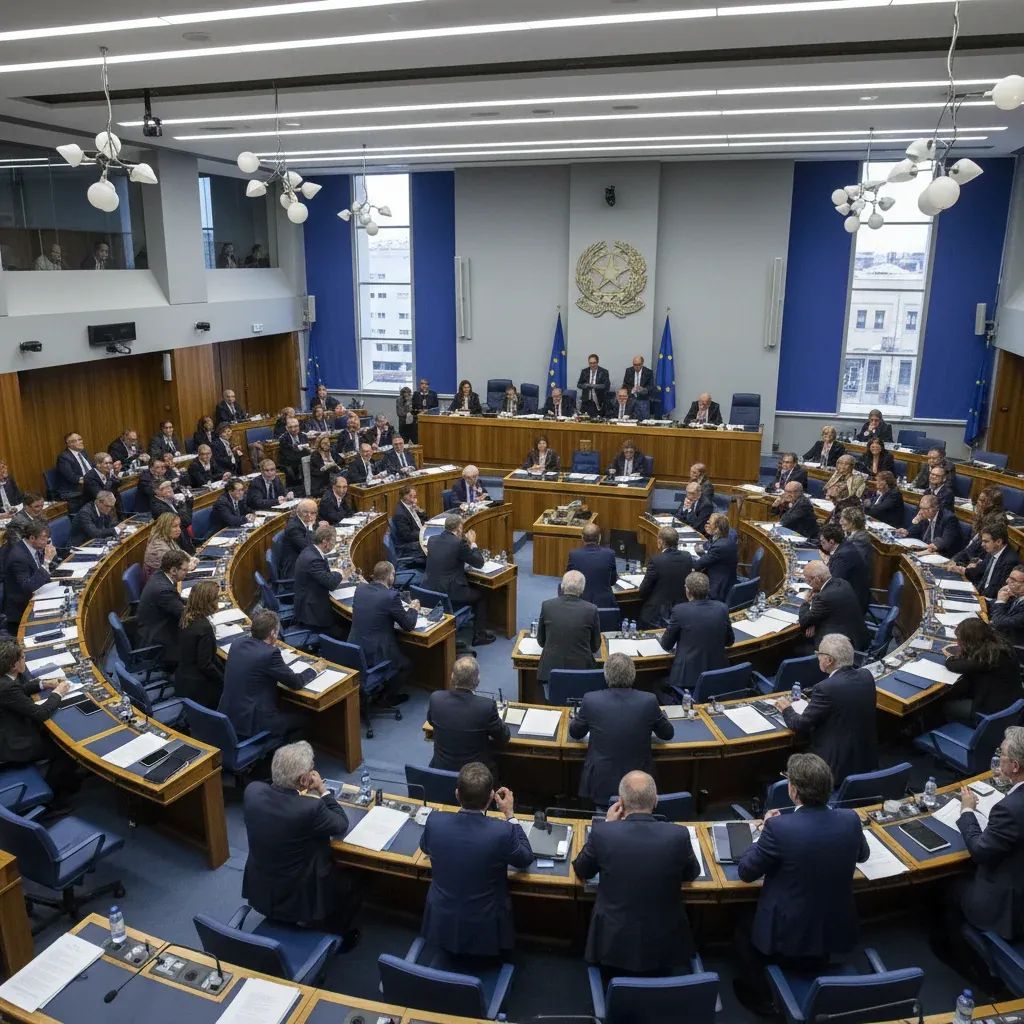
The Italian Cabinet is poised to formally recognize the consumer's right to take home uneaten restaurant food, effectively ending decades of cultural ambiguity and transforming the humble "doggy bag" from a potentially embarrassing request into a legally protected entitlement. The draft Competition Bill, expected to pass through the Council of Ministers shortly, will explicitly state that patrons may retain for takeaway any food and beverages purchased but not consumed, a move that ties anti-waste policy to consumer protection law.
Why This Matters:
• Legal clarity: Restaurants can no longer treat doggy bag requests as discretionary favors; the food you paid for is legally yours to take home.
• Official logo coming: A Ministry-issued symbol will identify participating establishments, making it easier to spot businesses that actively support takeaway packaging.
• 90-day implementation: Detailed service guidelines will be published within three months of enactment, co-signed by the Ministry of Enterprises and Made in Italy and the Ministry of Health.
• Waste reduction linkage: All public campaigns aimed at cutting food waste must reference the new logo, cementing the doggy bag as a cornerstone of Italy's sustainability strategy.
From Cultural Taboo to Consumer Entitlement
For years, Italian diners have hesitated to ask for a container, often perceiving the gesture as gauche or miserly. According to recent surveys, only 15.5% of customers currently request food packaging, and 11.8% ask to take home unfinished wine, despite the fact that roughly 92% of restaurateurs already stock suitable containers. The reluctance stems less from infrastructure than from lingering social norms that equated leftover requests with poor manners or financial desperation.
Yet the legal landscape has been shifting quietly. In 2014, the Court of Cassation ruled that requesting a doggy bag aligns with "commonly accepted rules of civil coexistence," effectively classifying refusal as unreasonable. A more forceful judgment arrived in January 2026, when the same court declared that paid food belongs to the customer, and restaurateurs cannot lawfully deny a takeaway request. The new Competition Bill codifies these precedents, elevating judicial interpretation into statutory right.
How the System Will Work
Under the draft legislation, the Ministry of Enterprises and Made in Italy, in coordination with the Ministry of Health, will issue a decree within 90 days detailing the operational framework. This includes hygiene standards for packaging, acceptable container materials, and the graphic specifications for the official logo. Restaurants and bars authorized to serve food and beverages will be permitted—but not obligated—to display the symbol, signaling their willingness to provide compliant takeaway service.
Public awareness campaigns promoting food waste reduction will be required to feature the logo prominently, creating a visual shorthand that links environmental responsibility with everyday dining choices. The initiative builds on the Law 166/2016, known as the Gadda Law, which encouraged food recovery and charitable donation but stopped short of imposing obligations on individual establishments.
What This Means for Residents
If you live in Italy, the practical upshot is straightforward: you can now request a container for uneaten food without legal or social gray area. Establishments that refuse risk running afoul of the new statute, though enforcement mechanisms remain to be clarified in the forthcoming decree. The official logo will serve as a trust signal, helping diners identify businesses that actively embrace the practice rather than merely tolerate it.
For expats and international residents accustomed to American or Northern European norms, where doggy bags are routine, the change removes a cultural friction point. You no longer need to gauge the mood of the waiter or worry about breaching unwritten etiquette. The right is yours, and the law backs it.
What to Do If a Restaurant Refuses Your Request
As this law takes effect, residents should know their rights. If a restaurant denies your request to take home uneaten food, you can cite the Competition Bill as legal grounds—and report the establishment to local consumer protection authorities if needed. Documentation of refusal, including the date, time, and restaurant name, will support any formal complaint. Until the decree is finalized, enforcement may be inconsistent, but knowing the law is already on your side provides important leverage.
Regarding acceptable containers, current guidelines—soon to be formalized in the decree—specify that establishments may provide their own containers or accept customer-provided packaging, provided containers meet basic food safety standards. Glass, ceramic, and food-grade plastics are standard; avoid anything damaged or previously used for non-food purposes. For temperature-sensitive items like seafood or dairy, use insulated containers with ice packs if available, and consume takeaway food within 2-3 hours.
Regional Attitudes and Cultural Context
While the law applies nationwide, attitudes toward doggy bags vary significantly across Italy. In Rome, Venice, and Florence, where tourism dominates, restaurants are often already accustomed to takeaway requests from international visitors and may embrace the law readily. In contrast, smaller provincial towns and traditional trattorias in rural regions may experience culture shock; diners there should be prepared to explain the legal basis for their request, particularly during the transition period.
Industry surveys indicate that northern Italy shows higher baseline acceptance of doggy bags (around 85% of establishments provide them voluntarily), while southern regions report rates closer to 70-75%. In major urban centers, younger restaurant owners and chains are more enthusiastic; family-owned establishments with multi-generational management may require more patience and education. Understanding these regional dynamics can help residents navigate implementation smoothly.
Economic and Environmental Stakes
According to data from Italy's waste management agencies, the country's food waste problem carries a price tag exceeding €13.5 billion annually, with more than 5 million tonnes of food discarded across the supply chain. Roughly 20% of that waste occurs in the restaurant sector, where inefficiencies can erode 10% to 15% of ingredient costs. At the consumer level, the average Italian now discards about 554 grams of food per week, down slightly from previous years but still above the European Union average.
The environmental toll is equally stark. Food waste accounts for nearly 10% of global greenhouse gas emissions—five times the footprint of the aviation industry—and consumes 250 cubic kilometers of freshwater and 28% of agricultural land to produce meals that never reach a mouth. By 2030, the European Union mandates a 30% reduction in per capita food waste across retail, restaurant, and household sectors, and a 10% cut in processing and production. Italy remains off pace to meet those targets, making legislative interventions like the doggy bag law a necessary accelerant.
European Context: How Italy Compares
France led the charge in 2021, mandating that restaurants offer reusable or recyclable containers for leftover food. Establishments serving more than 180 meals daily were already required to distribute doggy bags under a 2016 law, and large supermarkets must donate unsold inventory. Spain followed with its Law 1/2025, which imposes doggy bag obligations, requires biodegradable packaging, and threatens fines reaching thousands of euros for non-compliance. Both countries treat the takeaway container as a frontline tool in waste prevention, not merely a courtesy.
Germany, by contrast, has a national strategy targeting the entire food chain but no specific mandate for restaurant doggy bags. The country continues to register high waste levels in both household and out-of-home dining segments, relying instead on financial incentives for organic ingredient use and broader sustainability messaging.
Italy's approach splits the difference: the Competition Bill enshrines the consumer's right but leaves participation largely voluntary for businesses, relying on the logo system and public campaigns to drive adoption. Whether this lighter regulatory touch proves sufficient remains to be seen, particularly given the persistent cultural reticence among diners.
Shifting Attitudes and Industry Response
According to 2025-2026 survey data, 80% of Italians now claim they avoid wasting restaurant food, either by finishing their plates or requesting takeaway. In 93% of cases, establishments provide containers when asked, and in 60% of instances, the restaurateur volunteers the option unprompted. Celebrity chefs like Filippo La Mantia have publicly championed the practice for years, offering packaging for both food and wine despite initial customer hesitation.
Industry initiatives such as Rimpiattino, launched by Fipe-Confcommercio and Comieco, have sought to normalize the behavior through stylish, design-forward packaging that reframes leftovers as chic rather than shameful. The Competition Bill's official logo aims to achieve similar cultural rebranding at national scale, transforming the doggy bag from an awkward afterthought into a badge of environmental virtue.
Practical Implementation and Unknowns
The decree's 90-day timeline means the system should be operational by late 2026, though the text leaves several questions unanswered. Will the logo be mandatory for all food service establishments, or only those that opt in? What penalties, if any, apply to businesses that refuse lawful takeaway requests? And how will health authorities balance food safety concerns—particularly around temperature-sensitive items like seafood or dairy—with the imperative to reduce waste?
The legislation also does not specify container materials or cost allocation. In France and Spain, biodegradable or compostable packaging is standard, but Italy's decree may allow broader latitude. Whether restaurants will absorb packaging costs or pass them to consumers remains a point of negotiation, with smaller establishments likely to resist any unfunded mandate.
The Bigger Picture: From Right to Routine
Ultimately, the Competition Bill's doggy bag provision is less about containers than about redefining the transaction between diner and restaurateur. By classifying uneaten food as the customer's property and the takeaway as a protected right, the law rebalances power and normalizes a practice that has been technically legal but socially fraught for years.
For Italy to meet its 2030 waste reduction targets, however, legislation alone will not suffice. The country must shift ingrained habits, streamline donation infrastructure, and persuade diners that requesting a doggy bag is not a confession of over-ordering but a signal of civic responsibility. The official logo and accompanying public campaigns are designed to engineer that cultural shift, but success will depend on consistent enforcement, industry buy-in, and sustained messaging.
In the meantime, residents can expect to see the new symbol appearing in restaurant windows and on menus by year's end. When it does, remember: the food is yours, the law says so, and taking it home is no longer a favor—it's a right.