
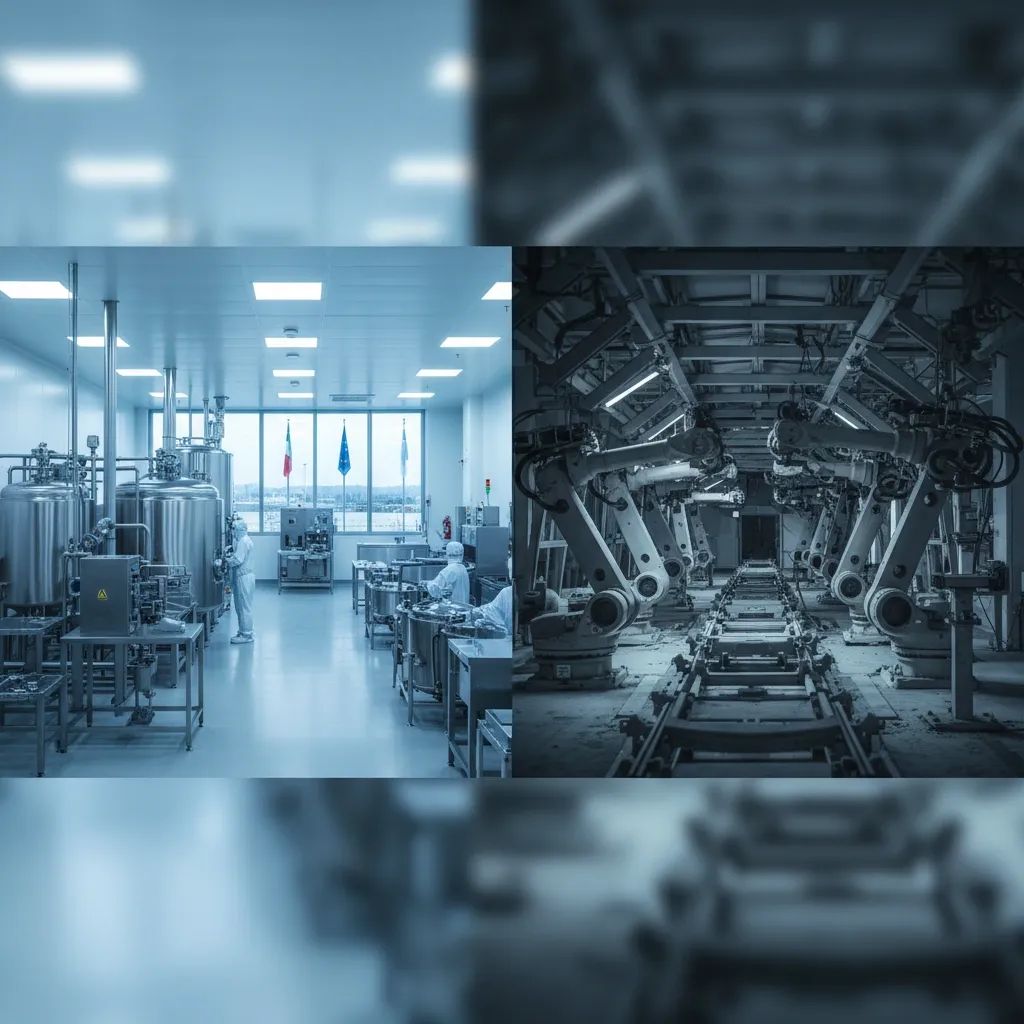
The Italy Confederation of Industry (Confindustria) has issued a cautious assessment of the country's manufacturing sector, signaling that while the worst of the downturn may be behind, a robust recovery remains distant. After three consecutive years of decline, Italy's industrial base is showing early signs of stabilization in early 2026, though the path forward is clouded by fragile consumer demand, a weakened dollar, and persistent energy costs.
Why This Matters
• Sector divergence: Only 9 out of 22 industrial sectors recorded growth in 2025, up from just 4 in 2024—but 12 sectors contracted in both years, signaling structural weakness.
• Export and consumption drag: A stronger euro against the dollar is crimping export competitiveness, while household spending remains too weak to pull manufacturing out of stagnation.
• Energy decree uncertainty: A government measure aimed at cutting electricity and gas bills could deliver "substantial" relief—if Brussels approves it—but faces a European Commission investigation over potential conflict with EU emissions trading rules.
The Uneven Recovery: Who's Winning, Who's Losing
Confindustria's Centro Studi has documented a polarized industrial landscape. In 2025, pharmaceuticals and metallurgy emerged as standout performers, while automotive and fashion continued to hemorrhage production and market share.
Only three manufacturing sectors managed to post gains in both 2024 and 2025—a figure the business lobby deems "too few for a strong aggregate dynamic." Meanwhile, the dozen sectors that declined in both years underscore the depth of the structural challenges facing Italy's industrial core.
The research center describes the trajectory as one of "end of the fall" followed by "partial and weak recovery." Economists at Confindustria's headquarters on Viale dell'Astronomia emphasize that Italy has not yet reached a clear turning point, though prospects for 2026 are gradually improving.
Pharma and Metals: The Outperformers
Italy's pharmaceutical industry posted a 3.8% increase in 2025, driven by surging exports—particularly a 54% jump in shipments to the United States. The sector is now Italy's second-largest manufacturing exporter by value, trailing only machinery, with total export revenues projected to exceed €70B in 2025.
Investment in research and development has climbed steadily, especially in biotechnology, biologics, and advanced therapies. Italy ranks as Europe's leading producer of pharmaceuticals by volume, with over €56B in annual production. The country's manufacturing facilities meet stringent EU quality and environmental standards, and automation has bolstered competitiveness. Key pharma hubs are concentrated in Milan's biotech corridor, Rome's research facilities, and northern regions, where job creation continued through 2025.
Yet challenges persist. The sector faces a higher effective tax rate than other Italian industries and grapples with the "payback" mechanism—a clawback system that discourages investment. Industry leaders are calling for stable fiscal frameworks and a national pharmaceutical strategy to sustain momentum.
In 2025, metallurgy benefited from a moderate 4% rise in exports. Italy is the second-largest steel producer in Europe and ranks 11th globally. A key competitive advantage: over 85% of Italian steel is secondary, produced from scrap metal in electric arc furnaces. This gives Italy a sustainability edge in an era of decarbonization.
The sector is advancing major infrastructure projects tied to renewable energy and decarbonization, with a target of net-zero emissions by 2030. Diversification into high-value niches—precision metallurgy, specialty alloys for aerospace and defense—is opening new revenue streams. Demand for metals like lithium, cobalt, and copper is rising sharply due to the global shift toward electric vehicles and renewable energy infrastructure.
Still, the industry contends with elevated energy costs relative to non-EU competitors, structural scrap shortages, and global overcapacity—particularly from China. Italian steelmakers are pressing for stable energy contracts, incentives for recycled content, and more pragmatic EU green policies.
Auto and Fashion: The Crisis Deepens
Italy's automotive sector is in "full emergency mode," according to industry assessments. In 2025, production fell 10.3% compared to 2024, totaling just 379,706 vehicles—a level not seen since the mid-1950s. Output has nearly halved since 2023. The crisis is particularly acute in Turin and surrounding Piedmont regions, home to Stellantis and major suppliers, where tens of thousands of jobs hang in the balance.
The causes are manifold. High energy costs erode margins and competitiveness versus global rivals. The transition to electric vehicles demands massive capital outlays that many Italian manufacturers struggle to finance. Italy lags in EV adoption: electric cars accounted for just 6.2% of new registrations in 2025, versus an EU average above 16%.
Domestic demand has slumped as government purchase incentives have been scaled back and economic uncertainty keeps buyers on the sidelines. Total new car registrations in 2025 were 1.53M, down 2.1% year-on-year and 20.4% below pre-pandemic 2019 levels. An estimated 77,000 jobs are at risk across the automotive value chain, predominantly in northern manufacturing hubs like Piedmont, Lombardy, and Emilia-Romagna.
However, looking ahead to 2026, a shift in mobility patterns offers a lifeline. Long-term vehicle leasing and rental contracts surpassed 1.1 million in 2025, accounting for over 30% of new car registrations—a trend that could accelerate fleet renewal and EV adoption.
The fashion sector is equally embattled. In 2025, production in textiles, apparel, and leather goods dropped 6.6% in the first eight months. Exports fell 3.4% during the same period, while imports—especially from China—surged 11.8%. Total sector revenue declined 2.6% in 2025, and an average of 11 companies per day shuttered operations in the second quarter. Milan, Venice, and Florence—traditional fashion centers—have seen accelerating factory closures and consolidation.
Italian fashion is caught between fast-fashion giants and a contracting luxury market. China's slowdown has hit high-end brands particularly hard, while inflation has pushed prices higher, alienating aspirational consumers. Competition from extra-EU producers intensifies the pressure on Italy's quality-and-craftsmanship model. The sector also faces mounting pressure to comply with stricter sustainability standards, a hurdle for smaller manufacturers.
What This Means for Businesses and Workers
For manufacturers, the outlook for 2026 depends heavily on sector positioning. Companies in pharmaceuticals, metallurgy, and food processing—labeled "anti-cyclical"—are likely to see continued, if modest, expansion. Those in automotive and fashion must brace for ongoing contraction unless structural reforms and investment materialize.
For employees, the divergence is stark. The pharma sector added 1.5% more workers in 2024, with a 3% increase in R&D and production roles. If this trend continues into 2026, pharma offers genuine job growth, particularly in Milan, Rome, and northern research centers. Conversely, automotive and fashion face layoffs and plant closures, especially in Turin, Bologna, and the Veneto region. Workers in these sectors should monitor government retraining programs tied to the National Recovery and Resilience Plan (PNRR) — Italy's €191.5 billion share of the EU's post-COVID recovery fund — which aims to channel funds into reskilling for green and digital transitions.
For investors and business owners, energy costs remain the single largest variable. The Energy Decree (Decreto Bollette), published in the Official Gazette on February 20, 2026, aims to reduce electricity and gas bills by addressing the price differential between European and Italian gas benchmarks. What this means for your household bills: If approved by Brussels, the measure could reduce electricity bills for homes and businesses by roughly €800M annually through 2027, translating to potential savings of €100-200 per year for average households, with larger reductions for energy-intensive businesses. However, the European Commission has opened an in-depth investigation into the decree's anti-ETS provisions, creating regulatory uncertainty. Watch for Brussels's ruling, expected in the coming months, as approval could be a turning point for industrial competitiveness, while rejection would leave Italy at a disadvantage versus northern European competitors.
The Energy Decree: A Gamble on Brussels
The Italian government's Decreto Energia (DL 21/2026) seeks to decouple the cost of EU emissions allowances from renewable energy prices, thereby lowering bills for households and businesses. It also increases the regional production tax (IRAP) on energy companies to fund the subsidy, generating an estimated €469.6M in 2026, €545.4M in 2027, and €74.5M in 2028.
Legal experts doubt that the ETS compensation mechanism for gas-fired power producers—enshrined in Article 6—will survive Brussels scrutiny. The Commission views the provision as "selective and structural," potentially violating state aid rules and the ETS Directive. Timeline for residents: Negotiations between Rome and Brussels are ongoing, with a European Commission decision expected by mid-2026. If approved, residents could see lower energy bills by autumn 2026; if rejected, the current pricing system persists. Negotiations between Rome and Brussels are ongoing.
For manufacturers, the uncertainty is a problem. Investment decisions hinge on stable input costs. If the decree's core measures are diluted or struck down, energy-intensive industries—chemicals, glass, ceramics, steel—will remain at a competitive disadvantage versus rivals in markets with lower power costs.
Separately, a decree implementing the EU Renewable Energy Directive III (RED III) entered into force on February 4, 2026. It sets binding targets for renewable hydrogen (RFNBO) use in industry and transport, explicitly linking incentives to ETS auction revenues. This framework offers a path for heavy industry to decarbonize, but requires upfront capital and infrastructure that many SMEs lack.
Broader Economic Context: Slow Growth, Volatile Industry
Italy's GDP grew 0.3% in Q4 2025, buoyed by PNRR-linked infrastructure investment. Confindustria forecasts GDP growth of 0.7% in 2026, up from an estimated 0.5% in 2025. In 2025, industrial production overall contracted, though industrial value-added (a different metric accounting for price changes and efficiency gains) grew 1.0%. Looking ahead to 2026, industrial value-added is expected to rise 0.4%, signaling stabilization but not yet robust expansion.
However, the Centro Studi warns that the industrial recovery remains "slow and volatile." Consumer confidence improved in January 2026, and the services sector is accelerating. But manufacturing lags, weighed down by export headwinds and weak domestic consumption.
The Eurozone is projected to expand 1.1% in 2026, while the United States is expected to decelerate, with GDP growth below 2% in 2025-2026. Global trade growth is slowing, and geopolitical instability—tariffs, supply chain disruptions—adds to the uncertainty.
Recovery Scenarios: What Comes Next
Automotive could see an inflection point in 2026 if new model launches and government support materialize. The Ministry of Enterprises has earmarked €1.6B for 2026-2030 to support industrial conversion and domestic production. Targeted EV purchase incentives, expanded charging infrastructure, and fleet tax reform are seen as essential.
The rise of long-term vehicle leasing and rental contracts is reshaping mobility: these surpassed 1.1M in 2025, accounting for over 30% of new car registrations. This shift offers a pathway to fleet renewal and EV adoption, but undermines traditional ownership models.
Fashion is expected to stabilize in 2026, with the Camera Nazionale della Moda Italiana (CNMI) forecasting 1% revenue growth as exports gradually recover and production costs stabilize. Success hinges on digitalization, AI adoption, and sustainability credentials. Italian brands must double down on craftsmanship, innovation, and "Made in Italy" prestige to differentiate from fast fashion.
Government support for SMEs and supply chain integration—a "new sector pact"—is critical. Many small manufacturers lack the capital to invest in green technologies and digital platforms.
For the broader industrial base, the outlook for 2026-2027 points to moderate growth of around 1% annually in real terms for manufacturing, after contraction in 2025. Electronics, machinery, automotive (if recovery takes hold), and electrical equipment—sectors tied to the "twin transition" (digital and green)—are forecast to show the strongest gains, with average annual deflated revenue growth of 2% to 2.2%.
Food and beverage, historically resilient, is expected to grow 1.7% annually in 2026-2027. But the recovery will be partial, recouping only a fraction of losses sustained over the past three years.
Impact on Expats and International Business
For foreign companies operating in Italy or evaluating market entry, the industrial fragmentation presents both risk and opportunity. Sectors like pharma and metals offer stable growth and export strength, making them attractive for joint ventures or supply chain partnerships. Fashion and automotive, by contrast, require caution—due diligence should focus on balance sheet strength and restructuring plans.
Expats working in manufacturing should be aware of sectoral volatility. Those in declining industries may face layoffs or relocation pressures. Conversely, pharma and tech roles tied to the green transition are in demand, particularly in Milan, Rome, and northern industrial centers. Knowledge of Italian labor law protections—including redundancy procedures and social safety nets—is essential.
Energy costs remain a wildcard. The Energy Decree's fate will determine whether Italy narrows the competitiveness gap with northern European peers. Businesses should monitor the European Commission's ruling, expected in the coming months, and prepare contingency plans for both approval and rejection scenarios.
Finally, the PNRR (Italy's €191.5 billion EU recovery fund allocation) is entering its final phase, with spending set to wind down by late 2026. The investment surge that propped up Q4 2025 growth will fade. Post-PNRR, Italy's industrial policy will depend on EU structural funds, national budget capacity, and private capital flows—all uncertain in a high-interest-rate environment, even as rates have moderated from 2023 peaks.
Construction and Services: Mixed Signals
Construction sector confidence has deteriorated for three consecutive months, reflecting the winding down of pandemic-era building incentives and housing subsidies. The superbonus tax credit, which fueled a construction boom, has been scaled back, and the sector is adjusting to a new normal.
Private services, by contrast, are expected to grow 0.2% in 2025 and 0.6% in 2026. Tourism, hospitality, and professional services are performing better than goods-producing industries, though growth is modest.
Overall investment is forecast to recover 0.9% in 2026 after contracting in 2025, driven by machinery purchases and digital infrastructure. However, as PNRR funds taper and tax incentives expire, investment growth will slow in 2027.
The Road Ahead: Fragile Foundations, Cautious Optimism
Confindustria's assessment paints a picture of an industrial sector emerging from a prolonged slump but far from a robust rebound. The heterogeneity across sectors means that aggregate statistics mask wide disparities in performance and prospects.
The twin challenges of decarbonization and digitalization will define competitiveness in the coming decade. Italy's manufacturers must navigate a treacherous landscape: high energy costs, dollar depreciation, tariff threats, and weak consumer demand at home and abroad.
Policy choices—on energy, labor, taxation, and EU relations—will be decisive. The Energy Decree represents a bold gamble: if Brussels approves, Italy gains a competitive lifeline; if not, the status quo persists. Either way, businesses must plan for continued volatility and structural change as the only constants in Italy's industrial future.


