
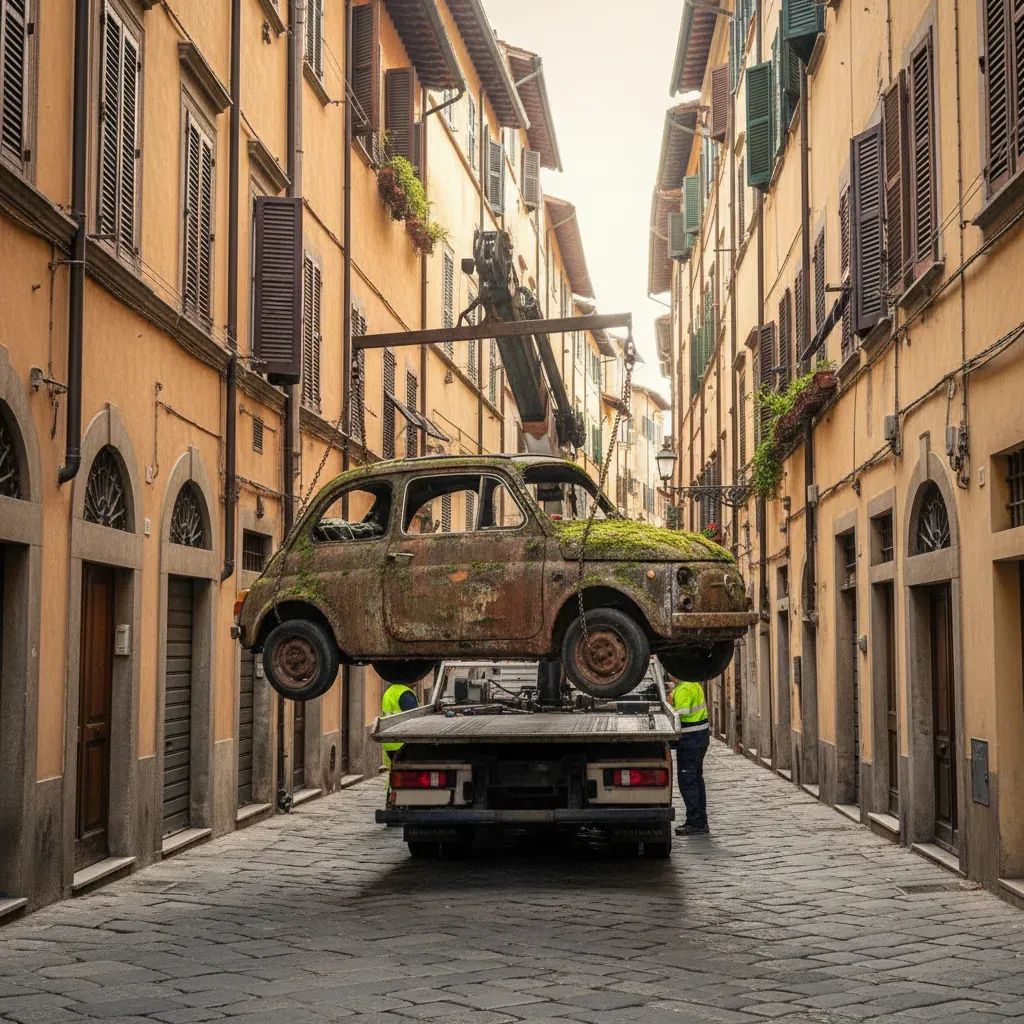
The Italy Parliament has cleared long-stalled rules that let local authorities scrap vehicles seized for unpaid debts and publicly name cars that ignore factory recalls, a move expected to remove 4 M phantom cars from streets and tighten road-safety policing.
Why This Matters
• No more road tax on a car once it is scrapped under the new procedure.
• Online blacklist goes live this week: insert a VIN and see if a recall is overdue.
• Fines up to €10,000 for leaving a derelict vehicle in public areas.
• Driving a non-recalled car after 24 months can now cost you up to €694 and a licence suspension.
How the New Scrapping Rule Works
Until now, a fermo amministrativo—a fiscal lien imposed by the Italy Revenue Collection Agency—made demolition impossible. Law 14/2026 ends that stalemate. Once the municipality certifies the car is a “carcass”, it sends a letter; if the owner stays silent for 60 days the tow truck can roll in, the car is crushed, and the licence plate disappears from the Public Vehicle Register (PRA). The debt survives, the metal doesn’t. That nuance satisfies both the Treasury, which still wants its money, and town halls desperate to reclaim parking spots.
Recall Blacklist: From Paper to Smartphone
The Italy Ministry of Infrastructure and Transport has opened an open-access database that tracks vehicles which skipped mandatory safety fixes for 2 years or more. Carmakers must upload VINs for passenger (M), commercial (N) and trailer (O) categories. The list syncs with police tablets, ZTL cameras and MOT testing lanes, making a missed air-bag swap as easy to spot as an expired inspection. Manufacturers face penalties up to €60,000 per omission; drivers caught on the road pay the same fine tier applied to no-inspection offences and may see insurers refuse payouts after a crash.
What This Means for Residents
• Households with an immobilised jalopy can finally clear the driveway and stop the annual bollo auto without first emptying the family wallet for back taxes.• Check your VIN before the next city trip; the blacklist is searchable on the Portale dell’Automobilista app and at most dealerships.• No green bonus: scrapping a lien-blocked car yields zero state incentives toward a new model, so budget accordingly if you plan to upgrade.• Expect tighter roadside checks—local police already pilot licence-plate cameras that ping when a recall hit rolls past.
Municipalities, Garages and Insurers: Who Does What
Town halls get a new enforcement toolkit and a revenue share from recycled metals, an element several cash-strapped cities intend to earmark for street-cleaning. Federcarrozzieri, representing body shops, anticipates a surge of work removing hazardous fluids before shredding. Insurance consortia warn policyholders that ignoring a recall could void coverage under the principle of concorso di colpa if a defect contributes to an accident.
Looking Ahead: Deadlines and Possible Tweaks
A implementing circular from the Italy Transport Directorate is promised “within spring”, expected to iron out grey areas—such as who pays storage costs between seizure and crushing. Environmental groups lobby to plug the rule into the broader PNRR-funded clean-fleet scheme, arguing that removing Euro 0 carcasses only matters if replacements emit less. Meanwhile, the ACEA pushes Rome to extend eco-bonuses beyond June 2026, possibly to Euro 6 used cars, a change that would give cash-strapped families an affordable way out of older, dirtier vehicles.
For now, the takeaway is simple: if your car sits on blocks—or your air-bag letter is still in the glovebox—2026 is the year Italian bureaucracy finally catches up to it.


