
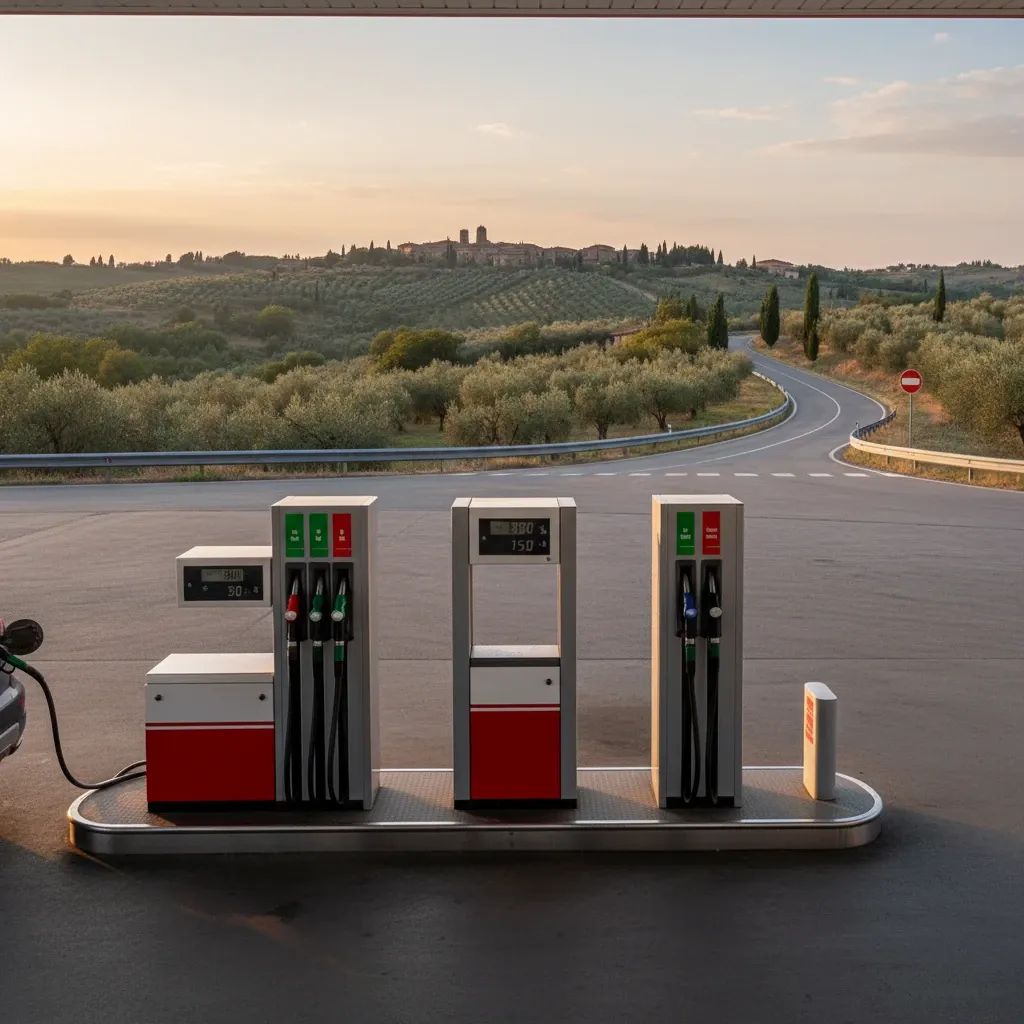
The Italy energy market is poised for immediate relief as global oil and gas prices plunged sharply following confirmation of a two-week ceasefire between the United States and Iran—a diplomatic breakthrough brokered by Pakistan that includes the critical reopening of the Strait of Hormuz. For Italian households and businesses bracing for sustained fuel inflation, the development signals the first tangible break in months of escalating energy costs tied to Middle East tensions.
Why This Matters
• Fuel at the pump could drop toward €1.85 per liter within weeks, down from peaks near €2.00 during the March crisis.
• Natural gas contracts at Amsterdam's TTF hub fell 15% to €45.18 per megawatt-hour, easing heating and electricity costs across Italy.
• Business input costs, especially for transport and manufacturing, stand to benefit from the sharpest one-day oil decline in over two years.
The Numbers Behind the Drop
West Texas Intermediate (WTI) crude, the U.S. benchmark, tumbled 15.7% to $95.21 per barrel in morning trading, while Brent crude—the global standard—declined 13.9% to settle near $94.05 per barrel. Both benchmarks had surged above $110 in March as Iran intermittently blocked tanker traffic through the narrow waterway that channels roughly one-fifth of the world's petroleum supply. The Strait of Hormuz, a 21-mile-wide chokepoint between the Persian Gulf and the Gulf of Oman, had effectively become a geopolitical flashpoint, driving insurance premiums and routing costs to record highs for European importers.
Amsterdam's Title Transfer Facility (TTF) gas benchmark mirrored the oil rout, shedding more than 15% to trade at €45.18 per megawatt-hour. Analysts at UBS note that the gas market had priced in a scenario of prolonged disruption and rationing; the ceasefire announcement effectively unwound that premium within hours of confirmation by U.S. President Donald Trump.
What Drove the Spike—and Why It Matters Now
Before the truce, escalating military exchanges between Washington and Tehran had choked off shipping lanes, forcing carriers to reroute around the Cape of Good Hope at enormous cost and delay. The Brent benchmark breached $111 per barrel; WTI hit $116. Italy's National Association of Petroleum Distributors (FIGISC) reported that retail diesel prices climbed to a national average of €1.98 per liter by late March, inflicting budgetary pain on logistics firms and agricultural operators ahead of the spring planting season.
European gas storage levels, already below seasonal norms due to reduced Russian pipeline flows and high winter demand, left the continent exposed. The TTF price had surged past €53 per megawatt-hour as governments from Rome to Berlin activated emergency demand-reduction protocols. Italy's Ministry of Ecological Transition briefly floated plans to cap commercial heating temperatures and defer non-critical industrial gas consumption—measures that were never implemented but underscored the gravity of the supply shock.
Impact on Residents and Businesses
For Italy-based consumers, the immediate consequence is a reprieve at the pump. Industry analysts project that wholesale gasoline margins will decline within 10 to 14 days, translating to retail reductions of approximately €0.10 to €0.15 per liter if the truce holds. That shift could save the average two-car household roughly €30 per month, equivalent to a week's worth of groceries in many regions.
Commercial transport operators, who had absorbed fuel surcharges averaging 12% to 18% during the crisis, may see those fees rolled back, lowering logistics costs for everything from supermarket deliveries to e-commerce fulfillment. The Italian Confederation of Agriculture (Confagricoltura) welcomed the price drop, noting that diesel accounts for nearly one-quarter of variable costs during peak planting and harvest periods.
Manufacturing sectors—particularly petrochemicals, plastics, and fertilizers—face a more complex picture. While lower feedstock costs offer near-term margin relief, analysts at Wood Mackenzie caution that refinery and LNG export infrastructure in Qatar sustained significant damage during the conflict. Repairs to the Ras Laffan LNG complex, which supplied roughly one-fifth of Europe's liquefied natural gas imports, are projected to take three to five years. That structural deficit will keep European gas prices elevated relative to pre-crisis norms, even as the immediate panic premium dissipates.
The Fragility Factor: Why Analysts Remain Cautious
Jason Schenker, chief economist at Prestige Economics LLC, told Bloomberg that "it would take something truly extraordinary to push oil back below $80 per barrel," but added that "almost any hitch in ceasefire talks could quickly send us back above $100." UBS has revised its 2026 Brent forecast upward to an annual average of $86 per barrel, from a pre-crisis estimate of $72, citing persistent geopolitical risk premia and the need to rebuild depleted strategic reserves.
The two-week truce is designed to create space for broader negotiations, but several structural uncertainties remain. Iranian authorities have signaled they intend to maintain enhanced security controls over Strait traffic, potentially including transit fees—a move contested by international maritime law but difficult to enforce against a regional military power. Oman, which shares jurisdiction over parts of the waterway, has stated it will not impose tariffs, but coordination remains an open question.
Insurance underwriters have yet to downgrade the Strait from "war risk" status, meaning maritime premiums will stay elevated for at least six to twelve months. That keeps shipping costs—and by extension, delivered energy prices—above historical norms even with the waterway nominally open.
Timing and Logistics: The Supply Chain Reality
Reopening a closed shipping corridor is not as simple as flipping a switch. Vessels that rerouted around Africa are still weeks away from their original destinations. Port authorities in the Persian Gulf report a backlog of more than 80 tankers awaiting clearance, and insurers require enhanced inspections for any ship transiting the Strait under current security protocols.
Patrick De Haan, head of petroleum analysis at GasBuddy, estimates that U.S. gasoline prices—which indirectly influence European benchmarks through arbitrage flows—could fall below $4 per gallon within one to two weeks if the ceasefire holds. European markets typically lag U.S. movements by several days due to contract structures and storage dynamics.
Refinery operators in Saudi Arabia, the United Arab Emirates, and Kuwait had scaled back output during the conflict to avoid inventory risk; restarting catalytic crackers and distillation units requires a phased ramp-up lasting several weeks. The International Energy Agency (IEA) projects that global oil supply will remain 1.2 million barrels per day below pre-crisis levels through at least the end of May, keeping a floor under prices even as traders unwind war-risk positioning.
Broader Economic Implications for Italy
The Bank of Italy had forecast that consumer price inflation would climb to 2.6% in 2026, driven primarily by energy-linked categories. A sustained decline in oil and gas prices could shave 0.3 to 0.5 percentage points off that projection, giving the European Central Bank (ECB) more room to consider rate cuts later in the year. Italy's heavily indebted public finances are particularly sensitive to interest rate policy; any easing would reduce debt-service burdens and free fiscal space for other priorities.
Conversely, a breakdown in the ceasefire—or even a prolonged stalemate in follow-on negotiations—would reignite inflationary pressures and risk tipping the eurozone's third-largest economy into technical recession. The ECB has already warned that a protracted energy shock could trigger stagflation, combining weak growth with elevated inflation, a scenario last seen during the oil crises of the 1970s.
Italy's Ministry of Economy and Finance had authorized temporary fuel-tax reductions in March to cushion the blow for consumers; those measures are scheduled to expire at the end of April. Whether they are extended will depend heavily on the trajectory of wholesale prices over the coming weeks.
What Comes Next
The two-week window provides breathing room, but the underlying geopolitical contest remains unresolved. Investors, policymakers, and consumers alike are watching not just the ceasefire's durability, but the pace at which damaged infrastructure can be repaired and normal commercial flows restored. For now, Italian drivers filling up at the pump can expect modest relief—but the full return to pre-crisis energy affordability may be months, if not years, away.


