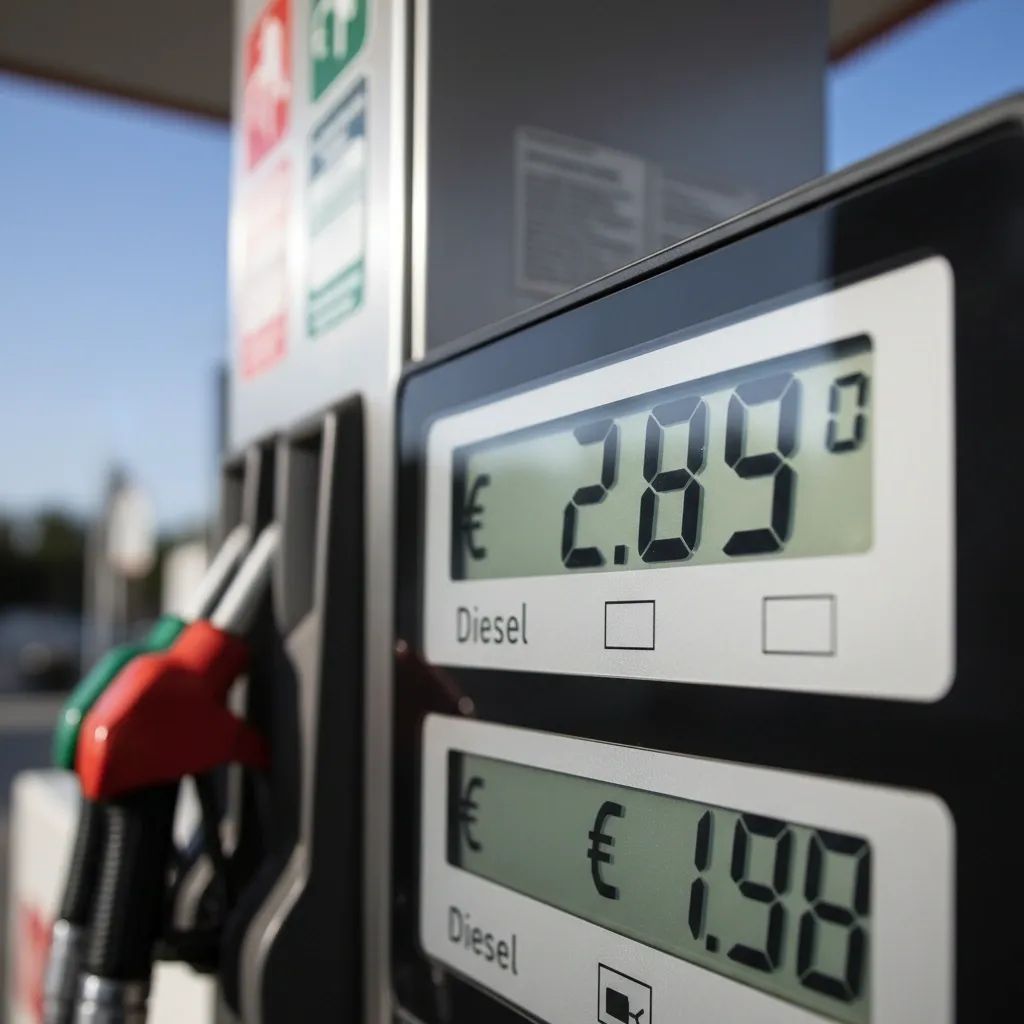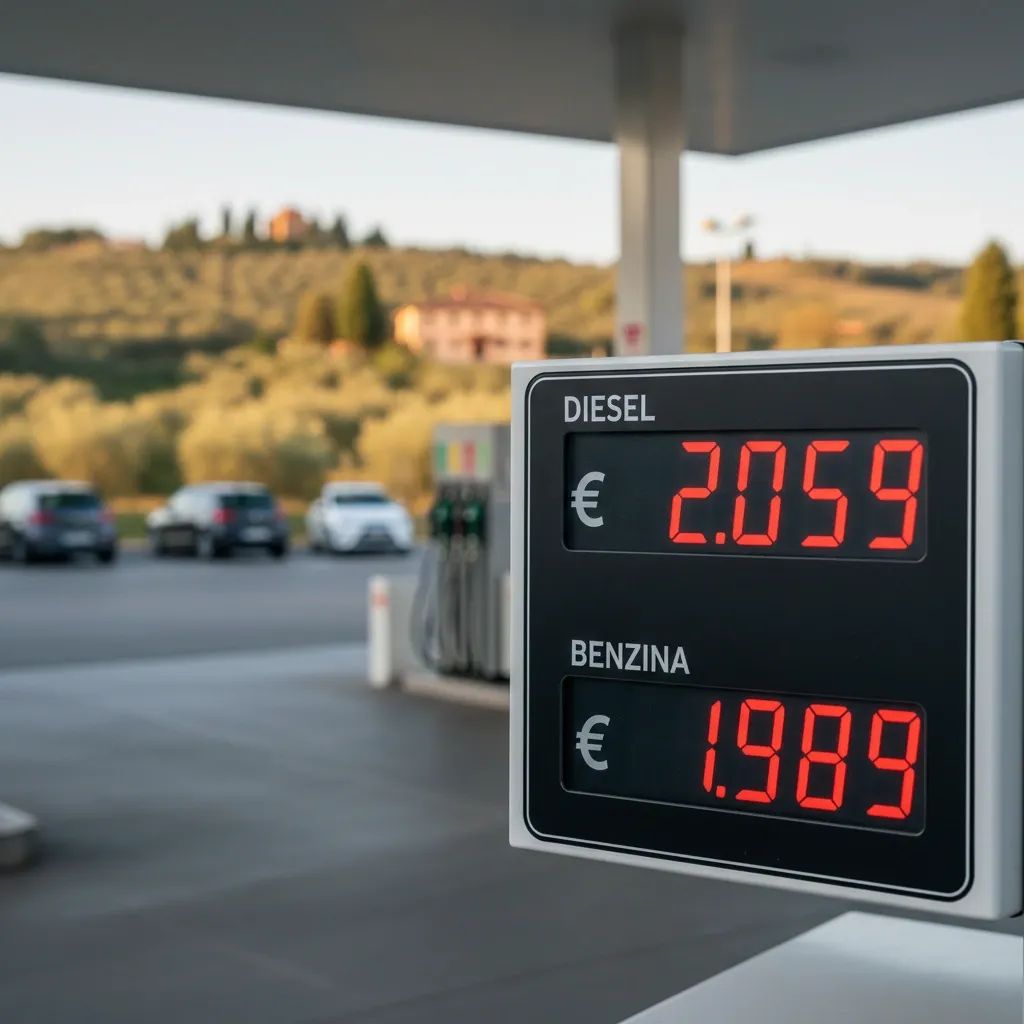
The Italian Ministry of Business and Made in Italy has confirmed that fuel prices surged again overnight, with self-service petrol hitting €1.877 per liter and diesel climbing to €1.985—marking consecutive daily increases that push Italy firmly among Europe's most expensive markets for motorists.
Why This Matters
• Highway diesel now exceeds €2.06 per liter, adding significant cost to travel and freight transport.
• Diesel is now more expensive than petrol—a reversal driven by January's tax equalization that raised diesel excise duty by 4.05 cents.
• No relief in sight: Government fuel subsidies expired July 3, and geopolitical volatility keeps crude prices elevated.
• Inflation ripple effect: Higher diesel costs translate directly into logistics expenses, threatening price increases across food and essential goods.
What Drove the Latest Spike
Italy's fuel price trajectory reflects a combination of domestic fiscal policy and external supply shocks. The immediate trigger was the July 3 expiration of the excise duty discount, which had kept prices artificially suppressed for months. That cushion is now gone, exposing Italian consumers to the full weight of international crude markets.
On the geopolitical front, tensions across the Middle East have kept international crude prices elevated. The broader context of global supply uncertainty continues to sustain pricing pressure on Italian markets.
The Diesel Dilemma
Perhaps the most striking feature of Italy's current fuel landscape is the inversion of the traditional price hierarchy: diesel now costs more than petrol at the pump. This shift stems from the 2026 Budget Law, which harmonized excise duties on both fuels at €672.90 per thousand liters. Diesel duty rose by 4.05 cents, while petrol duty fell by the same amount.
For consumers accustomed to choosing diesel vehicles for economy, this recalibration has been jarring. But the broader economic implications are more troubling. Diesel powers Italy's commercial backbone—freight logistics, agriculture, construction—and any sustained increase in diesel costs flows directly into the price of goods. Economists warn that persistent diesel inflation could stoke broader consumer price growth, eroding purchasing power just as households face other cost-of-living pressures.
Highway diesel, at €2.064 per liter, now represents a steep premium over the national roadway average, adding financial pain for long-distance travelers and haulage operators alike.
Italy in European Context
When measured against the continent, Italy's fuel costs sit uncomfortably high but not at the absolute peak. Data from early July showed Denmark leading Europe with petrol at approximately €2.325 per liter, followed by the Netherlands at around €2.20. Italy's petrol was tracking among the higher-cost nations in the EU.
For diesel, Finland has claimed the dubious honor of most expensive in the region, with Italy ranking among the highest in Europe, particularly on highways where diesel has breached the €2 threshold as of July 11.
What sets Italy apart is not just the absolute price but the tax burden: excise duties and VAT together account for a substantial share of the pump price, making Italy one of Europe's most heavily taxed fuel markets relative to the industrial cost of the product.
Government Response and Relief Prospects
The Italian government has pivoted away from blanket subsidies, citing both fiscal constraints and concerns that broad fuel tax cuts disproportionately benefit wealthier households with larger vehicles and higher consumption. The June 2026 extension of a modest 5-cent-per-liter reduction expired at the start of July, and officials have signaled no plans for a universal reinstatement.
Italy's mobile excise mechanism, introduced in 2007, theoretically provides automatic stabilization: when crude prices spike, the government uses surplus VAT intake to offset excise duty increases. However, the system's effectiveness has been inconsistent, and its activation remains discretionary rather than automatic.
What This Means for Residents
For drivers, the math is straightforward and unforgiving. Filling a typical 50-liter tank with petrol now costs roughly €94, while diesel drivers face a bill near €100 per tank. Over a month, frequent drivers could see fuel expenses rise by €20 to €40 compared to early June levels.
The timing—coinciding with the peak summer travel season—amplifies the financial sting. Families traveling to coastal resorts or mountain retreats must budget significantly more for transportation, and those who rely on personal vehicles for daily commutes face a sustained erosion of disposable income.
For businesses, especially small logistics firms and independent truckers, the diesel surge poses a significant challenge. Margins in freight transport are notoriously thin, and operators cannot always pass increased fuel costs onto clients quickly enough. Some may be forced to raise rates, which eventually filters into the prices consumers pay for groceries, building materials, and other goods.
Agricultural producers, many already operating under financial strain, face similar pressure. Tractors, irrigation pumps, and transport vehicles run on diesel, and prolonged high prices could force cost-cutting elsewhere or reduce profitability.
Outlook and Uncertainty
No credible forecasts suggest imminent relief. Analysts note that fuel prices exhibit what economists call the "rocket and feather" effect: they rise swiftly when crude costs increase but descend sluggishly when oil markets soften. Even if international crude markets stabilize or ease, the benefit may take weeks or months to materialize at Italian pumps.
The Ministry of Business and Made in Italy publishes weekly national averages through its fuel price observatory. Until next week's data becomes available, motorists and businesses must navigate a volatile and costly landscape with limited visibility into near-term trends.
Geopolitical risk remains a factor in price volatility. Any escalation in international tensions or disruption to global supply could affect prices further. Conversely, easing of tensions or demand softening might provide some relief—but neither scenario appears imminent.
In the meantime, Italian consumers are left weighing difficult trade-offs: drive less, switch to public transport where feasible, or absorb the higher costs and adjust household budgets accordingly. For those without alternatives, the current price surge represents a significant and sustained hit to financial well-being.