
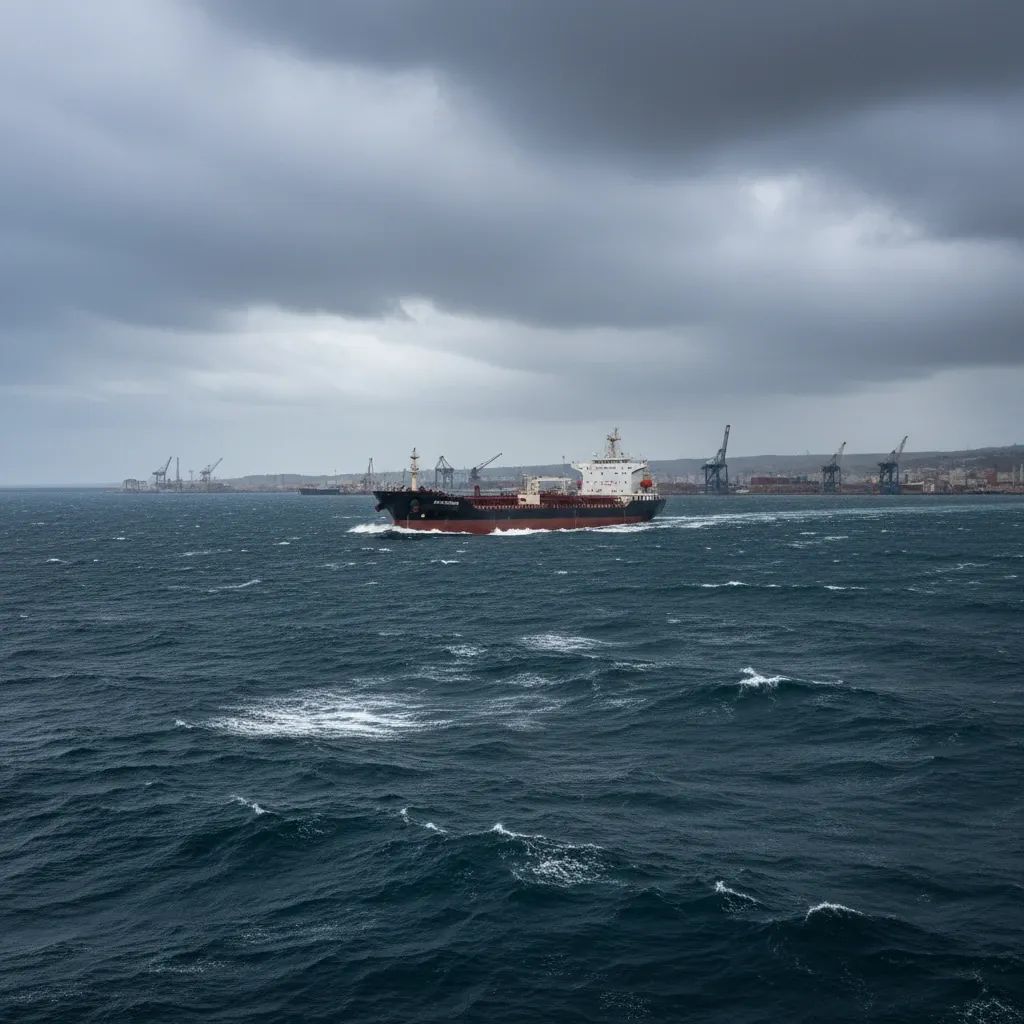
The Italian Cabinet, led by Prime Minister Giorgia Meloni, has completed a two-day diplomatic mission to the Persian Gulf, a strategic move designed to safeguard the nation's energy supply amid escalating regional conflict and soaring fuel costs. The visit, which spanned April 3-4 to Saudi Arabia, Qatar, and the United Arab Emirates, represents the first high-level European, G20, and NATO leader visit to the region since hostilities involving Iran erupted.
Why This Matters:
• Energy security: Italy imports over 13% of its energy from Gulf states, with 25% of its liquefied natural gas (LNG) transiting through the Strait of Hormuz—now a conflict zone.
• Price impact: Gas prices on the TTF market have surged 65%, while Brent crude has climbed past $100/barrel, driving inflation to 2.6% and cutting GDP growth forecasts to 0.5%.
• Military cooperation: Rome is offering defensive military assistance to Gulf partners facing Iranian attacks, solidifying a strategic regional alliance.
• Domestic backlash: Opposition parties have criticized the trip as a "4,000 km escape from Rome" while fuel rationing looms at home.
The Hormuz Chokepoint and Italy's Vulnerability
The Strait of Hormuz, a narrow maritime passage through which roughly one-quarter of global petroleum flows, has become a war zone. At least 22 civilian vessels—including oil tankers and container ships—have been struck since the US-Israel campaign began, with 20,000 seafarers currently stranded aboard ships in the Persian Gulf, according to the International Maritime Organization. Iranian forces have threatened and, in some cases, damaged critical oil and gas infrastructure, including the Kharg Island terminal and the South Pars field.
For Italy, the stakes are existential. Approximately 25% of Italian LNG consumption in 2025 originated in Qatar, all of it passing through Hormuz. Long-term contracts between ENI and Qatari suppliers, set to activate in 2026, are now at risk. The Bank of Italy has revised its 2026 GDP growth estimate downward to 0.5% (from 0.6%) and inflation upward to 2.6% (from 1.4%), directly attributing the deterioration to energy price shocks. In a worst-case scenario—oil above $150/barrel and gas exceeding €120/MWh—the central bank warns of zero growth in 2026 and recession in 2027.
The International Energy Agency has labeled the disruption "the most severe threat to global energy security on record," with more than 10 million barrels of oil per day lost from circulation. European gas prices on the TTF benchmark have rocketed to €72/MWh, a 35% increase, while some analysts report spikes exceeding 65%. Italian consumers are already feeling the pinch at the pump: diesel and gasoline prices have climbed sharply, and heating oil costs have more than doubled.
What Meloni's Gulf Mission Aims to Secure
Meloni's itinerary—Jeddah, Doha, and Al Ain/Abu Dhabi—was deliberately designed to address two parallel objectives: diversifying energy supply chains and deepening military-defense partnerships.
On the energy front, Rome is pursuing new contracts for oil and gas that bypass the Hormuz bottleneck where possible and reinforce Italy's ambition to become the Mediterranean energy hub. The Prime Minister's office emphasized the need to guarantee uninterrupted supply flows in a context of "dangerous price escalation" and geopolitical fragmentation. Italy's existing Memorandum of Understanding with Saudi Arabia, signed in January 2025, already covers carbon capture, electrical interconnections, and technology innovation over a five-year horizon. The current mission aims to expand that framework to Qatar and the UAE, both of whom control vast LNG export capacity.
On the defense and security axis, Meloni discussed defensive military assistance to Gulf states facing Iranian missile and drone strikes. Italy's role here is twofold: to reassure key energy partners of Rome's commitment to regional stability, and to position itself as a credible NATO interlocutor in the Middle East. The talks also touched on reciprocal investments, critical infrastructure protection, and migration management—issues of acute concern given irregular maritime flows from North Africa and the Horn of Africa toward Italian shores.
A planned stop in Kuwait was cancelled due to security concerns, underscoring the volatility of the region.
Domestic Political Fallout and the Fuel Rationing Debate
Back in Italy, the mission has sparked fierce political debate. Opposition lawmakers from the center-left Democratic Party and the Five Star Movement have accused Meloni of "fleeing 4,000 kilometers from Rome" while Italian households face the prospect of fuel rationing. The criticism centers on perceived inaction at home: despite the energy emergency, the government has yet to announce comprehensive measures to cap retail fuel prices or expand subsidies for vulnerable consumers.
Some transport sector representatives have called for the Italian Navy to increase its presence in the Gulf to protect commercial shipping and seafarers. Confitarma, the Italian shipowners' association, has urged the government to strengthen naval escorts and participate in multilateral coalitions to secure safe passage through Hormuz.
Foreign Minister Antonio Tajani has publicly advocated for diplomatic de-escalation and has signaled Italy's willingness to participate in a United Nations-led initiative to establish a humanitarian corridor for essential goods like fertilizers and food staples. A coalition of over 40 countries, including G7 members and Italy, has called for the "immediate and unconditional cessation" of Iranian attacks and is considering new economic and political sanctions.
What This Means for Residents and Businesses
For Italians, the Gulf crisis translates into immediate and medium-term economic pain:
• Higher fuel costs: Expect continued increases at gas stations, with diesel and gasoline prices tracking global crude benchmarks.
• Inflationary pressure: Energy costs ripple through the supply chain, raising prices for groceries, manufactured goods, and services.
• Risk of rationing: If Hormuz remains closed or severely restricted, the government may impose fuel allocation limits on non-essential transport and aviation sectors.
• Slower economic growth: Reduced consumer spending power and higher input costs for businesses will dampen growth prospects through 2027.
On the positive side, Italy's diversification strategy—if successful—could reduce long-term vulnerability. The country has already postponed the shutdown of coal-fired power plants until 2038 (13 years later than originally planned) to maintain backup capacity. Renewable energy production reached record levels in 2025, covering roughly 50% of domestic generation, a critical buffer against fossil fuel volatility.
Regional Responses and the Search for Alternatives
Gulf states themselves are scrambling to reduce dependence on Hormuz. Saudi Arabia's East-West Pipeline, which carries crude from eastern fields to Red Sea terminals, is now operating at maximum capacity. Plans for the India-Middle East-Europe Economic Corridor (IMEC), intended to bypass traditional maritime chokepoints, are being accelerated.
Iran, meanwhile, is reportedly considering new navigation rules, including the introduction of a toll system similar to the Suez Canal for vessels transiting near its territorial waters. Some nations—China, India, Greece, and Spain—appear to have negotiated more favorable transit terms through Iranian-controlled waters, raising questions about differential treatment and the erosion of international maritime norms.
The European Union has expressed alarm over its reliance on refined petroleum products from the Gulf, given limited alternative suppliers and insufficient domestic refining capacity. Shipping delays caused by rerouting around Africa have added weeks to delivery times, threatening stockpile levels across the continent.
Italy's Long-Term Energy Pivot
Italy's National Energy Strategy (SEN) prioritizes diversification and resilience. Key planks include:
• Expanded LNG imports: Beyond Qatar, Italy is pursuing supply agreements with Algeria, Egypt, Azerbaijan, Congo, and Angola.
• Increased renewable capacity: Solar and wind installations are being fast-tracked, with the goal of renewables covering 41% of energy demand by the end of 2025.
• Infrastructure investment: State grid operator Terna is upgrading transmission networks to integrate more renewable generation and improve system reliability.
• Strategic reserves: Italy maintains petroleum stockpiles and is enhancing regasification capacity at existing LNG terminals.
The government's pragmatic approach under Meloni blends immediate diplomatic engagement with medium-term structural reforms. The Gulf mission is part of a broader effort to secure energy sovereignty without abandoning fossil fuels prematurely—a stance that has drawn criticism from environmental groups but resonates with industrial stakeholders wary of blackouts and supply disruptions.
The Road Ahead
The coming weeks will clarify whether Meloni's Gulf outreach yields concrete supply commitments or remains largely symbolic. With ENI's long-term LNG contracts set to commence this year, any disruption to Qatari shipments would force Italy to source替代supplies on the spot market at punishing prices.
Meanwhile, the diplomatic push for Hormuz security continues. Italy has offered to host or participate in multilateral naval operations to escort commercial traffic, though details remain vague. The Pentagon claims its strikes on Iranian infrastructure have degraded Tehran's ability to threaten the Strait, but maritime insurance premiums tell a different story: rates for tankers transiting the Gulf have tripled since January.
For Italian households and businesses, the message is clear: energy costs will remain elevated for the foreseeable future, and the government's ability to cushion the blow depends on a mix of diplomacy, diversification, and domestic resilience. The Gulf mission is a calculated gamble—one that bets on personal relationships and strategic partnerships to offset the harsh arithmetic of global energy markets.


