
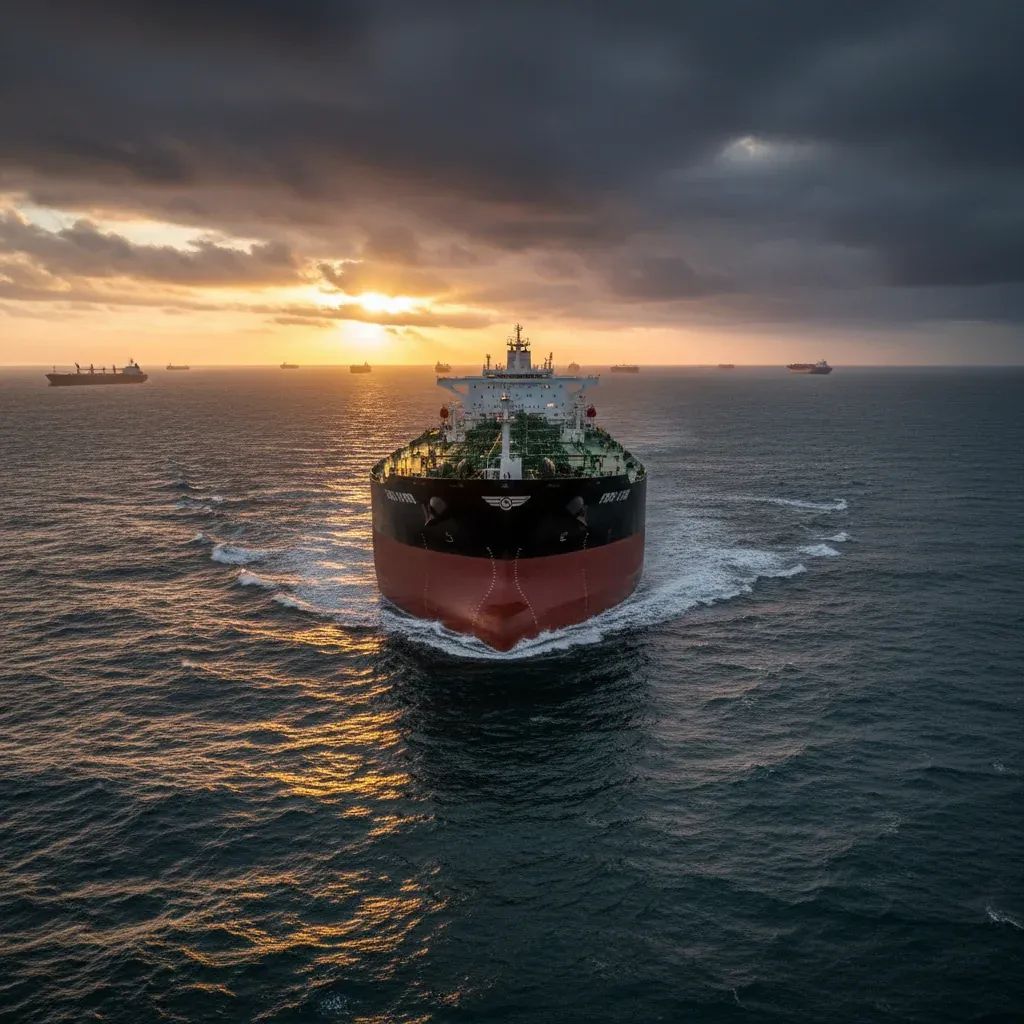
The Italy Ministry of Economy and Finance is studying emergency adjustments to the country's fuel tax system as crude prices surge above $87 per barrel in New York trading—a 5.14% jump that reflects deepening global anxiety over Middle East energy supply routes. For drivers and businesses across Italy, the practical question is no longer whether pump prices will climb further, but how quickly Rome can deploy tax relief to soften the blow.
Why This Matters
• Pump prices hit records: Diesel now costs €2.06 per liter at some Italian stations, with gasoline at €1.83—among the highest rates in Europe.
• Tax mechanism under review: The Ministry of Economy is considering activating the "mobile excise" framework, which could trim a few cents per liter if volatile conditions stabilize.
• No immediate supply risk: Italy's natural gas storage stands at 46.8% in early March—the highest level among EU member states at this stage of the withdrawal season—indicating successful winter management and reduced reliance on any single source.
• Two major distributors cut prices: IP and Tamoil have recommended their networks reduce prices by 1–2 cents per liter after recording the steepest increases since the Iran conflict began.
Why Oil Is Climbing—and What's at Stake for Italy
The catalyst is familiar: a widening war in the Middle East that threatens the Strait of Hormuz, through which roughly one-fifth of the world's oil flows each day. Iraq and Kuwait have already slashed output by 70%, and collective production cuts across the Gulf exceed 6 million barrels per day. The benchmark Brent blend briefly touched $120 earlier this month before retreating, yet analysts warn a sustained closure of the strait could push prices toward $147—nearing the all-time highs last seen in 2008.
For Italy, which imports the vast majority of its crude, every ten-dollar move in oil markets translates directly into higher costs at refineries and, within days, onto the forecourt. Unlike some neighbors that maintain larger strategic reserves or benefit from North Sea production, Italy relies heavily on a diversified import mix from North Africa, the Caspian, and the Gulf. When supply tightens, Italian distributors find themselves bidding in a global spot market that shows little mercy.
Record Highs at the Pump—and a Rare Pullback
As of today, IP leads the country with the highest posted prices: €1.83 per liter for gasoline and €2.06 for diesel, the latter figure shared with Q8. Since the start of the Iran hostilities, diesel has climbed 34 cents per liter at both Q8 and Tamoil stations, while Tamoil's gasoline has risen 15 cents.
Yet in an unusual move, both IP and Tamoil issued guidance to their franchisees this morning recommending modest rollbacks. IP advised a 2-cent reduction across both fuels; Tamoil suggested a 1-cent cut on diesel only. Whether those recommendations will appear on roadside signs remains to be seen—franchisees are not legally obliged to follow head-office pricing advice—but the gesture signals that at least some majors recognize consumer and political pressure is mounting.
By contrast, Eni continues to post the country's lowest retail averages: €1.95 for diesel and €1.79 for gasoline. The state-backed giant has absorbed a smaller share of the crude spike, logging increases of only 20 cents on diesel and 10 cents on gasoline since hostilities began. Industry watchers attribute Eni's restraint to a combination of integrated refining assets, long-term supply contracts, and a degree of political oversight that private competitors do not face.
The Mobile-Excise Debate: Fast Relief or False Hope?
At the heart of Rome's policy debate is a 2023 framework law that allows the Italy Treasury to temporarily lower fuel excise duties when pump prices breach thresholds defined in the national economic plan. In theory, the extra VAT collected on higher prices funds the excise cut, creating a self-financing stabilizer. In practice, legal and technical obstacles have so far prevented deployment.
Speaking at the ANSA Forum on Government Voices, Environment and Energy Security Minister Gilberto Pichetto Fratin confirmed that the Ministry of Economy is "evaluating corrections" to the 2023 statute. He was in Paris for a G7 energy meeting when the cabinet discussed the issue, but acknowledged that Prime Minister Giorgia Meloni has signaled work is underway.
Pichetto's caution reflects the difficulty of intervening in a market where crude swings 10–15% within a single trading session. "When prices move 20% in a few hours, we must be very careful about acting on emotion alone," he said. "We've seen a 20% drop triggered by a single statement from the U.S. president about the war ending—so you begin to understand the complexity."
Another wrinkle: the current law requires price increases to be "stable" over a two-to-four-month window before the mobile excise kicks in. Given that diesel spiked 25.8% in the first week of March alone, lawmakers and technocrats are debating whether to shorten that observation period or abandon the stability requirement altogether. Yet any amendment must navigate budget constraints, European fiscal rules, and the risk that a temporary cut becomes politically impossible to reverse once prices stabilize.
What This Means for Residents and Businesses
For households, the immediate arithmetic is straightforward. A driver covering 15,000 kilometers annually in a compact diesel car consuming 5 liters per 100 km will burn roughly 750 liters over twelve months. At today's €2.06 per liter, that's €1,545 in fuel costs—an increase of more than €250 compared to pre-conflict prices. Gasoline drivers fare slightly better, but not by much.
Commercial operators face steeper consequences. Haulage firms, already squeezed by labor shortages and aging fleets, estimate that a sustained €0.30-per-liter diesel increase adds roughly €3,000 per month to the operating cost of a single long-haul truck. Those costs cascade through supply chains, lifting prices on supermarket shelves, construction sites, and factory gates. Small logistics companies operating on thin margins may be forced to pass costs directly to clients or exit the market entirely.
Farmers are another vulnerable group. Spring planting season is underway across the Po Valley and southern plains, and tractors, combines, and irrigation pumps all run on diesel. The Coldiretti agricultural association has warned that fuel now represents the single largest variable cost in many cropping systems, surpassing even fertilizer.
Meanwhile, the Italy Revenue Agency continues to collect excise duty at a fixed rate of €0.6726 per liter on both gasoline and diesel—a figure harmonized in January 2026 under a budget reform intended to eliminate the historical diesel discount. That equalization added roughly 4 cents per liter to diesel costs at a moment when global markets were already heating up, compounding the pain for commercial users.
Gas Supply: Comfortable for Now, But Vigilance Required
In a separate parliamentary question time session, Minister Pichetto offered reassurance on natural gas. A March 5 meeting of the EU Energy Union Task Force concluded that Italy faces "no immediate risk" to gas supply security. Italy's storage facilities are 46.8% full in early March—the highest level among EU member states at this stage of the withdrawal season—indicating successful winter management and reduced reliance on any single source.
Less than 10% of Italian gas demand now comes from Qatari liquefied natural gas, and alternative pipelines from Algeria, Azerbaijan, and Norway have proven resilient. Still, Pichetto emphasized that the government is monitoring developments hourly. Should the conflict widen to disrupt LNG shipments from the Gulf or damage critical infrastructure, Europe's entire gas market would tighten within weeks.
European Peers Chart Different Paths
While Italy debates tax adjustments, other European governments have moved more aggressively. Spain has backed the International Energy Agency's proposal to release emergency reserves—potentially the largest coordinated drawdown in the agency's history. France is accelerating nuclear reactor restarts to reduce electricity-sector gas consumption. Germany, with deeper strategic reserves and a more competitive retail fuel market, has so far resisted direct price intervention, relying instead on antitrust enforcement to prevent margin abuse by distributors.
The European Commission has floated options including electricity-market contract-for-difference schemes, gas price caps, and expanded power-purchase agreements to decouple consumer bills from volatile spot prices. Yet any EU-wide measure requires unanimity or qualified majority votes, and member states remain divided over how aggressively to override market signals.
Looking Ahead: Structural Versus Stop-Gap
Italy's dilemma mirrors a broader European tension between short-term relief and long-term energy sovereignty. Mobile excises, reserve releases, and distributor jawboning can shave a few cents off pump prices, but none address the underlying vulnerability: Italy imports more than 90% of its oil and remains exposed to every geopolitical tremor from the Persian Gulf to the Caspian.
The path forward, according to both the European Commission and the Italy Energy Ministry, lies in accelerating the shift towards renewables, expanding nuclear capacity, and scaling green hydrogen. Solar and wind already provide more electricity than fossil fuels across the EU, yet transport—the sector most affected by oil prices—remains stubbornly dependent on liquid hydrocarbons. Battery-electric trucks, synthetic fuels, and rail electrification projects are advancing, but deployment timelines stretch into the 2030s.
In the meantime, Italian motorists and logistics managers will watch crude markets, cabinet meetings, and franchise price boards with equal intensity, knowing that the next swing in Brent or headline from the Gulf could mean another round of sticker shock—or, if Rome acts decisively, a modest reprieve at the pump.


