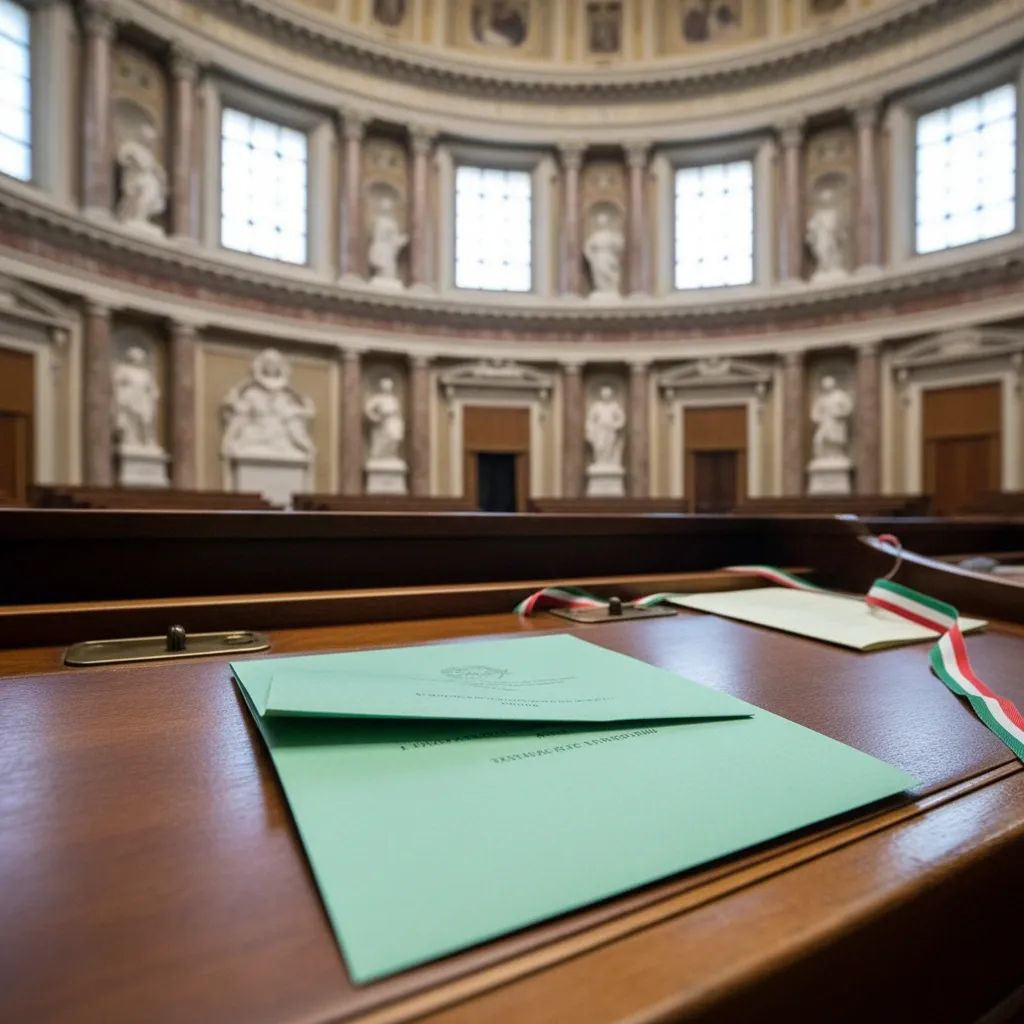
The Italy Chamber of Deputies has approved a controversial electoral reform in its first reading, setting the stage for a major constitutional showdown as opposition parties prepare legal challenges against what they describe as an unconstitutional power grab by the governing coalition.
Why This Matters
• New majority bonus system allocates 70 Chamber and 35 Senate seats to any list or coalition exceeding 42% of valid votes, potentially distorting proportional representation.
• Opposition parties are coordinating constitutional court challenges, arguing the reform creates a de facto premiership system through ordinary legislation.
• The reform now moves to the Senate for examination, with the governing coalition seeking rapid approval despite internal fractures.
• Experts warn the bonus mechanism could violate constitutional principles of representation equality.
Understanding Italy's Electoral System Context
For residents and voters unfamiliar with Italy's electoral framework, context is essential. Italy's current system, the Rosatellum law (approved in 2017), combines proportional representation with single-member district plurality voting—approximately 37% of seats use plurality rules while 63% use proportional allocation. This reform replaces that mixed approach with a predominantly proportional system featuring a governability bonus. Italy has undertaken significant electoral reforms roughly every 10-15 years, reflecting political pressure to balance competing values like governmental stability and representative democracy. If opposition parties successfully challenge this reform at the Constitutional Court, the legal review typically requires 6-12 months minimum, though complex cases involving multiple constitutional objections can extend 18-24 months or longer. During this period, the electoral rules governing the next national elections remain uncertain, complicating campaign planning for all political formations.
The Reform's Core Mechanism
The electoral overhaul, informally dubbed "Stabilicum" by Italian political commentators, introduces a governability bonus into the proportional system. Under the proposed framework, any political force clearing the 42% threshold in both chambers would automatically receive an additional allocation of parliamentary seats—70 in the Chamber and 35 in the Senate—designed to ensure stable governing majorities.
The mechanism includes a ceiling to prevent excessive concentration: 220 Chamber seats and 113 Senate seats represent the maximum any single list or coalition can obtain. If a winning force exceeds this cap through combined proportional and bonus allocations, the surplus gets subtracted from their proportional share. Should no formation reach the 42% trigger, the bonus seats would be distributed proportionally among all qualifying parties.
The reform preserves the existing Rosatellum law's thresholds—10% for coalitions and 3% for individual lists—while introducing a novel requirement: parties must designate their prime ministerial candidate at the time of electoral symbol registration, effectively binding voters' parliamentary choices to specific leadership options.
Additional provisions include voting rights for out-of-region residents, exemption from signature collection for parties holding parliamentary groups as of December 31, 2025, and gender alternation requirements starting from the third candidate position on party lists.
Parliamentary Drama Exposes Coalition Fault Lines
The reform's passage through the Italy Chamber proved contentious, exposing significant tensions within the governing majority. An amendment proposing a mixed system with blocked list leaders and up to three preference votes failed by a single vote during secret ballot proceedings, prompting opposition to demand governmental accountability.
The defeat highlighted coalition divisions. Giuseppe Conte, head of the Five Star Movement (M5S), characterized the secret ballot outcome as revealing fractures within the government majority. He called for the government to address these internal conflicts transparently.
Despite this setback, the Brothers of Italy parliamentary group leader announced the reform process would continue. The Minister for Parliamentary Relations expressed confidence in swift Senate consideration, though the incident has emboldened opposition forces to intensify their resistance strategy.
Constitutional Concerns Mount
Multiple constitutional scholars have flagged problematic aspects of the majority bonus system, particularly its potential to create disproportionate parliamentary representation that could contradict fundamental democratic principles enshrined in the Italy Constitution. The opposition has seized on these expert opinions to frame their resistance not as partisan obstruction but as defense of constitutional order.
Opposition leaders argue the reform conflates executive power with presidential prerogatives in ways that exceed ordinary legislation authority. The M5S leader contends the government has prioritized rewriting electoral rules for partisan advantage rather than addressing pressing issues like stagnant wages and fuel costs. His party has countered with an alternative proposal for pure proportional representation with a 3% threshold and preference voting, designed to restore citizen agency in parliamentary composition.
Opposition Strategy Takes Shape
The Five Star Movement has coordinated with other opposition forces to mount a multifaceted resistance campaign. During Chamber proceedings, M5S deputies displayed protest placards reading "Meloni has failed" and "electoral law = fraud law," while similar demonstrations with "Bolted Down" signs occurred in Senate chambers.
Beyond public protests, opposition parties are preparing substantive legal action. Multiple civic committees have already announced intentions to file constitutional court challenges once the law receives final approval. The M5S has explicitly signaled readiness to pursue judicial review, with Conte declaring the majority bonus proposal constitutionally problematic and promising the movement would challenge what it frames as illegitimate power consolidation.
Specific constitutional objections center on the creation of a de facto prime ministerial system through ordinary rather than constitutional legislation, potential violations of gender parity requirements in candidate lists, and fundamental distortions of proportional representation principles.
What This Means for Italy Residents and Voters
For Italy voters, the reform represents a concrete shift in how elections translate into legislative power. If implemented, the 42% bonus threshold means several practical changes:
On the ballot: Voters will see mandatory prime ministerial candidate designations prominently displayed with each party's electoral symbol—rather than choosing parties flexibly, voters will simultaneously commit to specific leadership choices before campaigns fully develop.
Vote-to-seat translation: Coalitions falling just short of the 42% mark could face significant disadvantage compared to rivals barely exceeding it. A coalition receiving 41% and one receiving 42% might see their parliamentary seat totals differ dramatically despite the 1% vote difference.
Coalition formation timing: Smaller parties will face pressure to join pre-election coalitions capable of reaching the 42% threshold. Currently, Italian politics allows post-election coalition negotiations; this reform reduces that flexibility, potentially limiting smaller formations' negotiating leverage after voters have spoken.
Next election timeline: If legal challenges proceed, residents will have extended uncertainty about which electoral rules will actually govern the next national elections. This ambiguity complicates campaign planning and may affect political participation timing decisions.
Taking action: Residents concerned about this reform can support constitutional court challenges through civic committees already organizing legal filings, engage with political parties on alternative proposals, or contact their parliamentary representatives to express positions on the reform.
Senate Phase and Constitutional Uncertainty
The Senate examination phase will test whether the Chamber's internal divisions within the governing majority represent isolated incidents or deeper fractures. Opposition forces hope to exploit any coalition instability to force substantial amendments or delay implementation.
Constitutional court proceedings, should they materialize, could require 6-24 months to resolve, creating extended uncertainty about electoral rules governing future national contests. This ambiguity complicates political planning for all formations and may generate public frustration with institutional processes.
The July 16 Chamber approval marks a critical juncture rather than conclusion in this constitutional process. As the reform advances to Senate consideration and opposition parties sharpen their legal and political attacks, Italy faces months of institutional uncertainty about the fundamental rules governing democratic representation and governmental formation.