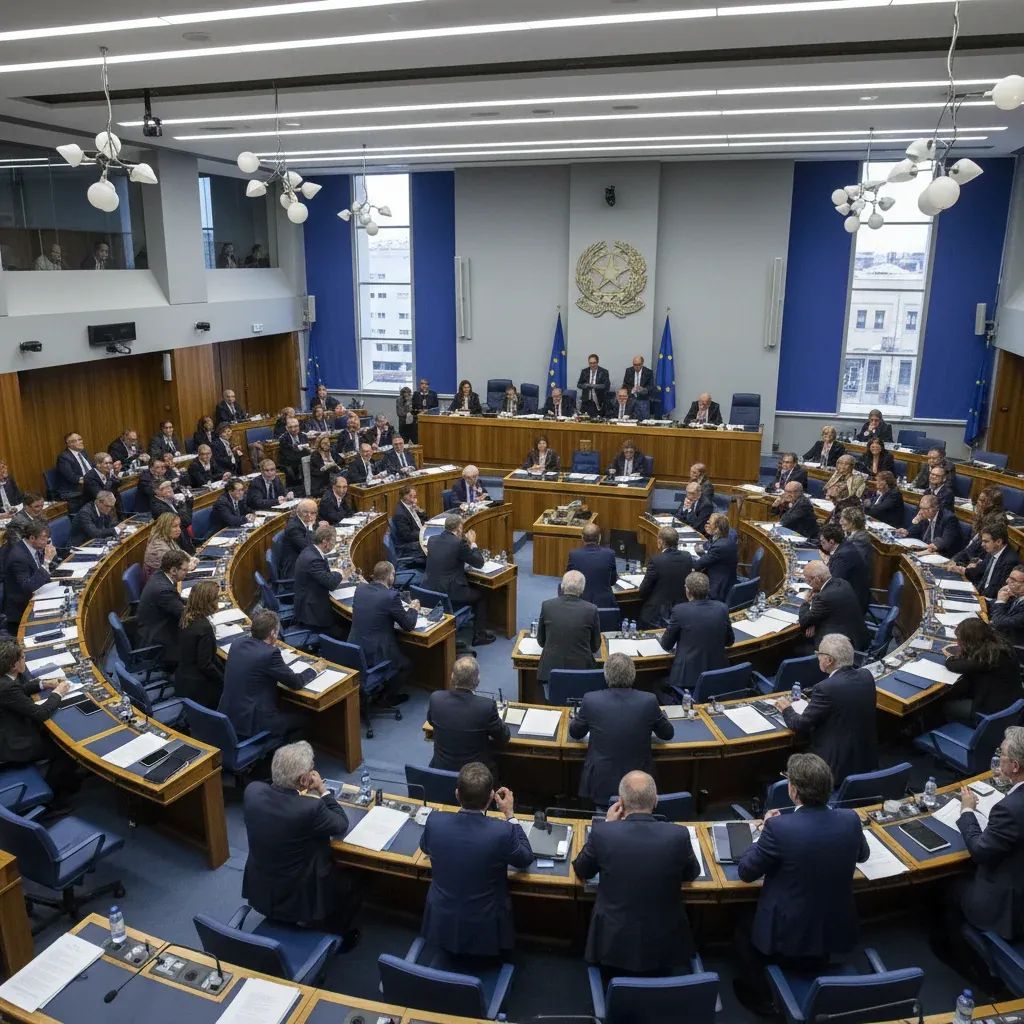
Italy's Prime Minister Giorgia Meloni is doubling down on her support for voter preference ballots despite a major legislative setback that exposed cracks in her coalition. Speaking to Italian media, Meloni insisted her position remains unchanged even as her electoral reform bill—now dubbed the "Stabilicum" or "Melonellum"—advances through Parliament without the feature she personally championed.
Why This Matters
• Political stability at stake: The Italy Cabinet is attempting to overhaul how Italians elect their lawmakers, with a system designed to deliver clear majorities and avoid the fragmented coalitions that defined decades of instability.
• Voter choice restricted: The current bill approved by the Chamber of Deputies on July 16, 2026 includes blocked party lists, meaning voters select a party symbol but not individual candidates—the party leadership decides who fills the seats.
• Preference defeat: An amendment to allow voters up to three preference votes failed by a single vote (188 against, 187 in favor) in a secret ballot on July 14, 2026, a stunning embarrassment for the ruling coalition.
The Core Reform: Majoritarian Prize With a Twist
The heart of the electoral overhaul is a proportional representation system supercharged with a winner-take-all bonus. Any coalition or single party securing 42% of the national vote would automatically receive an additional 70 seats in the Chamber and 35 in the Senate, capped at a maximum of 220 deputies and 113 senators. The threshold aims to manufacture a working majority from a fragmented electorate, eliminating the need for post-election coalition bargaining—the notorious inciuci, an Italian term for backroom deals in post-election coalition-building, which Meloni decries as the hallmark of left-wing governance.
If no group clears the 42% hurdle, seats would be distributed purely proportionally, without a runoff. The reform also scraps most of the single-member districts introduced in the 2017 Rosatellum law, returning Italy to an almost entirely proportional framework—albeit one rigged to favor the largest bloc.
For expatriates and students living away from home, the legislation includes a provision allowing voters to cast ballots in their temporary municipality of residence for parliamentary, European, and referendum elections, addressing a longstanding complaint about disenfranchisement.
What Happened With Preferences: A One-Vote Rebellion
Meloni had publicly backed an amendment from her Fratelli d'Italia party, Noi Moderati, and UDC to introduce a hybrid system: blocked top candidates (capilista) with up to three preference votes for lower slots. This would theoretically empower voters while preserving party control over the most prominent positions.
The amendment collapsed in a secret ballot, losing by one vote. Meloni attributed the failure to "the swamp"—a phrase suggesting betrayal within her own ranks. Coalition partners Lega and Forza Italia had initially opposed preferences, fearing that voter choice would dilute the gatekeeping power of party secretaries. Though they reportedly softened their stance before the vote, the secret nature of the ballot means accountability is impossible to assign.
Opposition parties, led by Partito Democratico secretary Elly Schlein, celebrated the defeat as proof the coalition lacks cohesion. Yet the left's position on preferences is murky: while some factions advocate for direct voter input, others prioritized blocking the government's entire reform package, which they deem unconstitutional and authoritarian.
What This Means for Residents
If the Italy Senate approves the bill in its current form, the next general election—scheduled for late spring or autumn 2027—will be contested under a system that:
• Removes your ability to pick candidates: Party leaderships will determine who occupies Parliament, resurrecting the pre-1993 "blocked list" model abolished by referendum.
• Amplifies the largest bloc: A coalition barely crossing 42% could command a supermajority, sidelining smaller parties and regional voices.
• Reduces regional representation: The elimination of single-member districts means candidates won't need to cultivate local ties; parties can "parachute" loyalists into any constituency without electoral consequence.
For voters, the practical impact is straightforward: your ballot becomes a party endorsement, not a personnel decision. The system prioritizes governability over granular representation, a trade-off Meloni frames as essential for economic growth and institutional credibility.
The Historical Context: Italy's Preference Paradox
Italy employed preference voting from 1946 until 1993, when referendums abolished it amid scandals linking personal votes to corruption and clientelism. Candidates allegedly traded favors for preferences, creating patron-client networks that corroded democratic accountability.
Yet three decades on, 63% of Italians now favor restoring preferences, according to recent polling—a sentiment that crosses party lines and extends even to habitual non-voters. The pendulum has swung: blocked lists, once seen as a safeguard against corruption, now symbolize the dominance of party apparatuses over citizens.
Meloni's rhetoric taps into this frustration. "It's under everyone's eyes how important this period of stability has been for Italy, with a solid government and the numbers to govern," she told Il Giornale. "We've benefited in every respect—economically, in international prestige, in the capacity to advance structural reforms. That's why I think it's useful for the nation to have an electoral law that ensures governability and stability, allowing those who win elections to govern without deals or rainbow coalitions."
She framed the preference debate as existential: "This is what drives the left crazy—they're used to governing even when they lose elections, precisely through palace games. But this nation deserves not to go backward. And on preferences, I haven't changed my mind."
Opposition Strategy: Unity Against the Framework, Division on Details
Alleanza Verdi e Sinistra (AVS) has emphasized the reform's constitutional vulnerabilities, warning that the Italy Constitutional Court may strike down provisions granting disproportionate representation. Movimento 5 Stelle, which previously proposed a proportional system with preferences, has attacked the "abnormal" majority bonus as a distortion of the popular will.
Within the Partito Democratico, internal debates have flared. While Schlein has branded the bill "unamendable" and called for total rejection, figures like Stefano Bonaccini have urged the party to weaponize the preference issue, forcing the right to confront its contradictions: How can Meloni claim to champion voter empowerment while advancing a system that curtails it?
The left's celebration of the amendment's defeat has exposed this tension. By blocking preferences, they prevented a concession that might have made the reform more palatable—but also denied voters the expanded choice they claim to support.
What Happens Next
The bill now moves to the Italy Senate, where modifications remain possible. The center-right aims to advance the legislation as far as possible before the summer recess, with floor debate potentially deferred until autumn.
Meloni's challenge is twofold: she must maintain coalition discipline while navigating a Senate where margins are tight, and she must reconcile her rhetorical commitment to voter empowerment with a bill that, as written, consolidates party control. The one-vote loss suggests that secret ballots—a procedural safeguard for conscience votes—may remain a weapon for dissidents within her own camp.
For Italians, the stakes extend beyond arcane electoral mechanics. The reform will shape who governs, how stable that governance is, and whether Parliament reflects the electorate or the preferences of party elites. Meloni's insistence that she "hasn't changed her mind" on preferences signals the debate is far from settled—but the clock is ticking toward 2027, and the current text offers voters no say in who represents them.