
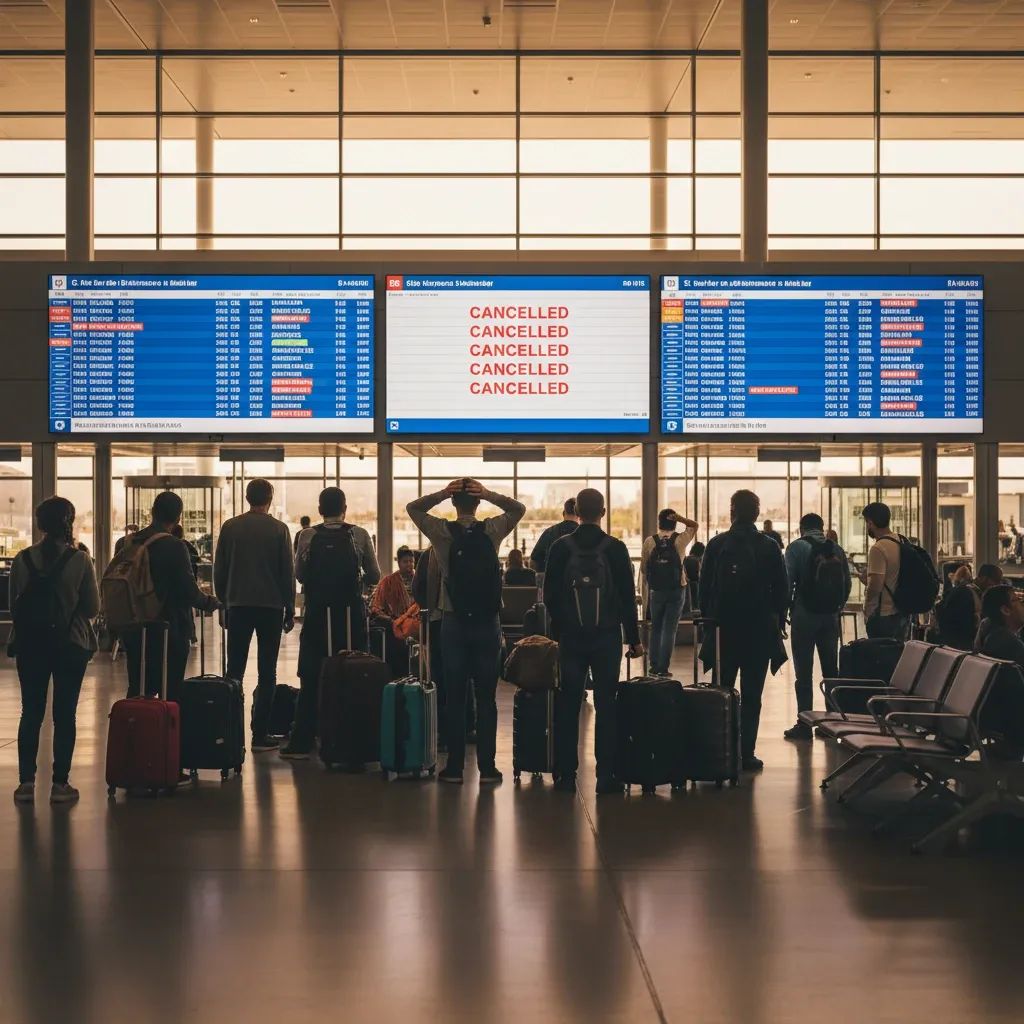
Italy's two largest airlines operating domestically grounded roughly 300 flights on Thursday, February 26, marking a significant labor stoppage in the aviation sector. The 24-hour strike by ITA Airways and EasyJet cabin crew, pilots, and ground personnel left tens of thousands of passengers stranded, with unions reporting strong participation rates among eligible workers.
Why This Matters
• Contract expiration: The national labor agreement for ITA Airways staff expired in December 2024; EasyJet's contract lapsed in September 2025.
• Salary erosion: Real wages have declined sharply as inflation outpaced pay increases, despite Italian airports handling record passenger volumes in 2025.
• Immediate impact: ITA Airways canceled 55% of scheduled departures for February 26, with ripple effects extending into the following day.
• Legal protections: Protected time windows (7:00–10:00 and 18:00–21:00) and island connections remained operational under Italy's essential service laws.
The Postponed Strike That Couldn't Wait
This walkout was originally scheduled for February 16, but Italy's Transport Ministry—led by Deputy Prime Minister Matteo Salvini—issued a rare precettazione order delaying the action to avoid overlap with the Milano-Cortina 2026 Winter Olympics. The postponement bought time for negotiations, but five major unions (Filt Cgil, Fit Cisl, Uiltrasporti, Ugl Trasporto Aereo, and Anpac) announced that talks with airline management had "produced no meaningful progress" on core demands.
The decision to proceed with the strike reflected deepening frustration. Union representatives described the current contracts as "inadequate under both salary and worker protection criteria," particularly glaring given that Italian airports recorded their busiest year on record in 2025. Traffic data from ENAC (the Italy National Civil Aviation Authority) show that passenger movements exceeded 2019 benchmarks by roughly 8%, yet ground staff and flight attendants saw minimal wage adjustments to offset the cumulative inflation since 2021.
What Workers Are Demanding
ITA Airways Personnel
For the national flag carrier's employees, the fight centers on three pillars:
• Salary alignment: Base pay for junior first officers at ITA starts around €1,200 net per month for domestic routes, well below European peers. Unions are pushing for a 12–15% salary increase over three years to restore purchasing power.
• Industrial plan clarity: Workers want transparent commitments on fleet expansion, route development, and job security following the Lufthansa Group's acquisition of a controlling stake in ITA in 2023.
• Work-life balance: Scheduling practices that result in split-shift days and irregular rest periods remain a persistent grievance, despite EU regulations capping annual flight hours at 900 and weekly duty time at 60 hours.
EasyJet Crews
The low-cost carrier's Italian-based staff face distinct challenges:
• Contract renewal stalemate: Negotiations have dragged on for months since the September 2025 expiration, with management offering terms that unions deem insufficient.
• Operational chaos: Persistent understaffing and last-minute roster changes have triggered fatigue complaints and a spike in sick leave, which EasyJet counters by citing "market-standard crew ratios."
• Commission pressure: Unlike legacy carriers, EasyJet's compensation model includes onboard sales targets, which flight attendants describe as "a secondary job during safety-critical duties."
Economic and Legal Context
Italy's aviation sector employs roughly 52,000 people directly, with another 80,000 jobs in airport services, catering, and logistics. The average assistant de volo (flight attendant) in Italy earns approximately €37,500 annually (€3,126 net per month), while experienced captains at legacy carriers can reach €74,400 gross in structured pay bands that include flight hours, per diems, and route bonuses.
By comparison, Ryanair captains operating from Italian bases earn between €180,000 and €200,000 under Ireland-registered contracts, illustrating the wage gap between low-cost and traditional carriers. This disparity fuels resentment, particularly as Italy-based crews see their counterparts in Germany and France secure double-digit raises through sectoral bargaining.
The legal framework for strikes in Italy balances labor rights with public service continuity. The Commissione di Garanzia (Guarantee Commission) mandates that airlines preserve:
• Essential connections to Sicily, Sardinia, and other islands
• Morning and evening travel windows (7:00–10:00 and 18:00–21:00) for business commuters
• Intercontinental flights already in progress at the strike's start
ENAC publishes the list of voli garantiti (guaranteed flights) 48 hours before any action, allowing passengers to rebook. Still, the EU Regulation 261/2004 does not mandate compensation when strikes involve an airline's own staff, classifying such events as "extraordinary circumstances" beyond carrier control.
Impact on Residents and Travelers
For passengers affected by the strike, the disruption translated to rebooking hassles, missed connections, and unplanned hotel stays. Italy's Consumer Protection Authority (AGCM) reminds travelers that airlines must provide:
• Meals and refreshments during wait times
• Hotel accommodation if overnight delays occur
• Alternative transport or full refunds for canceled flights
However, cash compensation—ranging from €250 to €600 depending on distance—does not apply when the airline's own employees walk out, a legal gray area that passenger advocacy groups have challenged in Italian and EU courts without success.
Business travelers face a particular squeeze. Rome and Milan airports, which together handle 40% of Italy's commercial traffic, saw the heaviest cancellations. Corporate travel managers report that premium-cabin fares on short-notice alternative carriers (such as Lufthansa or Air France via connecting hubs) cost significantly more than original bookings, with no reimbursement path under standard business insurance.
Tourists caught mid-itinerary face logistical nightmares, often forced to arrange alternative transport at considerable expense and time.
How Italy Compares to European Neighbors
Aviation labor disputes have surged across Europe in 2025–2026, but Italy's regulatory model stands apart:
• France experienced a national air traffic control strike in September 2025, grounding flights across Paris CDG, Nice, and Marseille. French law allows open-ended strikes with minimal notice, but strong union coordination often yields swift settlements.
• Spain saw rolling Ryanair ground staff walkouts through December 2025 at Madrid, Barcelona, and Valencia, organized by the Azul Handling workforce over outsourcing practices.
• Germany's Lufthansa Group averted planned strikes in early 2026 by agreeing to a 12% wage increase over 18 months for pilots and cabin crew, setting a benchmark that Italian unions now cite in negotiations.
Italy's precettazione tool—government-ordered postponement of strikes—has no direct equivalent in France or Germany, where courts rarely intervene unless public safety is imminently threatened. Critics argue this mechanism favors airlines by diluting union leverage, while supporters point to Italy's heavy reliance on seasonal tourism as justification for state involvement.
What Comes Next
Unions have signaled readiness for escalating actions if ITA and EasyJet do not present revised contract proposals in coming weeks. Options on the table include:
• Weekend-focused strikes targeting peak leisure travel periods
• Coordinated walkouts with airport ground handlers and air traffic controllers
• Legal action in Italian labor courts to compel binding arbitration
ITA Airways management issued a statement acknowledging the disruption but insisting that "current economic conditions do not support the salary increases demanded without jeopardizing the company's path to profitability." EasyJet's communications team emphasized its "ongoing commitment to constructive dialogue," while noting that crew costs in Italy are already 18% above the company's European average.
For passengers planning travel through Italian airports in the coming weeks, the advice is straightforward: book refundable fares, monitor airline apps for real-time updates, and allow extra buffer time for connections. The ENAC strike calendar (published at enac.gov.it) lists all declared labor actions, though surprise work stoppages remain legally permissible with 10 days' notice.
The broader question facing Italy's aviation sector is whether the country can sustain its post-pandemic traffic growth without addressing the structural wage and staffing imbalances that drove significant worker participation in this action. With summer 2026 bookings already trending strong, the clock is ticking for management and unions to find common ground—or risk a season of compounding travel chaos.


