
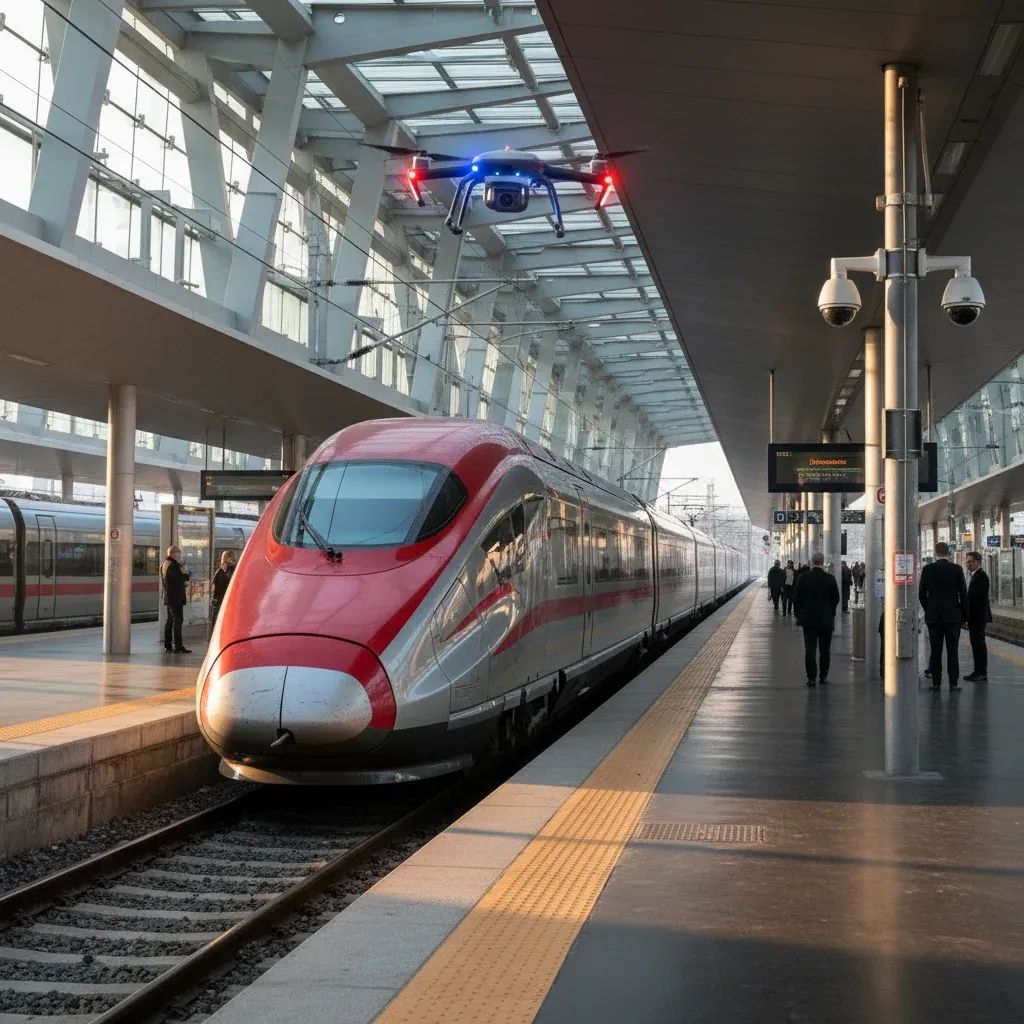
The Italy Interior Ministry has activated its top security committee and enlisted Ferrovie dello Stato (FS) executives to harden the country’s 17,000-kilometre rail grid, a decision that will reshape everything from your morning commute to the penalties faced by would-be saboteurs.
Why This Matters
• More patrols, more checks – Expect visible security on platforms and aboard long-distance trains within days.
• AI cameras & drones – New tech will scan tracks around the clock, potentially reducing service disruptions.
• Harsher jail terms – A draft law proposes 12-20 years for rail sabotage, aligning penalties with terrorism statutes.
• Budget impact – Extra surveillance and fencing come with a multimillion-euro price tag that may surface in ticket or tax debates.
A Coordinated Response to a Growing Threat
Gathered inside the Viminale headquarters, Interior Minister Matteo Piantedosi, police chiefs, intelligence officers and the full FS board mapped a rapid-deployment plan. The trigger: a string of cable burnings and tunnel break-ins that paralysed high-speed services on the Rome–Florence and Rome–Naples corridors. Investigators link the attacks to an anarchist-leaning network seeking high-profile disruption ahead of the Milano-Cortina 2026 Winter Games.
The committee elevated the national alert level and ordered joint patrol units (FS Security plus state police) to fan out along the entire north-south backbone. According to senior officers, the mix of railway staff and law-enforcement agents is meant to combine "track know-how with arrest powers"—a capability gap exposed during February’s strikes.
The Numbers Behind the Alarm
Statistics shared at the briefing paint a steep curve: 9 sabotage events in 2024, 49 in 2025, and already "nearly one per week" this year. Each incident ripples outwards—delays sometimes top 160 minutes, cascading across regional timetables and racking up multi-million-euro indemnities for passengers.
Security analysts warned the committee that the network’s sheer size—17,000 km of open, largely unfenced track—makes total enclosure impossible. Instead, resources will be concentrated on the Alta Velocità spines, freight junctions feeding the northern industrial triangle, and the new PNRR construction sites.
Technology Steps Into Station
FS’s chief innovation officer laid out a toolkit that blends drones, AI-driven video analytics, and sensor-embedded fencing. Drones will fly pre-programmed night routes over remote viaducts; smart cameras will flag "heat blooms" from cutting tools in real time; buried fibre sensors will vibrate when a manhole cover is lifted. The ministry claims the rollout can begin within 45 days, starting on the Turin–Milan and Bologna–Florence stretches.
Parallel to hardware, the committee green-lit a deeper partnership with Italy’s cybersecurity agency following two ransomware hits on FS subsidiaries in 2024-25. The brief is clear: sabotage now spans both physical and digital rail operations.
The Legal Screw Tightens
During the meeting, justice officials previewed a bill that carves out a new crime: “Attack on transport safety with terrorist intent.” If passed, anyone convicted of damaging rail assets to intimidate the state faces 12-20 years in prison and asset seizure. The draft also speeds up preventive wiretaps for suspects and allows undercover purchases of explosive precursors, mirroring anti-mafia rules.
Transport Minister Matteo Salvini immediately endorsed the text, telling reporters that rails are "the arteries of the nation" and that paralysis "will never be tolerated as political protest." Parliamentary debate is expected to open within weeks, and early signals from major blocs suggest cross-party backing.
What This Means for Residents
Commutes may feel different – Expect random bag checks on Intercity and even some regional runs. Allow extra minutes at ticket gates, especially in Rome Termini, Milano Centrale and Napoli Africanna.
Fares vs. taxes – FS must fund new tech, and while officials insist on “no immediate ticket hike,” unions predict the topic will resurface in the next pricing round.
Travel planning – Until drones and AI stabilise the network, keep an eye on the Trenitalia App alerts; minor timetable reshuffles are likely when maintenance crews replace burned cabling.
Legal landscape – If you witness suspicious activity—unattended tools near tracks, forced service doors—reporting it may soon become a civic duty under the forthcoming law, similar to anti-terror hotlines.
Regular riders should weigh a simple trade-off: tighter security vs. smoother journeys. For investors, the measures are also a sign Rome will not let critical infrastructure worries overshadow the global spotlight of the 2026 Winter Olympics.


