
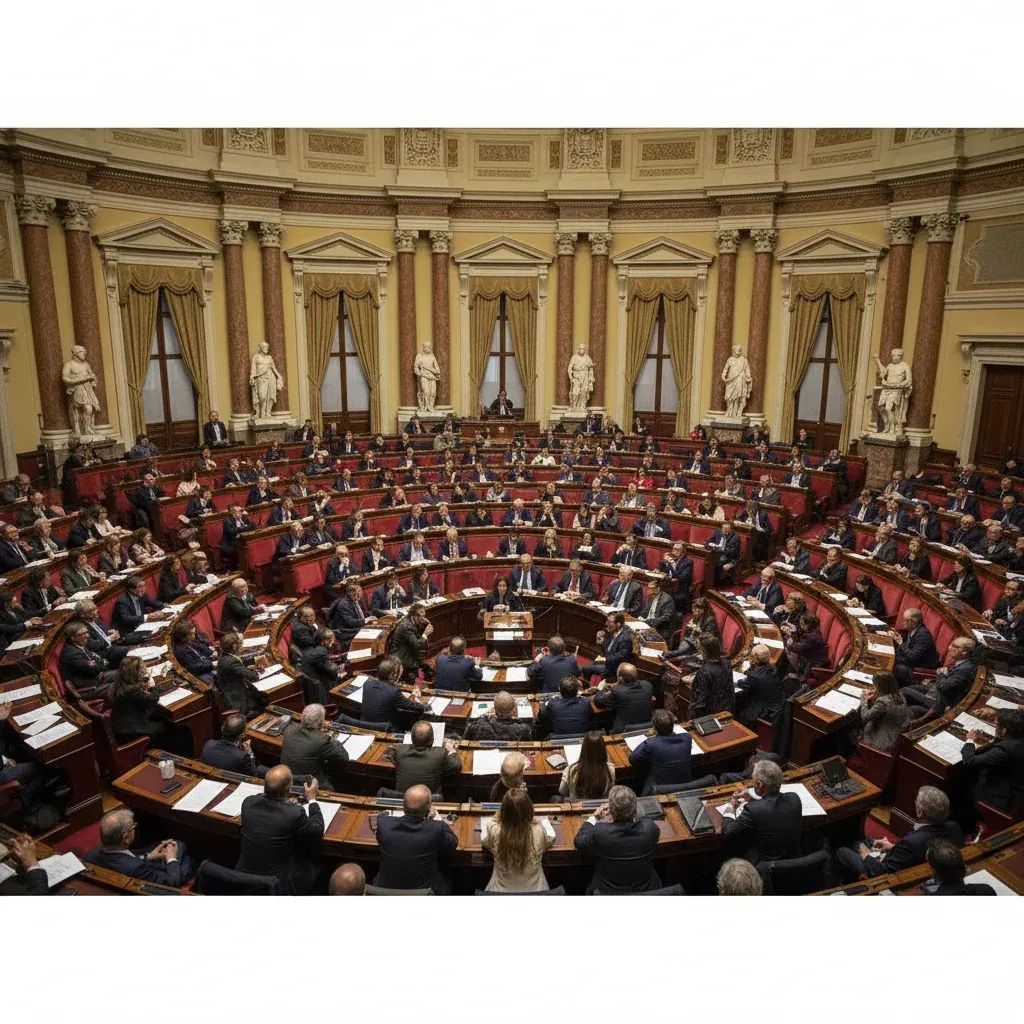
The Quirinale Palace has opened a digital platform inviting residents across Italy to submit 30-second videos defining what the republic means to them, a grassroots gesture aimed at marking the 80th anniversary of the Italian Republic on June 2. The initiative, titled "I volti della Repubblica" (The Faces of the Republic), has already collected over 100 contributions from citizens and public figures alike, building what officials describe as a "living archive" of democratic reflection.
The website, www.ivoltidellarepubblica.quirinale.it, asks participants to complete the prompt: "Per me la Repubblica è…" (For me, the Republic is…). Videos must be vertical, no longer than half a minute, and can be submitted by any adult citizen or legal resident. Minors may participate with parental consent. Organizers anticipate the platform could eventually host hundreds of thousands of messages, representing a cross-section of age groups, regions, and perspectives.
Why This Matters
• Open to all: Any adult resident of Italy can upload a video; minors need guardian approval.
• Deadline approaching: The campaign runs through the June 2 Republic Day celebrations, marking eight decades since the 1946 referendum.
• Celebrity kickoff: Early submissions include comedian Checco Zalone, singer Riccardo Zanotti of Pinguini Tattici Nucleari, tennis player Jasmine Paolini, and actor Claudio Bisio.
• Official framing: President Sergio Mattarella summarized the project with the line, "La Repubblica siamo noi. Ciascuno di noi" (The Republic is us. Each one of us).
A Milestone Anniversary, Crowdsourced
June 2, 1946, remains the constitutional pivot of modern Italy: the day citizens voted to abolish the monarchy and establish a republic. This year's 80th-anniversary commemoration comes at a moment when civic engagement increasingly moves online, and the Quirinale—historically the preserve of formal ceremony—has chosen a platform designed for maximum accessibility and viral reach.
The vertical-video format signals an explicit appeal to smartphone users and younger demographics, who might otherwise tune out institutional messaging. By capping clips at 30 seconds, the Quirinale borrows directly from the grammar of TikTok and Instagram Reels, treating the anniversary not as a lecture but as a conversation starter.
Early submissions span a wide emotional and thematic range. Children in some videos equate the republic with "equality" or "being loved." Zalone, known for satirical takes on Italian identity, framed his answer around "libertà" (freedom), playing on the wordplay between "re" (king) and "repubblica." Paolini, fresh from international tennis circuits, and Zanotti, whose band has become a voice for millennial disillusionment and hope, add generational variety to the mix.
What This Means for Residents
If you've ever felt disconnected from the rituals of Republic Day—military parades, presidential speeches, closed-off piazzas—this is the first time the Quirinale has solicited direct testimony from ordinary residents on what the state contract actually means. The platform is straightforward: record a clip on your phone, upload it, and your voice becomes part of the official archive.
For educators, the site offers a ready-made classroom tool. Schools looking to tie civics lessons to a live national project now have a submission portal that gives students a tangible audience. For civic groups, the campaign provides a framework for community storytelling events or intergenerational dialogue projects.
The initiative also has implications for cultural memory. Unlike static monuments or one-off ceremonies, a digital archive can be updated, searched, and revisited. If the Quirinale follows through on its ambition to collect hundreds of thousands of clips, the result will be a time capsule of how Italians in 2026 understood their republic—useful both for historians and for future citizens wondering how previous generations defined their political identity.
Political and Symbolic Context
Mattarella's personal endorsement—"The Republic is us"—carries weight beyond ceremony. In a country where institutional trust oscillates and populist rhetoric often frames "the state" as distant or corrupt, the president's formulation reframes the republic as a collective possession rather than an abstract apparatus.
The choice to launch the campaign in late May, giving citizens a week to participate before the official holiday, suggests the Quirinale wanted momentum rather than a slow build. By enlisting recognizable names early, the palace ensured media pickup and social-media circulation, turning what could have been a bureaucratic gesture into a trending topic.
Still, the project raises practical questions. How will the Quirinale curate submissions if hundreds of thousands arrive? Will the archive remain searchable indefinitely, or will it become a digital relic? And will the platform's demographic reach extend beyond the digitally fluent, or will it skew young and urban, leaving out older or less connected Italians?
Technical and Legal Guardrails
The platform's parental-consent requirement for minors reflects Italy's stringent data-protection standards under both national law and EU GDPR rules. Videos become part of a public archive, which means participants effectively waive privacy over their submissions. The Quirinale has not disclosed whether it will moderate content beyond basic legality checks, raising questions about how it will handle provocative or dissenting contributions.
The vertical-video mandate is a technical constraint with editorial consequences: it privileges mobile-first creators and discourages polished, studio-quality submissions. That design choice signals the palace wants authenticity over production value, though it also means the archive will likely include plenty of shaky footage, ambient noise, and improvised remarks—exactly the kind of messiness that characterizes genuine public participation.
Historical Precedent
This is not the first time the Quirinale has experimented with participatory commemoration, but it is the most digitally native. Past anniversaries have featured essay contests, school visits, and televised addresses. The shift to a user-generated video platform reflects both the evolution of media consumption and a recognition that younger Italians engage with institutions differently than their grandparents did.
The 1946 referendum itself was a turning point in Italian civic identity: 12.7 million voted for the republic, 10.7 million for the monarchy, in a deeply polarized postwar moment. By inviting citizens to redefine what that choice means 80 years later, the Quirinale is effectively asking: Has the bargain held? Do residents still feel ownership over the democratic experiment?
Participation Window and Next Steps
The platform remains open through June 2, after which the Quirinale has indicated it will feature selected submissions during official ceremonies and possibly in a documentary or exhibition format. Whether the archive will remain permanently accessible, or how the palace will handle the logistical challenge of reviewing potentially hundreds of thousands of clips, has not been clarified.
For now, the message is simple: if you live in Italy and have 30 seconds to spare, the state is listening. Whether that invitation translates into meaningful civic engagement or becomes a fleeting digital experiment will depend on how many residents choose to click "upload."


