
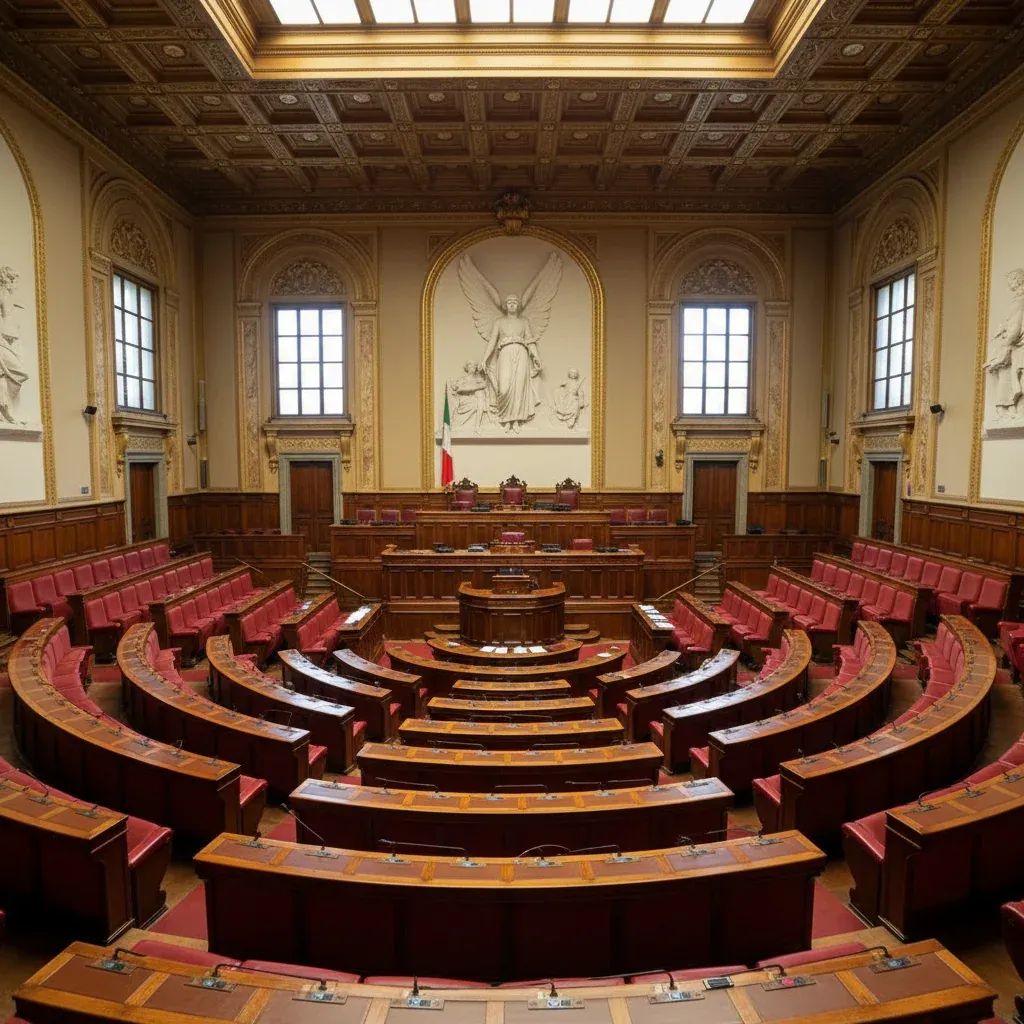
The Italian Parliament's Constitutional Affairs Committee is advancing an electoral law overhaul that will directly affect how residents cast ballots in the 2027 national elections. At the center of the debate is a contested decision over preference voting—whether voters will be able to select individual candidates or only choose between party lists.
Current Electoral System Context
Italy has traditionally used a mixed electoral system allowing voters to express preference votes for individual candidates within party lists, giving citizens some agency over candidate selection. The proposed Melonellum reform would fundamentally change this by introducing blocked lists, where voters select only a party slate without the ability to pick specific representatives. This shift would concentrate candidate selection power entirely within party leadership.
Why This Matters
• Your next ballot will look different: The ruling coalition proposes blocked lists with no voter choice of individual candidates, while Fratelli d'Italia is pushing to retain preference voting.
• Political stability structure: The proposed law includes a majority premium awarding 70 extra Chamber seats to the coalition that clears 42% of the vote—potentially giving a governing majority to a party cluster with less than half the national vote.
• Timeline pressures: Opposition parties have requested a delay to the June 26 plenary debate, citing concerns about adequate examination time, as the committee chair has imposed strict time limits on debate.
• Coalition divisions: The preference voting question has exposed significant disagreements within the ruling alliance, with different coalition partners taking conflicting positions.
The Core Dispute Over Voter Control
The ruling coalition—comprising Fratelli d'Italia (FdI), Lega, Forza Italia, and Noi Moderati—has proposed an electoral system designed to guarantee executive stability through a proportional framework with a built-in governability bonus. Under the current draft, the coalition or single list securing the most votes nationwide and at least 42% in both chambers would automatically receive 70 additional seats in the Chamber and 35 in the Senate. If no grouping reaches that threshold, seats would be distributed via proportional representation.
The sticking point is the blocked-list mechanism: voters would see party-curated slates without the ability to express a preference for individual candidates. Forza Italia leader and Deputy Prime Minister Antonio Tajani confirmed the coalition consensus on this approach, stating that there is overall agreement not to include preference voting.
However, Fratelli d'Italia's organizational leadership has indicated it will file a floor amendment to reintroduce preference voting when the bill reaches plenary debate. The party frames preference voting as a matter of democratic legitimacy, arguing that Italians should have agency over who represents them. This position reflects both principle and FdI's confidence in its grassroots organization.
Coalition Tensions and Procedural Disputes
The preference question has exposed ideological and tactical differences within the ruling alliance:
Fratelli d'Italia supports preference voting, seeing it as essential for democratic representation and believing its candidates would perform well in head-to-head preference contests.
Forza Italia and Lega prefer blocked lists, which maximize party control over candidate selection and insulate leadership from internal challenges. Lega's Constitutional Affairs Committee representative has stated clear opposition to any majority compromise amendment on preferences.
Noi Moderati, the smallest coalition partner, has aligned with FdI and plans to file its own pro-preference amendment.
Within Forza Italia itself, some members have publicly questioned the party's official line opposing preferences, indicating internal disagreement.
The Constitutional Affairs Committee, chaired by Nazario Pagano, has implemented strict time limits on debate—three minutes per speaker per amendment—to manage the volume of pending amendments. The Democratic Party and other opposition groups have requested that the June 26 floor debate be postponed, arguing that a matter of constitutional significance requires more thorough parliamentary scrutiny.
Implications for Italian Voters
For Italian voters, blocked lists represent a significant change in electoral mechanics. Citizens will lose the ability to directly influence which individual candidates win seats—party leadership will determine candidate ranking and presentation. This concentrates power in party secretariats.
The majority premium mechanism also introduces a significant distortion: a coalition winning 42% of the vote could command roughly 57% of parliamentary seats, potentially marginalizing parties outside the governing alliance. Constitutional scholars have raised concerns about whether this system adequately reflects the equality and pluralism principles foundational to Italian democratic law.
The bill also includes updates to overseas voting regulations, though specific provisions remain under discussion in committee. Expatriates and dual Italian nationals should monitor developments to understand how new rules may affect their ability to participate in 2027 elections.
Timeline and Next Steps
The Constitutional Affairs Committee is working toward a final vote by late June, with plenary debate scheduled to begin June 26. The government aims for first-passage approval in the Chamber before the summer recess.
The outcome remains uncertain. If the preference amendment fails in the Chamber, the Melonellum will likely pass with blocked lists intact. If it succeeds, significant negotiations within the coalition could be required to reach agreement.
The opposition is closely monitoring internal majority contradictions, betting that coalition divisions could either modify or delay the reform. For now, the timeline is compressed and the final outcome remains to be determined when the plenary debate proceeds.


