The European Commission unveiled on July 17, 2026, a revised carbon pricing mechanism that Italy and nine other EU member states have immediately rejected as inadequate, signaling fresh turbulence ahead for Europe's signature climate policy tool. The dispute centers on the Emissions Trading System (ETS), the continent's cap-and-trade framework that puts a price on industrial pollution—and increasingly, on the competitiveness of European manufacturers.
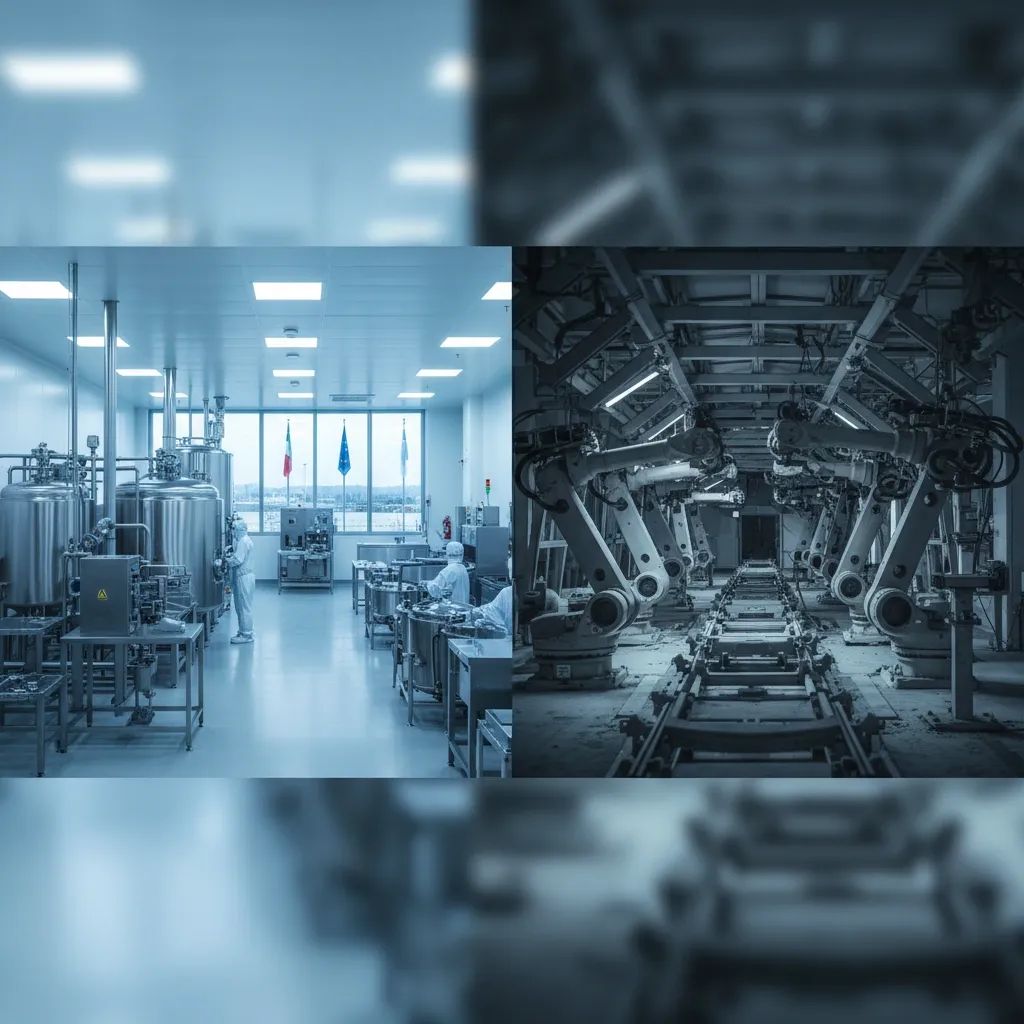
At stake is whether the EU ETS can evolve from a pure climate instrument into what Italian officials are calling an "industrial policy tool" capable of balancing decarbonization with the survival of domestic production. For residents of Italy, where manufacturing contributes roughly 16% of GDP and employs millions, the outcome will determine whether heavy industry continues to operate on Italian soil or migrates to jurisdictions with lighter regulatory burdens.
Why This Matters
• Carbon costs are biting: The price of EU carbon permits has surged from under €10 per tonne a decade ago to around €80 today, with peaks above €100 in 2023. For energy-intensive sectors like steel, cement, and chemicals, this translates to 16% of median earnings (EBITDA) in some cases.
• Industrial flight risk: Between 2013 and 2024, the number of ETS-regulated installations across the EU has fallen 14.6%, and cement plants have declined by 6%, raising concerns that emission reductions reflect factory closures, not cleaner production.
• Free permits phasing out: The Commission's proposal extends the phase-out of free carbon allowances to 2038 for some sectors—slower than environmentalists wanted, but still not slow enough to satisfy Italian industrialists who warn of a competitiveness crisis against non-EU rivals.
What the Commission Proposed
The European Commission's July 17, 2026 package aims to align the ETS with the bloc's target to cut net emissions 90% by 2040. The centrepiece is a recalibrated Linear Reduction Factor (LRF)—the rate at which the total supply of carbon permits shrinks each year. Under the new proposal, the cap will tighten by 3.7% annually from 2031 to 2035, then slow to 1.7% from 2036 to 2040.
Other headline measures include:
• Extended free allowances: Industries covered by the Carbon Border Adjustment Mechanism (CBAM)—which taxes carbon-intensive imports—will receive free permits through 2038, rather than losing them entirely by 2034.
• Benchmark flexibility: The Commission has offered roughly €6 billion in additional flexibility by softening the efficiency benchmarks that determine how many free permits a factory receives for heating and fuel use.
• Industrial Decarbonisation Bank: A new €100 billion financing vehicle to support large-scale clean technology investments, with a €30 billion "Investment Booster" available before 2030.
• Carbon removals and offsets: Certified permanent carbon removals within the EU will be integrated into the system, and up to 2% of international carbon credits will be allowed for the 2036–2040 period.
• Waste incineration: ETS coverage will extend to waste incinerators between 2031 and 2034.
The Commission framed the proposal as a way to maintain climate ambition while giving industry breathing room through slower permit reductions and expanded financial support.
Italy and Allies Push Back
Shortly after the July 2026 announcement, Adolfo Urso, Italy's Minister of Enterprises and Made in Italy, delivered a blunt verdict: "insufficient, too timid."
Speaking in Catania, Urso argued that the reforms fail to address the structural vulnerabilities the ETS creates for European manufacturers competing against producers in China, India, and the United States, where carbon pricing is either non-existent or far weaker. He pledged to consult with Italian industrial leaders and the bloc of ten countries—led by Italy and Poland—that have jointly called for a "radical overhaul" of the system.
The coalition's position paper, obtained by ANSA, demands that the ETS be transformed into a "pragmatic and fair" instrument of European industrial policy, one that "conjugates decarbonisation, competitiveness, and economic security." Central to their demands is a fundamental rethink of the benchmark parameters that govern free permit allocation, which they argue currently punish efficient European plants while failing to protect them from overseas competitors.
On paper, the ten-country group commands a blocking minority within the EU Council, giving them significant leverage to force further concessions during negotiations with the European Parliament, which aims to finalize its position by year-end.
What Italian Industry Is Saying
Emanuele Orsini, president of Confindustria—Italy's powerful employers' federation—was equally dismissive. In a statement released shortly after the Commission's announcement, he called the proposal "unsatisfactory for Italian industry" and pointed to an immediate market reaction: carbon permit prices rose on the day of the announcement, suggesting traders had anticipated deeper reforms that never materialized.
Orsini argued that the Commission's tweaks produce only "marginal short-term effects" and sidestep the "structural criticisms of the system in a global context." He urged the European Parliament and Council to intervene decisively, insisting that the ETS must be adapted so it does not "compromise Europe's industrial base."
Confindustria's critique reflects broader anxiety within Italian manufacturing. Between 2021 and 2024, carbon costs have averaged 16% of operating earnings for cement producers, according to research from CESISP at the University of Milano-Bicocca. Similar pressures afflict steel, chemicals, glass, and aluminum—sectors that collectively anchor entire regional economies across northern and central Italy.
The federation is calling for the EU to freeze or slow benchmark tightening, extend free allocations indefinitely for sectors at risk of carbon leakage, and strengthen the CBAM to ensure foreign competitors face equivalent carbon costs at the EU border.
Impact on Residents and Investors
For Italians, the ETS debate is not an abstract policy squabble—it has tangible implications for jobs, prices, and regional economic stability.
Energy-intensive industries employ hundreds of thousands directly and support sprawling supply chains. If carbon costs force plant closures or offshoring, the economic fallout will be concentrated in industrial heartlands like Lombardy, Piedmont, and Veneto, where steelworks, cement plants, and chemical facilities are major employers.
Electricity prices are also in play. Because power generators pass ETS costs through to consumers, higher carbon permit prices translate into higher bills for households and businesses. The Commission's proposal includes mechanisms for member states to compensate industrial consumers, but residential customers have fewer protections.
For foreign investors and multinational firms with operations in Italy, the ETS revision introduces regulatory uncertainty. The slower permit reduction schedule offers some stability, but the political pushback from Italy and its allies suggests the final rules may differ significantly from what the Commission proposed. Firms planning capital-intensive projects—such as electric arc furnaces or carbon capture installations—face a moving target for return-on-investment calculations.
On the upside, the €100 billion Industrial Decarbonisation Bank represents a substantial public commitment. Italian firms that can demonstrate viable clean technology projects may tap these funds, potentially offsetting some of the compliance burden. The €30 billion advance tranche before 2030 is designed to accelerate early movers.
What Happens Next
The Commission's proposal now enters the EU legislative process, where the Parliament and Council will each develop their own positions before entering trilogue negotiations to hammer out a final text. The Parliament's Environment Committee is expected to take the lead, with a plenary vote targeted for late 2026.
Italy's government will work through the Council to build support for deeper reforms, focusing on:
• Softer benchmark tightening to preserve free allocations.
• Extended transition timelines for sectors like cement and steel.
• Stronger CBAM enforcement to level the playing field with imports.
• Mandatory earmarking of auction revenues for industrial decarbonisation, rather than general budgets.
Environmental groups, meanwhile, are mobilizing in the opposite direction. Organizations like WWF and Carbon Market Watch have criticized the proposal for granting industry a "license to pollute longer and cheaper," arguing that extended free allocations undermine the "polluter pays" principle and delay necessary emissions cuts.
The European Court of Auditors has previously flagged that free permit allocations—originally conceived as temporary—still account for over 40% of total supply and have in some cases slowed decarbonization rather than accelerating it.
The Bigger Picture
The ETS was established in 2005 as the world's first major carbon market and covers roughly 40% of the EU's total greenhouse gas emissions, including power generation, manufacturing, aviation, and—since 2024—maritime transport. It has generated over €175 billion in auction revenues, which member states are supposed to channel into clean energy and efficiency investments.
The system is now at a crossroads. The EU has committed to a 90% net emissions reduction by 2040, a target that requires either rapid industrial transformation or significant offshoring of production. The Commission's proposal tries to thread the needle by maintaining climate ambition while softening the near-term compliance burden.
But for Italy and its allies, the calculus is different. They argue that without symmetrical carbon pricing globally, the ETS simply makes European products uncompetitive, driving emissions—and jobs—offshore without reducing global pollution. The CBAM is supposed to solve this, but it remains untested at scale and covers only a handful of sectors.
The political stakes are high. Italy's government, like several others in the coalition, faces domestic pressure to protect manufacturing jobs while meeting EU climate commitments. The resolution of this tension will shape not only the future of the ETS, but the viability of European industry in a global economy where carbon costs remain deeply asymmetric.