
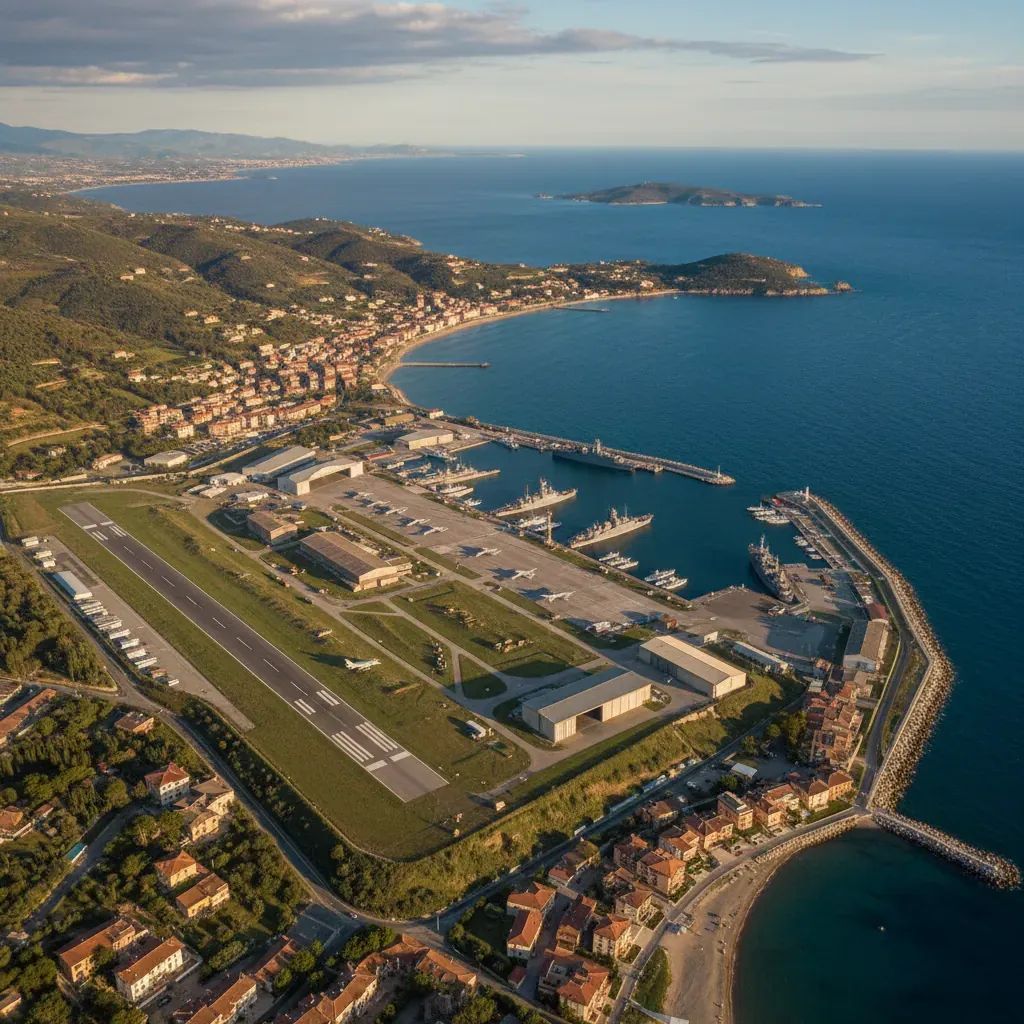
The United States Department of Defense is preparing to sharply reduce its conventional military commitment to NATO, a strategic shift that will force Italy and other European members to assume primary responsibility for the continent's defense. The move marks the most significant recalibration of transatlantic security architecture in decades and will fundamentally alter the military landscape that has underpinned Italy's national defense planning since the Cold War.
Why This Matters
• Italy will need to boost defense spending beyond current levels to fill capability gaps in air and sea power left by U.S. reductions
• The Italian Armed Forces may face pressure to contribute more fighter jets, naval vessels, and reconnaissance assets to NATO's collective defense
• Nuclear deterrence remains under U.S. control, but conventional defense responsibilities shift primarily to European shoulders
• Timeline for implementation extends over 6–12 months, giving Italy a narrow window to adjust force posture and procurement priorities
The Pentagon's Reduction Package
According to information presented to NATO headquarters last week by an envoy from U.S. Defense Secretary Pete Hegseth, Washington intends to cut strategic bomber deployments by roughly half while reducing fighter aircraft availability by up to one-third. The United States will also cease providing submarines for European operations and significantly curtail both reconnaissance and armed drone support. Naval destroyer contributions face substantial reductions as well.
A NATO diplomatic source confirmed to ANSA that the proposed cuts are "substantial" and place allies "under pressure" to compensate. However, no formal, detailed list of specific reductions has been officially transmitted yet. The Supreme Allied Commander Europe (SACEUR) is "fully engaged" and monitoring the situation closely, with officials emphasizing that "there is no gap in deterrence" at present.
The reductions are not occurring in a vacuum. The U.S. Congress actually authorized a force expansion for fiscal year 2026, adding over 30,000 personnel across all services and pushing the defense budget to approximately $1 trillion (€961 billion at current rates)—a 13% increase. Active-duty troop levels will exceed 1.3 million, the highest since 2023. The apparent contradiction underscores a deliberate strategic pivot: Washington is growing its military but redirecting focus toward the Indo-Pacific theater and China, expecting Europe to shoulder more of its own regional security burden.
What This Means for Italy
For Italy, the immediate consequences are financial and operational. The country currently allocates approximately 2% of GDP to defense, meeting the NATO baseline established in 2014. At The Hague Summit in 2025, allies committed to reaching 5% of GDP by 2035, with commitments targeting at least 3.5% dedicated to core military requirements and 1.5% to security-related spending such as critical infrastructure protection. Achieving that target will require Rome to nearly triple defense investment over the next nine years.
What This Means for Italian Taxpayers
For an average Italian household, the shift toward 5% defense spending by 2035 represents a significant change. Italy's 2024 defense budget was approximately €30 billion. Reaching 5% of GDP would require roughly €65-70 billion annually by 2035—an increase of approximately €35-40 billion per year. Spread across Italy's population of 59 million, this translates to roughly €600-700 additional per capita annually by 2035, though the increase will be phased in gradually over the decade.
This expanded defense commitment will inevitably affect budget priorities elsewhere. The government will need to weigh increased military spending against other sectors—healthcare, pension adjustments, infrastructure projects, and social programs. While defense is a legitimate national priority, Italian residents should expect these budget trade-offs to become a central political discussion in coming years.
The Italian Air Force operates a mix of Eurofighter Typhoons and F-35 Lightning II jets, with plans to acquire a total of 90 F-35s. As U.S. fighter presence in Europe shrinks by a third, Italy will face pressure to accelerate deliveries, increase readiness rates, and potentially deploy more aircraft to NATO's Quick Reaction Alert missions. Across Europe, approximately 600 F-35s are expected to be operational by 2035, and Italy's contribution to that fleet will become strategically more important.
Naval implications are equally significant. The Italian Navy, with its two aircraft carriers and a robust destroyer and frigate fleet, already plays a leading role in Mediterranean security. But with U.S. submarine support withdrawn and destroyer deployments curtailed, Italy may be called upon to increase naval patrols, participate more actively in anti-submarine warfare exercises like NATO's Dynamic Mongoose 2026 in the Arctic, and potentially contribute to the United Kingdom's proposed nine-nation multinational maritime force for the North Atlantic.
The Broader European Response
European allies are responding with a mix of concern and pragmatism. Poland, which received its first F-35A fighters in May, initially faced confusion when President Trump first announced troop withdrawals from Germany but later pledged to send 5,000 additional soldiers to Warsaw. The messaging has been "truly confusing," according to European ministers, but the underlying direction is clear: America First means Europe must do more.
France views the shift as an opportunity to "Europeanize NATO," while Norway emphasizes the need for structured reductions that allow time for capacity-building. Germany, which currently hosts around 36,000 U.S. troops, will see 5,000 transferred out within 6–12 months, representing roughly one-seventh of the American military footprint there.
NATO Secretary General Mark Rutte has sought to reassure member states, stating that withdrawals will occur gradually and will not impact alliance defense plans. General Alexus Grynkewich, Supreme Allied Commander in Europe, noted that further reductions are expected but will proceed in phases, allowing the European pillar to strengthen before the U.S. further scales back.
Historical Context and Strategic Realignment
This is not the first time Washington has reduced its European military presence. During President Trump's first term, threats to withdraw 9,500 troops from Germany circulated but never fully materialized. In January, the Pentagon withdrew approximately 200 personnel from nearly 30 NATO organizations, including intelligence fusion centers and special operations commands. The U.S. Army also cut its brigade combat teams in Europe from four to three, reverting to 2021 levels and delaying troop rotations to Poland.
Yet the current reductions are more comprehensive and doctrinally driven. The United States is the only NATO member whose defense spending as a percentage of GDP actually declined between 2014 and 2024, dropping from 3.71% to 3.38%, even as absolute dollar spending rose by $95 billion in constant 2015 terms. Washington now expects Europe to take up the conventional defense slack while the U.S. maintains nuclear deterrence and shifts attention to Asia.
Risks and Opportunities
Critics warn that rapid U.S. disengagement could erode NATO's deterrence credibility and create security vacuums that Europe is not yet prepared to fill. The loss of American experience—what some call a "brain drain"—from NATO command structures and intelligence-sharing hubs may reduce operational effectiveness. Moscow has already begun questioning the alliance's reliability, and further reductions could embolden adversarial postures.
On the other hand, the pressure may accelerate long-overdue defense modernization across Europe. Multinational initiatives, including cooperative programs on long-range precision strike drones and ballistic missile defense, are already underway. The United Kingdom's proposed maritime force and increased F-35 deployments represent tangible steps toward burden-sharing. If Italy and its neighbors successfully coordinate procurement, training, and interoperability efforts, the result could be a more balanced and resilient alliance.
Immediate Action Items for Italy
Rome should prepare for several near-term demands. First, expect increased calls to contribute more aircraft, ships, and personnel to NATO rapid-response formations. Second, budget planners must begin mapping out the trajectory to 5% of GDP by 2035, identifying which capabilities—fighters, drones, submarines, air-to-air refueling—require priority funding. Third, Italy will need to engage more actively in multinational defense initiatives to pool resources and avoid duplicative spending.
The Italian Ministry of Defense has not yet issued a formal response to the U.S. plans, but defense circles in Rome recognize that the era of cheap security guarantees is over. Whether this transition strengthens or strains Italy's fiscal position will depend on how swiftly and strategically the government acts in the coming months.
What Changes for Communities Hosting U.S. Bases
For Italian residents living near American military installations such as Aviano Air Base in northeastern Italy or Lago di Garda facilities, the immediate outlook involves modest adjustments rather than dramatic changes. The U.S. commitment to Europe overall remains strong despite conventional force reductions. However, residents can expect:
• Reduced American personnel at some bases over the 6-12 month implementation period, though nuclear-capable operations will remain stable
• Possible consolidation of some American support activities, potentially affecting local employment near bases
• Enhanced Italian military presence at facilities hosting shared operations, with more Italian personnel and equipment
• Continuity of security protocols around bases, with few immediate changes to daily life for surrounding communities
For towns and villages with economic ties to these installations, local governments should begin engaging with regional military commands to understand workforce impacts and explore opportunities for expanded Italian military presence to offset any American personnel reductions.
Nuclear Deterrence Unchanged
One critical reassurance: the United States has explicitly committed to maintaining nuclear deterrence in Europe through NATO. American strategic weapons, forward-deployed nuclear-capable aircraft, and extended deterrence guarantees remain intact. The cuts apply exclusively to conventional forces—fighters, bombers, surface ships, submarines, and drones. For Italy, which hosts U.S. nuclear-capable assets at bases like Aviano, this continuity provides a measure of stability even as conventional postures shift.
The Road to the Ankara Summit
The next NATO Summit, scheduled for Ankara, Turkey, on July 7–8, will serve as a critical forum for hammering out the details. Agenda items include defense spending commitments, industrial production capacity, and continued support for Ukraine. Italy's position at that table will be closely watched, both by allies seeking leadership on Mediterranean security and by Washington evaluating which partners are serious about burden-sharing.
For now, the formal list of U.S. capability reductions has not been finalized. But the direction of travel is unmistakable, and the clock is ticking. Italy has a narrow window to adapt its force structure, deepen defense partnerships, and secure the budget authority needed to shoulder a greater share of European defense. How effectively Rome navigates this transition will define Italy's security posture for the next generation.


