
Italy's Democratic Party leader Elly Schlein has flatly ruled out resuming Russian gas imports despite the energy crisis triggered by Iran's control of the Strait of Hormuz, declaring that any purchases would directly fund Vladimir Putin's ongoing invasion of Ukraine. Speaking on the sidelines of the Global Progressive Mobilisation in Barcelona, Schlein told reporters that "the conditions simply do not exist" to restart flows from Moscow—a stance that puts her at odds with rising energy costs and an increasingly complicated European energy picture.
The timing is politically delicate. Italy faces mounting pressure from industrial sectors as gas prices spike, but Schlein's position reflects a broader ideological divide within the country over how to balance economic pain with geopolitical principle. Her remarks come as European Union sanctions on Russian gas approach their final deadlines, yet actual import data tells a more paradoxical story.
Why This Matters
• EU sanctions prohibit new Russian gas contracts from March 18, 2026, with a full LNG import ban set for January 2027 and pipeline gas by autumn 2027.
• Italy's energy costs have surged due to the Hormuz crisis, with 20-25% of Italian oil imports passing through the strait before its closure.
• First-quarter 2026 EU imports of Russian LNG actually rose 17% to 5M tonnes, costing member states roughly €2.88B—contradicting official rhetoric.
The Hormuz Factor: Italy's Perfect Storm
The Strait of Hormuz, a chokepoint for roughly one-fifth of global natural gas and oil, has been under Iranian military control since late 2025, creating a volatile cycle of closures and partial reopenings. On April 17, Tehran briefly announced full reopening, sending oil prices plummeting to $85.57 per barrel. Days later, Iran reversed course, reimposing strict controls in response to a U.S. naval blockade on Iranian ports. At least two, possibly three, merchant vessels have been fired upon attempting passage, and reports suggest portions of the strait have been mined.
For Italy, the fallout is severe. The country is considered among the hardest-hit European nations due to its historic reliance on natural gas and a lack of diversified energy sources. Analysts warn of a "lockdown energetico"—an energy lockdown—with immediate cost increases for fuel, electricity, and industrial operations. Sectors including metallurgy, chemicals, ceramics, glass, and paper face acute vulnerability, as do small and medium-sized enterprises dependent on Gulf markets or maritime supply chains.
The International Energy Agency cautioned in mid-April that Europe has roughly six weeks of jet fuel reserves, raising the specter of flight cancellations. Oil prices, which hit a record $410.45 per barrel in December 2025, could climb again to $100–130 if the blockade persists, experts predict.
Schlein's Red Line: No Money for Moscow's War Machine
Schlein's refusal to entertain a Russian gas detour is unequivocal. She has repeatedly characterized any resumption as a "grave error" that would bankroll Putin's military campaign. "From February 24, 2022, energy and war are inseparable," she argued in recent statements, warning that reopening gas flows would signal "dangerous strategic fragility" to allies and markets.
Her stance reflects Democratic Party orthodoxy: since Russia's full-scale invasion of Ukraine, the center-left has maintained that European solidarity and sanctions integrity outweigh short-term energy relief. Schlein contends that Europe and Italy must not finance the Russian war machine, regardless of energy price volatility.
The EU's Contradictory Reality
Yet the data undercuts the narrative. Despite official sanctions timelines, EU imports of Russian LNG hit a record 6.8B cubic meters in the first three months of 2026—up from 5.7B in the same period of 2025. Deliveries from the Yamal project in Siberia surged, with European buyers spending an estimated €2.88B in the first quarter alone.
Much of this increase is attributed to reduced Qatari LNG flows, themselves disrupted by Middle Eastern infrastructure damage and Hormuz tensions. Prices spiked, and European buyers—facing a choice between expensive alternatives and sanctioned Russian gas—chose the latter. Critics have labeled this a "European short circuit" or outright hypocrisy: official policy points one way, market behavior another.
EU regulations now in force prohibit new or modified Russian gas import contracts signed after June 17, 2025. As of March 18, 2026, new deals are banned outright. Short-term LNG contracts face prohibition from April 25, 2026, and pipeline gas contracts from June 17, 2026. The ultimate goal remains a full LNG import ban by January 2027 and a pipeline gas ban by autumn 2027, though individual member states may request extensions under exceptional circumstances.
What This Means for Residents
For those living in Italy, the political rhetoric and regulatory deadlines matter less than the bills. Energy costs are climbing, and industrial competitiveness is at stake. Decree Law 42/2026 offers subsidized financing and grants for SMEs hit by the crisis, but the measures are stopgaps, not solutions.
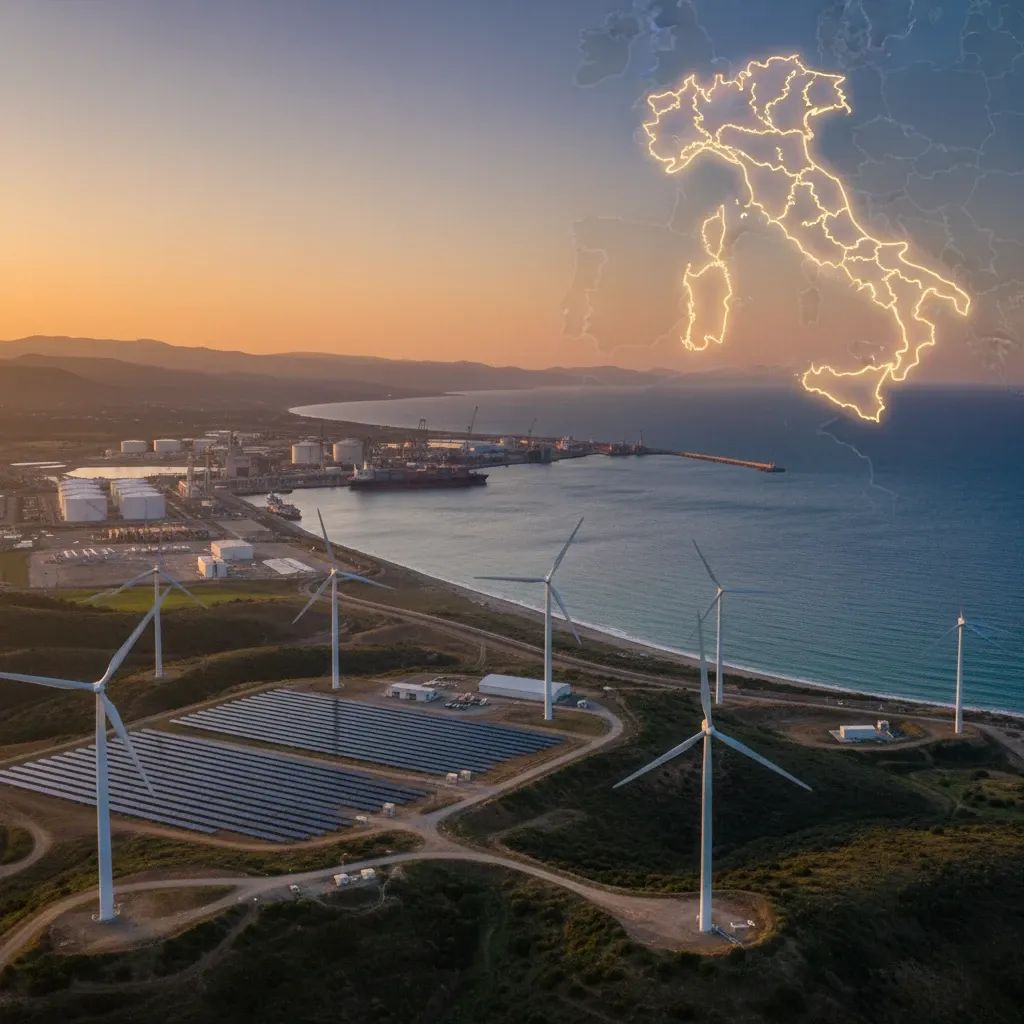
Italy's diversification strategy has made progress. The country has nearly eliminated its reliance on Russian gas, which accounted for 40% of supplies in 2021. New partnerships with Algeria (now the top supplier), Libya, Congo, Qatar, the United States, and Azerbaijan have filled much of the gap. The TAP pipeline from Azerbaijan and the TransMed pipeline from Algeria are key arteries, while new floating regasification terminals at Piombino and Ravenna will add capacity equivalent to over 40% of annual national demand—roughly 27B cubic meters.
Renewable energy investment is accelerating, with €8–10B flowing into wind, solar, and storage projects in 2026. Renewables covered 41.1% of Italy's electricity demand in 2025, and 7,191 MW of new capacity came online last year. Still, reaching the 2030 targets of the updated National Integrated Energy and Climate Plan (PNIEC) would require installations of over 12,000 MW annually—a pace Italy has yet to sustain. Bureaucratic delays, grid connection bottlenecks, and regulatory uncertainty remain persistent obstacles.
The government's Piano Mattei aims to position Italy as a Mediterranean energy hub, leveraging partnerships across Africa to secure gas supplies and develop renewable projects in countries like Egypt, Mozambique, and Angola. The initiative is intended to reduce dependence on volatile sources while promoting sustainable growth in partner nations.
The Political Calculus
Schlein's hardline stance plays well with her party's pro-Ukraine, pro-sanctions base, but it risks alienating voters and businesses feeling the pinch of high energy costs. The Italian government has called for coordinated European responses to the global energy shock, emphasizing that industries and households cannot bear indefinite price spikes without economic damage.
The debate over Russian gas has resurfaced before—most recently when some political figures floated the idea of partial resumption—but Schlein and the Democratic Party have consistently opposed it. The argument is both moral and strategic: rewarding aggression undermines collective security, and restoring Russian energy leverage invites future geopolitical blackmail.
Technically, a full resumption faces obstacles beyond politics. The Nord Stream 1 and 2 pipelines remain partially inoperable, damaged in 2022 under circumstances still debated. Any renewed pipeline flows would require significant infrastructure investment and regulatory reversals.
Looking Ahead
As the Strait of Hormuz situation remains unresolved and Russian sanctions approach their final phase, Italy finds itself navigating a treacherous energy landscape. The country's exposure to global shocks is acute, and its transition to renewables—though underway—is neither fast enough nor stable enough to insulate households and businesses from volatility.
Schlein's refusal to budge on Russian gas is a political marker, a declaration that some lines cannot be crossed regardless of economic pressure. Whether that stance holds as energy bills rise and industries struggle will depend on how long the Hormuz crisis lasts, how quickly alternatives scale, and whether European solidarity can withstand the stress of another energy shock.
For now, the message from Italy's center-left leadership is clear: there will be no return to Russian gas, no matter the cost. The question is whether the rest of the country—and Europe—can afford to agree.


