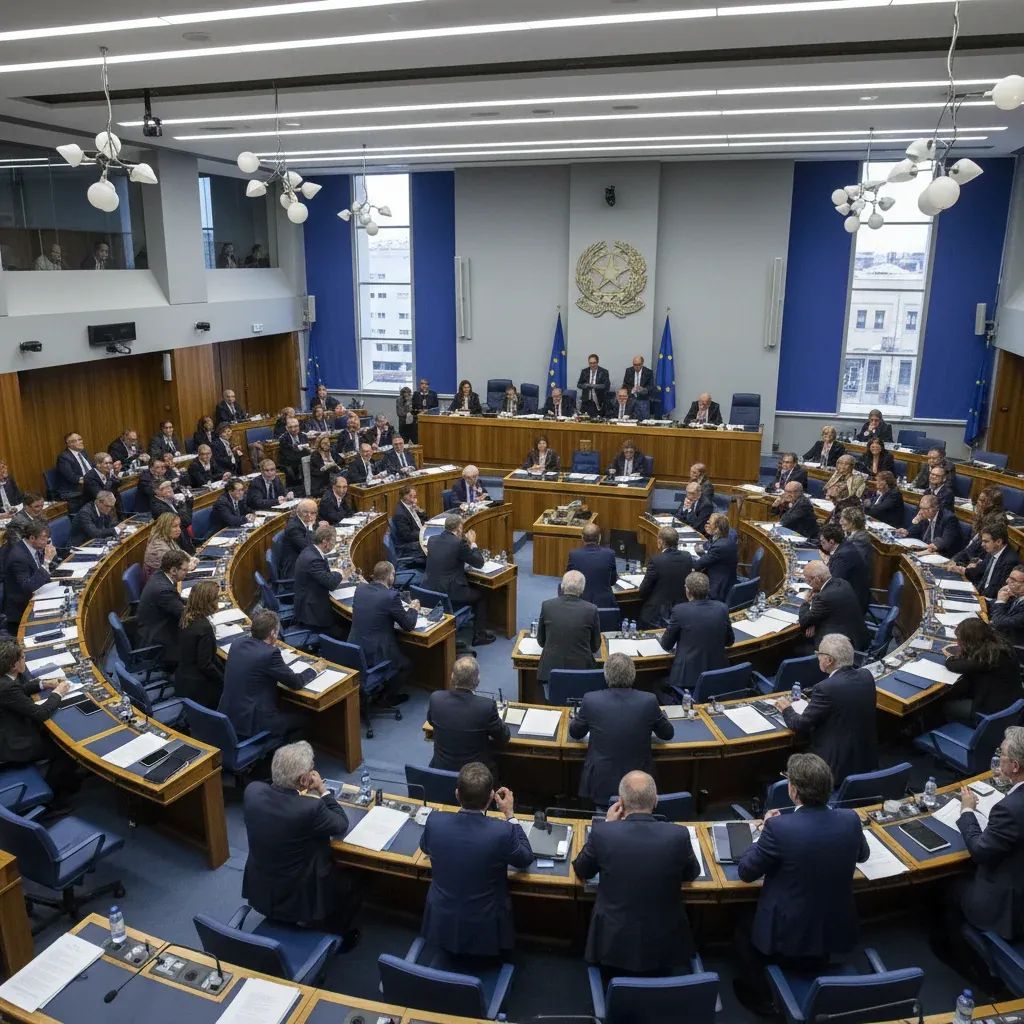
An AI-generated video depicting Italy's European Parliament member Roberto Vannacci as a Roman emperor ordering the symbolic execution of opposition leaders has ignited a legal and political firestorm, raising urgent questions about accountability under Italy's existing laws governing incitement to violence.
Why This Matters:
• Legal concerns: The video may violate the Mancino Law (L. 205/1993), which sanctions gestures and actions inciting violence for political motives, potentially carrying criminal penalties.
• Political fallout: Five Star Movement leader Giuseppe Conte and Democratic Party officials have demanded government allies publicly distance themselves from Vannacci, whose party is negotiating a formal coalition pact with Prime Minister Giorgia Meloni's administration.
• Incitement questions: Legal experts note the video's depiction of opposition leaders facing execution could trigger scrutiny under existing anti-incitement statutes, regardless of claims that the content is satirical.
The Controversial Deepfake
The footage, created using Grok AI and shared on the Instagram account of Vannacci's wife Camelia Mihailescu, stages a Colosseum scene with the former general seated alongside digital replicas of Prime Minister Meloni and Senate President Ignazio La Russa, both dressed in imperial garb. At the arena's center, bound figures representing Democratic Party secretary Elly Schlein, Giuseppe Conte, former Prime Minister Romano Prodi, and former Chamber President Laura Boldrini await execution.
Vannacci makes the pollice verso (thumbs-down gesture), signaling death. The "empress"—modeled on Mihailescu—flashes an obscene gesture toward the captives. A gladiator armed with a sickle and hammer—symbols of communism—carries out the sentence.
The video was published on July 20, 2026, and remains accessible on multiple social media profiles as of today.
Legal Framework and Potential Consequences
Under Italy's Mancino Law, which has long prohibited incitement to violence on political grounds, the deepfake faces potential legal scrutiny. The law targets actions and imagery that incite violence based on political ideology, and Italian courts have historically applied these provisions broadly to include symbolic depictions of political violence.
Italian legal responsibility operates on the principle of personal accountability—individuals who commission, create, or deliberately disseminate such content can face criminal liability. The question of whether the video qualifies as protected satire or crosses into actionable incitement remains contested.
Legal observers note that symbolic depictions of politically motivated killings involving recognizable public officials have been examined in Italian courts, with outcomes varying based on context, intent, and risk of harm. The presence of identifiable likenesses combined with imagery evoking ancient Roman execution practices adds complexity to any legal defense.
Political Backlash and Coalition Tensions
Giuseppe Conte issued a sharp rebuke on Facebook, calling the video a "message that incites violence and risks inciting the most fanatical." He challenged the government to clarify its position: "Is this the electoral campaign we should expect? Today Vannacci declared himself ready to make a written agreement with Meloni. Is it with people like these that Meloni, La Russa, Tajani, and Salvini will make a deal?"
Francesco Boccia, Democratic Party Senate group leader, labeled the footage "instigation to hatred and violence." Simona Malpezzi, a PD senator, directly asked Prime Minister Meloni whether she intends to form an alliance with Vannacci's movement or publicly dissociate from the content.
Angelo Bonelli of Europa Verde accused Vannacci of importing "Trump-style methods" of delegitimization and violence spectacle into Italian politics.
What This Means for Residents
For Italians, the episode underscores how AI-generated content depicting political violence has become a contemporary political flashpoint. While Italy has existing laws addressing incitement to violence, the deployment of deepfake technology raises questions about enforcement and deterrence in the digital age.
The controversy also exposes fractures within Italy's center-right coalition. While various political figures have expressed concern about the video, neither Prime Minister Meloni nor her cabinet have issued formal public condemnations. Senate President La Russa called the clip "unacceptable" in remarks to Il Foglio, yet the government's broader response remains measured.
This silence matters because Vannacci's Futuro Nazionale movement is currently negotiating a written coalition agreement with Meloni's government ahead of upcoming regional elections. Opposition leaders argue that any formal pact without clear distancing from such tactics would signal troubling political tolerance.
Vannacci's Defense: "Pure Fantasy"
Vannacci dismissed critics, telling supporters the video is "science fiction and clearly unreal" and advising detractors to "take an antihistamine"—a sarcastic suggestion they are overreacting. He characterized the footage as satirical commentary, invoking free speech protections.
Legal analysts counter that Italian courts have consistently examined whether "satire" defenses apply when content depicts violence against identifiable individuals, particularly public officials. The presence of recognizable likenesses combined with imagery evoking ancient Roman executions raises substantive questions about intent and potential incitement.
Historical and Cultural Context
The video's Roman setting carries significant symbolism. Fascist Italy under Mussolini extensively appropriated imperial Roman iconography to legitimize autocratic rule, a visual language still sensitive in contemporary political discourse. By staging opposition leaders as victims of symbolic state execution—a punishment reserved for enemies of the state in antiquity—the video evokes authoritarian elimination of dissent.
Laura Boldrini, herself depicted in the footage, noted this parallel, stating the imagery "recalls methods of eliminating opponents typical of authoritarian regimes."
What Happens Next
Prosecutors in Rome have not yet announced whether they will open a formal investigation, though legal observers suggest the public nature of the offense and involvement of high-ranking officials make some form of official review possible.
For residents tracking the case, the outcome will illuminate how Italy applies its existing incitement laws in the context of AI-generated political content. If authorities decline to pursue charges, critics warn it could signal tolerance for fabricated violence imagery. If investigations proceed, the case will test whether traditional legal defenses remain adequate in an era of synthetic media.
The political dimension remains equally uncertain. Meloni's government faces a choice: formally repudiate Vannacci and risk alienating a nationalist constituency, or maintain measured distance and invite accusations of insufficient moral clarity. Opposition parties have signaled they will use the government's response as a political issue in regional campaigns.
For now, the video remains online, viewed tens of thousands of times, as Italy grapples with the collision of ancient symbolism, modern politics, and cutting-edge artificial intelligence.