
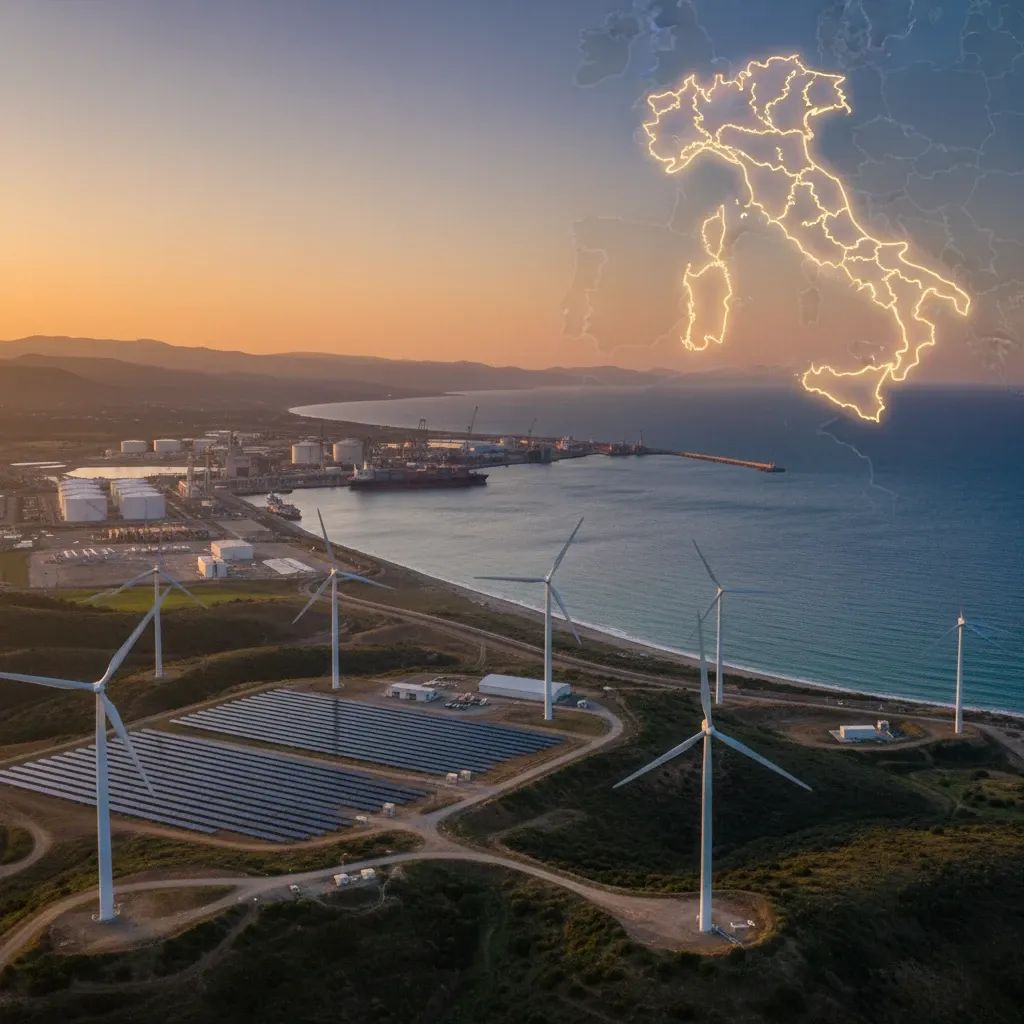
The European Commission has reaffirmed that its embargo on Russian fossil fuels is irreversible, a position that will reshape energy costs and supply chains for households and businesses across Italy through the remainder of this decade.
Why This Matters
• No reversal possible: EU law now prohibits any resumption of Russian gas imports, regardless of political pressure from member states.
• Oil embargo coming: A legislative proposal to ban Russian petroleum completely is expected before the end of 2027.
• Price volatility ahead: Italy faces continued exposure to higher energy costs as alternative suppliers charge premiums over former Russian pipeline rates.
Brussels Closes the Door on Russian Energy
Speaking at a daily press briefing, European Commission spokesperson Anna-Kaisa Itkonen dismissed any notion that the bloc might reconsider its energy sanctions against Moscow. Her comments came in response to remarks by Alice Weidel, leader of Germany's right-wing Alternative für Deutschland party, who had suggested reviving Russian gas imports.
"If the question concerns resuming Russian gas imports into the European Union, no, this is not possible," Itkonen stated. She emphasized that existing EU legislation makes a U-turn legally impossible, adding that the bloc has made its strategic choice "without regrets."
The regulatory framework is already in effect. A key enforcement measure took place this month affecting short-term pipeline gas contracts with Russia. Two additional measures are scheduled to activate in January and September of the coming year, further tightening restrictions on Russian energy flows.
The Phased Enforcement Schedule
The EU has established a timeline for completely eliminating Russian gas and oil imports. Short-term contracts are being phased out over the coming months, while longer-term agreements face stricter deadlines extending through 2027. The framework leaves no legal pathway for member states to reverse course.
Member states were required to submit national diversification plans outlining concrete steps to replace Russian supplies. Companies must notify authorities of all remaining Russian gas contracts, with penalties for non-compliance.
In emergency scenarios, the Commission retains limited authority to temporarily suspend import restrictions, though this represents a safety valve rather than a policy shift.
What This Means for Italian Households and Industry
Italy has made significant progress in reducing dependence on Russian gas, with supplies from Russia declining substantially since sanctions began. However, this transition carries tangible costs for households and businesses.
The shift to alternative energy sources—primarily liquefied natural gas (LNG) from Western suppliers, along with increased renewable energy—has introduced new cost pressures. Italy, like other southern European nations, now relies heavily on LNG shipments, which according to industry analysts typically command higher prices than the pipeline gas previously imported from Russia.
Italian electricity prices already rank among the highest in Europe, driven by a combination of gas-fired generation and historical renewable energy incentive structures. This transition away from Russian supplies has contributed to maintaining elevated costs relative to other EU nations.
Industrial sectors with high energy consumption face heightened operating costs during this transition period. Small and medium enterprises may absorb these increases or pass them on to consumers.
Oil Embargo: The Next Frontier
While gas restrictions dominate headlines, the Commission is preparing legislation to eliminate Russian petroleum imports entirely by the end of 2027. The EU has already significantly reduced Russian oil dependency through existing sanctions.
Itkonen confirmed that oil restrictions "are part of the broader REPowerEU strategy" and that "work is underway" on the proposal. The timeline targets completion before the 2027 deadline.
For Italian refineries and transport sectors, this represents another layer of supply-chain restructuring, requiring increased reliance on alternative sources from North Africa, the Middle East, and other suppliers.
The REPowerEU Strategy
Launched in May 2022, the REPowerEU plan rests on three pillars: energy conservation, supply diversification, and accelerated clean energy production. The strategy aims to increase renewable energy capacity and has set ambitious targets for wind and solar deployment.
The EU has raised its binding renewable energy target to a minimum of 42.5% by 2030, with an aspirational goal of 45%. Streamlined authorization procedures for renewable infrastructure projects aim to accelerate deployment across member states.
However, the transition introduces new vulnerabilities. LNG supply chains depend on global market conditions and maritime routes that can be disrupted by geopolitical events. European importers compete with Asian buyers for available LNG supplies, particularly during periods of supply tightness.
The Road Ahead for Italy
For residents and businesses in Italy, the embargo means sustained pressure on energy bills and continued volatility in wholesale markets. While renewable energy costs are falling—solar and wind are increasingly competitive with traditional generation—the transition away from gas-fired power and heating will take years to complete.
Energy independence represents a long-term benefit. By 2027, Italy will be insulated from Russian supply disruptions, and the trajectory points toward greater reliance on domestically sourced renewable electricity. The question remains how much short-term cost pressure households and companies can absorb during this transition period.
Italy's government has introduced targeted subsidies and price-dampening measures to cushion the immediate impact, though these strain public finances. As the embargo tightens through 2027, expect continued policy debate over balancing energy security, affordability, and climate commitments.


