
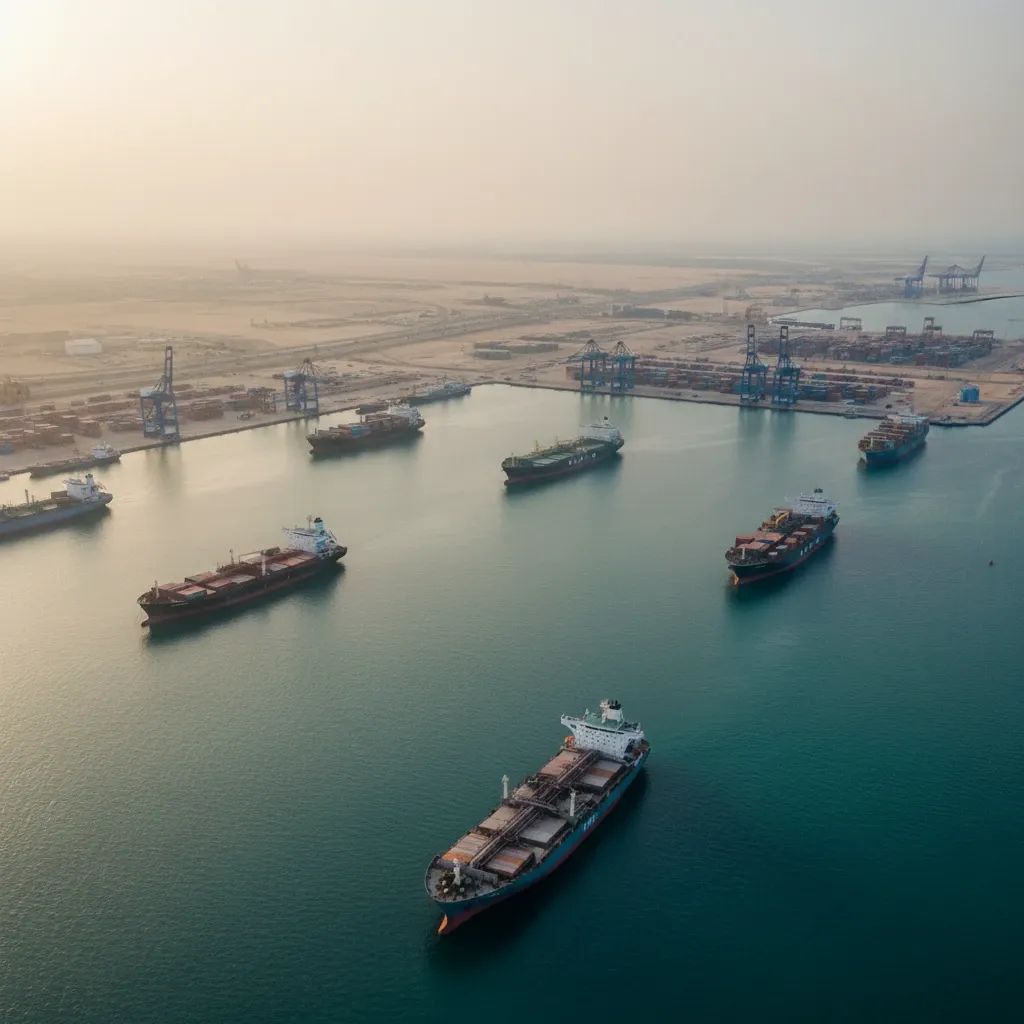
Iran's Revolutionary Guards have escalated their rhetoric around the Strait of Hormuz, warning that foreign naval forces risk becoming trapped should tensions spiral further. The standoff comes as the U.S. has moved to assert control over the world's most vital oil chokepoint, while Iran claims sovereignty over the waterway. This collision of interests could send shock waves through global energy markets and living costs across Europe, including Italy.
Why This Matters
• Energy prices are climbing: Global oil markets are reacting to supply concerns, with prices elevated. These cost increases translate directly into higher petrol, heating, and electricity bills for Italian households.
• Supply chain disruption looms: About 20% of global oil and a similar share of liquefied natural gas pass through this 34-kilometer strait daily, feeding Italy's energy imports and the wider European economy.
• Italy is part of the international response: Rome has joined over 40 nations calling for diplomatic resolution and participates in maritime awareness efforts in the region, though the government has emphasized the need for diplomatic solutions and UN authorization before any military escalation.
The Standoff: Control vs. Access
The impasse centers on one fundamental question: who controls passage through the narrow waterway separating the Persian Gulf from the open ocean. Recent negotiations have failed to bridge the gap between Iran's assertion of control and international demands for freedom of navigation.
Iran's Revolutionary Guard Corps (IRGC) has asserted control over traffic in the strait and warned foreign vessels against passage. The Guard's naval command has posted warnings on social media, underscoring the military threat.
Iran's chief negotiator put the position bluntly: the negotiations failed because the counterpart could not earn the trust of the Iranian delegation. U.S. officials confirmed that Iran rejected proposed terms, with the core disagreement centered on control of the strait itself.
Britain has explicitly refused to participate in a U.S.-led blockade, instead stating it would work with France and other partners to uphold freedom of navigation through diplomatic and multilateral efforts.
Military Reality: Asymmetry in a Narrow Channel
The IRGC's naval doctrine is built around asymmetric warfare—fast attack boats, naval mines, shore-based anti-ship missiles, and low-cost drones designed to exploit the cramped geography of the strait. The confined waters and proximity to Iranian shores limit the effectiveness of conventional naval superiority. Mine clearance remains especially challenging, with experts warning that any military operations in the area would face significant obstacles.
The U.S. Navy operates with advanced capabilities, yet the strait's geography presents unique tactical challenges. Analysts warn that even a temporary closure or interruption would act as a significant shock to the global economy, driving up production costs and feeding inflation. For Italy, heavily reliant on imported energy, the impact would be immediate.
What This Means for Residents
Italian consumers should prepare for higher energy costs in the coming weeks and months. Petrol prices at the pump are likely to continue rising if the standoff persists. Heating and electricity bills will follow suit, particularly as Europe's energy mix remains vulnerable to supply shocks from the Middle East.
Shipping costs are also under pressure. Global shipping lines are applying risk-related surcharges and adjusting routes to account for the situation. That means longer delivery times and higher prices for imported goods, from electronics to clothing. Fertilizer and agricultural products face potential disruption, which could eventually affect food production costs and grocery prices.
For Italian businesses dependent on global supply chains—automotive, manufacturing, chemicals—the bottleneck could translate into production delays and rising input costs. Small and medium enterprises may face pressure on margins as costs rise.
Europe's Diplomatic Response
Italy sits within a coalition of more than 40 nations that has called for a diplomatic resolution to the standoff. The coalition includes NATO members and key Asian economies such as Japan and South Korea, all of which rely on the strait for energy security. European leaders have issued joint statements pledging support for freedom of navigation.
Italy and Germany have emphasized the importance of diplomatic solutions, insisting on exhausting negotiation channels and requiring explicit UN authorization before any military action in the strait. Europe's approach prioritizes multilateralism and legal clarity, reflecting concerns that unilateral military action could deepen the crisis rather than resolve it.
Britain has positioned itself independently, emphasizing it will work with France and other partners on maritime security rather than participate in a separate U.S.-led construct.
Economic Fallout: From Oil to Food
The strait is not merely an oil route. It is a critical artery for refined petroleum products, petrochemicals, and manufactured goods moving to and from the Gulf's ports. Disruption to the channel would ripple across sectors: energy, manufacturing, agriculture, and consumer goods.
Asia depends heavily on energy transiting Hormuz, making China, India, and Japan acutely vulnerable to supply disruptions. Europe, while less dependent on Middle Eastern oil than Asia, would still face price spikes driven by global market integration. Italian families, already navigating elevated living costs, would experience pressure on household budgets as energy and goods become more expensive.
Alternative routes exist but cannot fully compensate for a closure. Saudi Arabia and the United Arab Emirates maintain pipelines bypassing the strait, yet their capacity is limited. Iraq, Kuwait, and Bahrain have no viable alternatives, meaning a prolonged closure would severely impact their ability to export and their government revenues.
What Happens Next?
The risk of escalation remains high. Iran has warned that military vessels approaching the strait risk confrontation. The U.S. has stated it intends to ensure freedom of navigation through the waterway. Iranian sources claim unauthorized approach attempts have occurred—claims not independently confirmed.
Diplomatic efforts continue, but the fundamental disagreement remains unresolved. The failed negotiations underscore the depth of the divide over control and access. Until that gap closes, the strait remains a critical flashpoint where geopolitical interests, economic necessity, and military capabilities intersect—with Italy and the rest of Europe watching energy prices and cost of living for the consequences.


