
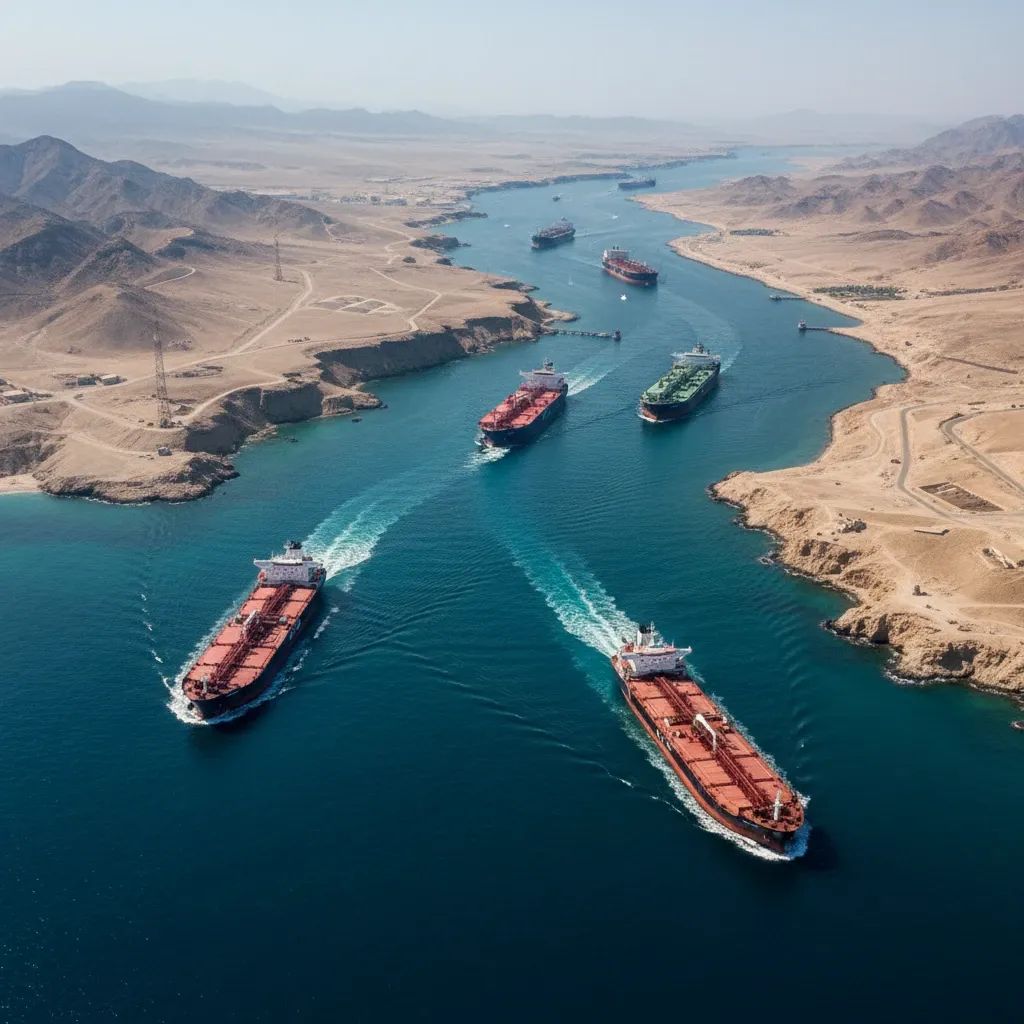
A three-week military confrontation between the United States, Israel, and Iran has effectively closed the Strait of Hormuz—the world's most critical oil chokepoint—driving crude prices past $115/barrel and pushing Italian pump prices to levels that threaten to erase household discretionary spending. Italy, which imports roughly 90% of its oil needs, is particularly vulnerable to Middle East supply disruptions. Despite a government decree extending fuel excise tax cuts through May 1, pump prices across Italy continue their upward march, with diesel now more expensive than gasoline and household budgets taking a hit estimated at €1.3 billion for the upcoming travel season alone.
Why This Matters
• Supply crisis unprecedented: The International Energy Agency has characterized the Hormuz blockade as the "largest supply disruption in the history of the global oil market," with one-fifth of the world's oil and liquefied natural gas normally flowing through this maritime chokepoint now effectively blocked to commercial traffic.
• Pump prices climbing daily: Self-service diesel in Italy now averages €2.14/liter (up from €2.13 on Saturday), while gasoline sits at €1.78/liter—and highway stations charge even more.
• Economic forecast darkening: Italy's 2026 GDP growth could flatten to zero if oil holds at $110-120/barrel through mid-year, according to domestic economic projections.
• Infrastructure damage extensive: Dozens of refineries, gas facilities, and ports across the Gulf region sustained damage that will take months to years to repair, constraining global supply well beyond any diplomatic ceasefire.
• Inflation accelerating: Italy's consumer price index hit 1.7% in March, up from 1.5% in February, propelled by a 12.5% spike in diesel and 2.9% rise in gasoline costs.
Hormuz Blockade Rewrites Market Reality
The diplomatic pause that briefly pushed Brent crude below $110 early Monday lasted mere hours. By afternoon trading, West Texas Intermediate (WTI) had reached $115.57/barrel (+2.8%) and Brent to $111.58 (+1.65%) after Iran rejected a proposed 45-day truce with Washington and fresh strikes targeted petrochemical complexes in Tehran. Over the past week alone, crude prices have climbed 23%, a pace unseen since the 2008 financial crisis.
The Strait of Hormuz—the maritime chokepoint through which one-fifth of the world's oil and liquefied natural gas normally flows—remains effectively closed to commercial traffic. While Iran has permitted a trickle of vessels from friendly nations and so-called "shadow fleet" tankers to pass, data from maritime analytics firm Kpler show only 21 ships transited the strait over the weekend, a fraction of normal volumes. Saudi Arabia's Red Sea terminal at Yanbu is operating at maximum capacity to bypass the blockade, but the rerouted supply falls far short of pre-conflict levels.
Major financial institutions have scrambled to revise their forecasts. Bank of America now projects Brent at $77.50/barrel for the full year 2026, up from a prior $61 estimate, with an $80 average expected in the second quarter. Standard Chartered raised its 2026 Brent outlook to $85.50/barrel, anticipating a spike to $98 in Q2. UBS went further, forecasting an average of $86/barrel this year and warning that prices could briefly breach $120 if the Hormuz closure persists another two to three weeks. Some market watchers have floated the possibility of $200/barrel in a worst-case scenario involving prolonged supply disruptions.
The International Energy Agency has characterized the situation as the "largest supply disruption in the history of the global oil market," projecting a collapse of 8 million barrels per day in March output from Gulf producers unable to export their crude.
Italy's Pump Price Pain
Italian motorists are feeling the squeeze despite Rome's efforts to cushion the blow. The Italy Ministry of Business and Made in Italy (MIMIT) reported Monday that self-service gasoline prices nationwide averaged €1.781/liter, up from €1.777 on Saturday. Diesel, traditionally cheaper than gasoline, now costs €2.140/liter at self-service pumps. This reversal reflects Italy's 2026 Budget Law, which deliberately raised diesel excise taxes while lowering gasoline taxes to discourage diesel vehicle purchases for environmental reasons—a policy now colliding painfully with the supply crisis since diesel is more affected by Middle East disruptions. On Italy's toll motorways, the damage is steeper: gasoline averages €1.816/liter and diesel €2.157/liter.
For a typical Italian household driving a diesel vehicle 10,000 kilometers annually, the annual fuel bill has climbed by an estimated €208 compared to pre-conflict levels. Monthly household expenses have risen between €20 and €45, with the annual burden potentially reaching €540 for some families. The government decree extending the excise cut through early May—now under review by the Italy Senate Finance Committee—has provided limited relief as international crude prices overwhelm the tax discount.
The real-world effect extends far beyond the gas tank. With 86% of Italy's freight moving by road, higher diesel costs ripple through the entire economy, pushing up prices for groceries, consumer goods, and industrial inputs. The trucking sector faces existential pressure, with industry groups warning that diesel could hit €3/liter if the crisis deepens, forcing logistics companies to pass costs downstream or absorb losses that threaten solvency.
Infrastructure Wreckage Across the Gulf
The Middle East conflict has left a trail of damaged energy assets that will constrain global supply for months, if not years. In Iran, the giant South Pars gas field—the world's largest, shared with Qatar—has been struck multiple times, most recently on April 6, suspending several production units. Kharg Island, which handles roughly 90% of Iranian oil exports, has reported explosions, though damage assessments remain incomplete. The Mobarakeh Steel Company has halted operations entirely after attacks destroyed key units.
Across the Gulf, the damage is equally severe. Qatar's Ras Laffan LNG terminal, the planet's largest liquefied natural gas export facility, sustained "extensive damage" in a March 19 Iranian strike, cutting the country's export capacity by 17% and costing an estimated $20 billion in annual revenue. Restoration of such complex infrastructure could take three to five years, according to industry specialists.
Kuwait has seen "severe" damage to refineries and petrochemical plants operated by the Kuwait Petroleum Corporation, with fires at the Mina Al-Ahmadi refinery and the Shuwaikh oil sector complex. The United Arab Emirates suspended operations at the Shah natural gas field following drone attacks, while Bahrain has faced strikes on hydrocarbon storage depots. Even Saudi Arabia's Ras Tanura facility, one of the world's largest oil production sites, was targeted, forcing the closure of several refinery units.
Industry analysts estimate that repairing damaged Gulf refineries and energy infrastructure will require "several months" at minimum, with more complex facilities needing far longer. Even if a ceasefire materializes soon, shipping companies are expected to wait at least two months before resuming normal Hormuz transit, given lingering security concerns and the need to assess safe passage.
What This Means for Residents and Businesses
Italy's government has responded with a patchwork of support measures. Agricultural enterprises can claim a 20% tax credit on fuel purchases made in March 2026. Road freight operators are eligible for excise refunds on commercial diesel used in the first quarter, with applications due by April 30. A targeted fuel voucher program for low-income households is under consideration, though no broad-based excise cuts beyond the current May 1 extension have been announced.
Families are already adjusting behavior, curtailing non-essential travel and scrutinizing household energy use. The broader economic threat looms larger: if oil prices remain elevated through mid-year, Italy's 2026 economic growth could stall completely, wiping out earlier forecasts of modest expansion. The Eurozone as a whole faces the prospect of growth slowing to just 0.5-0.6%, down from earlier projections near 1%.
Jamie Dimon, chief executive of JPMorgan and a bellwether voice in global finance, issued a stark warning this week: the conflict risks triggering a commodities price shock that will drive inflation higher and force central banks to raise interest rates, compounding the economic pain. Dimon also flagged concerns about the private credit sector—non-bank lending to companies—though he stopped short of calling it a systemic threat.
What Residents Can Do:
• Check eligibility for government fuel vouchers if you are a low-income household
• If you are a road freight operator, apply for excise refunds on commercial diesel by the April 30 deadline
• Consider carpooling or using public transport alternatives for non-essential trips
• Monitor government announcements for additional support measures beyond May 1
Diplomatic Efforts and OPEC's Limited Response
Diplomatic negotiations continue in various formats, with intermediaries shuttling between Tehran, Washington, and regional capitals. Yet prospects for an imminent breakthrough remain dim following Iran's rejection of the 45-day ceasefire proposal. Military operations on both sides show no sign of abating, with infrastructure strikes and maritime interdiction continuing apace.
OPEC+, the cartel of oil-producing nations, announced Sunday a modest production increase of 206,000 barrels per day, a gesture that briefly nudged prices downward Monday morning before geopolitical reality reasserted itself. The alliance has expressed "strong concern" about the attacks on member-state facilities, noting that repairs are complex, costly, and far from immediate, reducing collective production capacity in the near term.
The Italy Cabinet, along with counterparts across Europe, faces a delicate balancing act: protecting consumers and businesses from price shocks while preserving fiscal revenues and maintaining pressure on member states to accelerate the transition away from fossil fuels. With Italy's inflation still below the Eurozone average of 2.5% thanks in part to targeted interventions, policymakers are weighing whether to extend excise relief beyond May or pivot to more targeted support for vulnerable households and critical industries.
For now, Italian drivers should expect pump prices to remain elevated and volatile, hostage to events unfolding thousands of kilometers away in the waters and oilfields of the Persian Gulf.


