Iran's Islamic Revolutionary Guard Corps has launched a missile barrage against military installations in Jordan hosting US forces, marking a sharp escalation in the six-month-old standoff between Washington and Tehran over control of the Strait of Hormuz. The strikes—aimed at King Hussein and Al Azraq airbases and the port city of Aqaba—followed a pre-dawn US raid on Iranian rocket launchers positioned on Larak Island, where American officials claim the Islamic Revolutionary Guard Corps (IRGC) was preparing to seed commercial shipping lanes with naval mines.
Why This Matters
• Jordanian air defenses intercepted 8 missiles that violated the kingdom's airspace, with no reported casualties or major infrastructure damage.
• US Central Command confirmed nearly all incoming projectiles were destroyed by American and Jordanian defensive systems, avoiding significant impact on the roughly 4,000 US military personnel stationed across multiple Jordanian facilities.
• Iran's Foreign Ministry warned of "decisive responses" to further US aggression and held Washington fully responsible for any escalation, while President Masoud Pezeshkian stated Tehran "does not seek war" but will not remain passive.
• The exchange threatens 20% of global oil supply transiting the Strait of Hormuz, with Brent crude recently spiking above $120–130 per barrel (approximately €110–120) amid ongoing supply disruptions.
The Larak Incident and US Justification
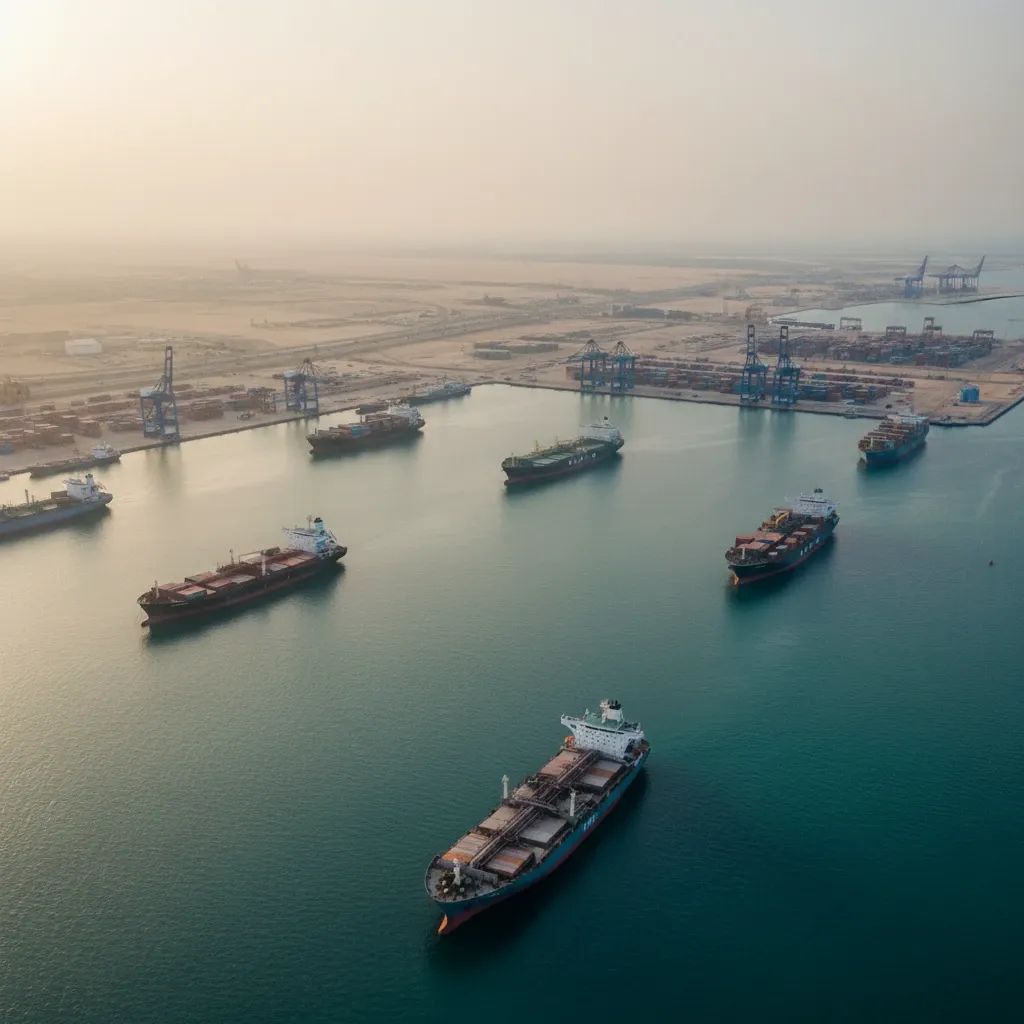
American strike aircraft targeted two IRGC launchers on Larak Island late on 30 August, destroying equipment that US Central Command characterized as an imminent threat to international navigation. According to a Pentagon official speaking to Axios, surveillance assets detected Revolutionary Guard units preparing rocket-assisted deployment of naval mines across shipping channels in the Strait of Hormuz—a chokepoint responsible for roughly one-fifth of the world's seaborne petroleum trade.
US Central Command described the operation as "limited and precise," emphasizing it was defensive rather than aggressive. "The IRGC's claim that this constituted an 'act of aggression' is absolutely false," the command stated on social media platform X. "Our action directly countered forces engaged in mine-laying that posed an immediate danger."
Iranian semi-official Tasnim News Agency reported two fatalities and two injuries among IRGC personnel and civilians on Larak, though these figures remain unconfirmed by independent sources. The IRGC issued a statement vowing Washington "will be punished" for the strike, which it labeled a violation of UN Charter principles governing the use of force.
Tehran's Retaliation
Less than twelve hours after the Larak raid, Iranian missiles streaked across Jordanian airspace toward installations known to support American air operations. Jordan's Royal Armed Forces confirmed deploying air-defense batteries to intercept eight projectiles at dawn, preventing them from reaching populated areas or critical infrastructure. A US defense official speaking to Fox News corroborated the account, noting "almost all inbound missiles were intercepted" and that American forces sustained no casualties.
The IRGC claimed its missiles struck technical infrastructure, maintenance hangars, and fighter positions at the King Hussein and Al Azraq bases, causing "serious damage." Independent verification of these claims has not been possible, and US Central Command reported no significant impacts. Iran's Foreign Ministry later issued a statement asserting that Jordanian bases "were used to launch and support the Larak attack," justifying the retaliatory strikes as self-defense under international law.
Jordan's Precarious Position
The kingdom finds itself caught between longstanding security partnerships and escalating regional conflict. Jordan hosts approximately 4,000 US military personnel across several facilities, including the Muwaffaq Salti Airbase near Azraq and installations around the capital. This presence has transformed Jordan into a potential flashpoint, even as its economy struggles with the ripple effects of broader Middle East instability.
Tourism—which accounts for nearly 15% of Jordan's GDP—has plummeted as travelers avoid the region. Meanwhile, Amman has sought to balance its alliance with Washington against diplomatic support for Palestinian statehood and wariness of becoming a direct combatant in the US-Iran confrontation. Jordanian officials have yet to issue a formal public statement beyond the military's confirmation of the interceptions, though the kingdom joined UN appeals for ceasefires and dialogue earlier in the summer.
What This Means for Italian Residents
For people living in Italy, this Middle East escalation carries direct and immediate consequences affecting household budgets, travel plans, and economic stability:
Energy Bills and Fuel Costs: Italy imports approximately 90% of its crude oil and 80% of its natural gas, making the country particularly vulnerable to disruptions in global energy markets. With Brent crude currently trading above €110 per barrel, fuel pump prices across Italy have risen sharply—reaching €1.80–€1.95 per liter in recent weeks depending on region. More critically, as energy providers pass increased wholesale costs to consumers, Italian households face rising electricity and heating bills heading into autumn and winter. Italians already paying elevated energy costs due to broader geopolitical tensions should prepare for further increases if the Hormuz Strait tensions persist or escalate.
Heating and Winter Preparedness: With winter months approaching, Italian families traditionally increase gas consumption for heating. Italy's energy import dependency means that sustained oil and gas price spikes directly translate to higher riscaldamento (heating) bills. Families on fixed incomes and those in energy-intensive sectors should monitor utility company announcements closely, as some providers may announce surcharges or adjusted pricing before the heating season begins in November.
Travel Disruptions from Italian Airports: Multiple international carriers operating from Milan (Malpensa, Linate), Rome (Fiumicino, Ciampino), and other Italian hubs have announced flight reroutes and suspensions for routes crossing the Persian Gulf. Travelers heading to the Middle East, Asia, or connections through Gulf hubs (Dubai, Doha, Abu Dhabi) should expect longer flight times, potential cancellations, and higher ticket prices. Airlines have begun imposing fuel surcharges on affected routes. If you are planning autumn or winter travel from Italy to these regions, booking early and purchasing comprehensive travel insurance covering conflict-related cancellations is strongly recommended.
Supply Chain and Inflation Effects: Beyond energy, the Strait of Hormuz disruption affects Italian manufacturers and consumers. Italian industrial exports—particularly in automotive, machinery, and fashion—depend on timely component shipments routed through affected regions. Delays increase production costs, which manufacturers often pass to consumers. Additionally, imported goods from Asia and the Gulf region, including consumer electronics, textiles, and food products, face longer transit times and higher shipping costs, driving retail price increases. Italian households should expect continued modest inflation pressures in non-energy goods through autumn.
Currency and Investment Concerns: The euro has faced pressure amid broader economic uncertainty tied to Middle East tensions. Italian savers with investments in energy stocks, shipping companies, or emerging markets face portfolio volatility. Those planning major purchases (vehicles, appliances) in coming weeks may benefit from acting sooner rather than later, as supply constraints could drive prices higher.
Escalation Timeline and Mine Warfare
The current flare-up is the latest chapter in a confrontation that began in earnest during mid-2026, when Washington accused Tehran of mining commercial shipping routes and imposed a naval blockade. US forces announced on 28 August that they had cleared Iranian mines from internationally recognized transit corridors, employing Navy SEALs, combat divers, and aerial assets in a weeks-long operation. Admiral Brad Cooper, head of US Central Command, declared the lanes "free of Iranian mines."
Yet within days, a supertanker caught fire after striking two mines in the southern approaches to the Strait, according to maritime incident reports. The IRGC claimed the vessel had "attempted to transit illegally" and warned other ships against violating Iranian-imposed restrictions—a position Washington rejects as incompatible with the principle of freedom of navigation enshrined in the UN Convention on the Law of the Sea.
US surveillance detected fresh mine-laying preparations on Larak Island shortly afterward, prompting the 30 August strike. The pattern suggests a persistent Iranian strategy of asymmetric deterrence: Tehran lacks the conventional naval power to contest American carrier strike groups directly but can threaten vital chokepoints with mines, small boats, and coastal missile batteries.
International Reaction and Diplomatic Stalemate
President Masoud Pezeshkian, speaking before departing for the Shanghai Cooperation Organization summit in Kyrgyzstan, reiterated that Iran "does not seek war" but pledged decisive responses. He called on regional states to "unite and work to ensure security, economy, and development," warning that instability carries economic and security costs for all parties.
Iran's Foreign Ministry filed a formal protest, asserting the Larak raid violated the UN Charter and calling on the Security Council to hold the US accountable. The ministry warned that Washington and "all parties colluding in these illegal actions" bear full responsibility for any escalation and reiterated Tehran's "right to self-defense" under Article 51 of the charter.
The United Nations has convened multiple emergency briefings since February 2026 to address the US-Iran confrontation, with the Secretary-General and Jordan's Foreign Minister jointly appealing for ceasefire and dialogue in late July. Yet diplomatic momentum remains elusive, as Washington insists on Iran's cessation of mine-laying and Tehran demands an end to what it terms an illegal blockade and "economic warfare."
Regional Fallout and the Axis of Resistance
Iran's network of aligned militias and state actors—collectively known as the "Axis of Resistance"—has suffered setbacks in 2026. Hezbollah in Lebanon has been degraded by sustained Israeli strikes, and key logistical corridors through Syria have closed under pressure. Nonetheless, Iran retains significant leverage through its ballistic missile arsenal, drone capabilities, and geographic command of the Hormuz chokepoint.
Gulf Arab states, including Qatar, Kuwait, Saudi Arabia, and the United Arab Emirates, have experienced measurable economic contractions tied to the conflict. Direct Iranian strikes on energy infrastructure, ports, and residential areas—coupled with maritime traffic disruptions—have slashed GDP growth forecasts and triggered capital outflows. Some Gulf Cooperation Council (GCC) members view Iranian mine warfare as a threat to their own export revenues, yet they remain wary of deeper entanglement.
The Pentagon is reportedly reviewing troop deployments across the Gulf, weighing force adjustments that could reshape America's Middle East posture after decades of heavy military presence.
What Comes Next
The speed of the action-reaction cycle—US strike on Larak, Iranian missiles into Jordan, all within twelve hours—suggests both sides are operating with compressed decision timelines and heightened alert postures. This raises the risk of miscalculation, even as both governments publicly disavow a desire for full-scale war.
Shipping insurers have already raised premiums for vessels transiting the Gulf, and some charterers are routing tankers around the Cape of Good Hope despite added expense and delay. Energy analysts warn that a sustained closure of the Strait could trigger a supply shock affecting global markets and placing further pressure on Italian household energy budgets.
For now, Jordanian and US air defenses have contained the immediate threat. But the exchange has demonstrated Iran's willingness to strike American assets on allied soil, widening the geographic scope of the confrontation. Whether diplomacy can arrest the escalation spiral or whether further incidents push the parties toward open conflict remains uncertain—and directly consequential for Italian residents watching energy costs, travel plans, and household finances.