
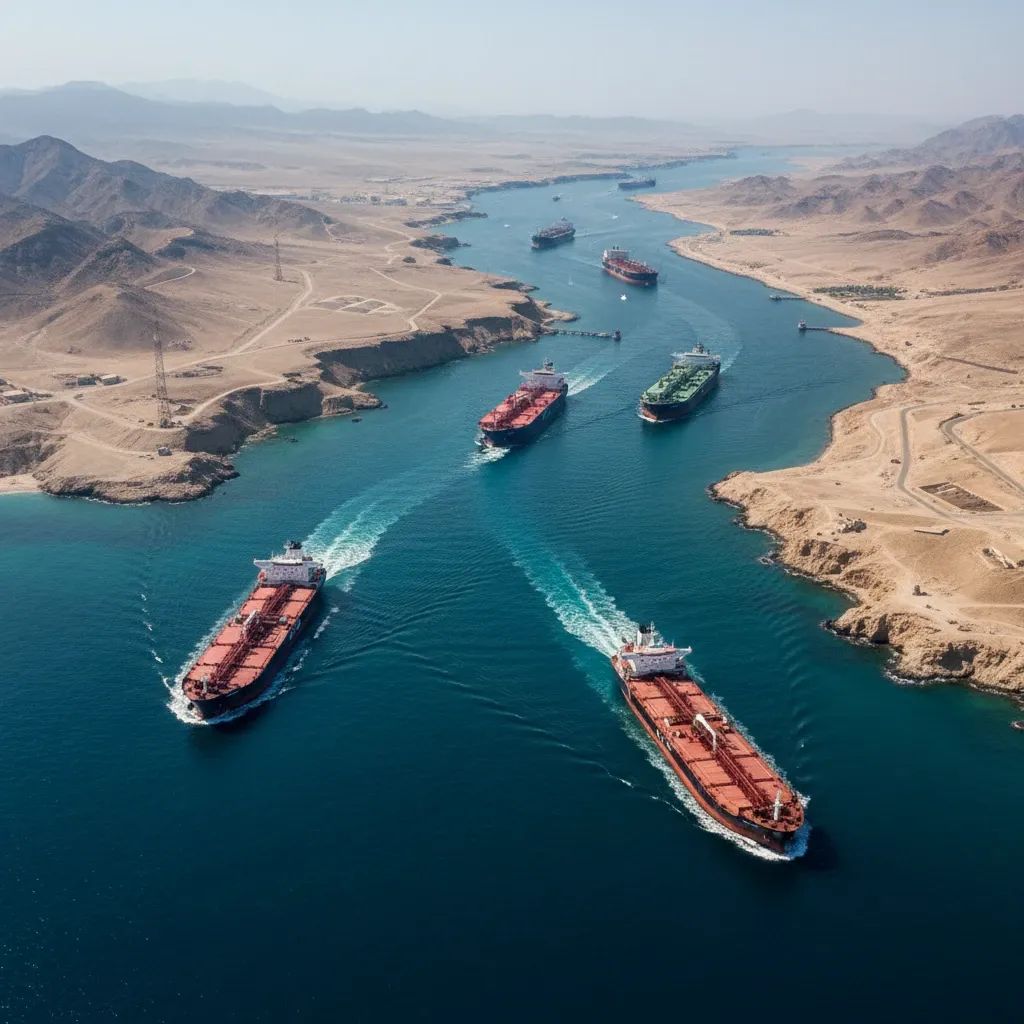
Iran re-closed the Strait of Hormuz under military control on April 19, just two days after briefly allowing commercial shipping during a ceasefire—plunging Italian fuel prices back into uncertainty after nine consecutive days of declines. The Italy Ministry of Business and Made in Italy confirmed the relief period, but the geopolitical situation remains fragile. Weekend negotiations between Washington and Tehran will determine whether current pump prices hold or spike again. As of April 19, self-service petrol averaged €1.76 per liter and diesel stood at €1.69 per liter, both down sharply from the €2.10+ highs reached during the blockade peak. The shift followed a temporary ceasefire and the brief reopening of the strategic waterway, which funnels roughly 20% of the world's seaborne oil. Yet analysts caution that Italy's energy costs—and by extension, grocery bills and business overheads—hang on the outcome of these critical weekend negotiations between Washington and Tehran.
A Volatile Timeline: Hormuz Opens, Closes, Then Re-Closes
The current volatility began February 28, when Iran closed the Strait of Hormuz in retaliation for U.S. and Israeli airstrikes that killed its supreme leader. Roughly 18 million barrels per day of crude and condensate—approximately one-quarter of global oil trade—vanished from the market overnight. Brent crude surged past $126/barrel by early March, a level not seen since the 1970s oil shocks.
On April 8, a two-week ceasefire mediated by Pakistan went into effect. Iran announced April 17 that commercial shipping could resume "for the duration of the truce," a move that briefly pulled TTF gas futures down to €38.77/MWh. Yet the U.S. naval blockade on Iranian ports remained in place, prompting Tehran to re-close the strait the following day. By April 19, Iran's Revolutionary Guard declared the waterway fully shut and under military control, warning that any vessel approaching would be treated as an enemy combatant. Gunboats have already fired on several ships attempting passage.
Why This Matters for Italian Households
• Gas prices closed at €39/MWh on the Amsterdam TTF exchange on April 19, down more than 7% from the crisis peak, directly easing electricity generation costs for Italian utilities.
• Diesel now costs less than petrol for the first time since March, reversing a three-week anomaly that punished truckers and commuters.
• Spring produce is flooding markets—asparagus prices fell 27.9% week-on-week—but energy-intensive cold storage, transport, and fertilizer costs remain elevated, capping the relief shoppers see on shelves.
• A permanent ceasefire could stabilize supply chains; renewed escalation would send crude back above $120/barrel and reignite Italy's inflationary spiral.
What Italian Residents Should Know: Tracking Prices and Making Decisions
For a median household with a diesel car, the nine-day slide translates to roughly €200 in annual savings if sustained. Yet Italians are still spending an estimated €150 million extra per week at the pump compared to pre-crisis levels. Here's what you need to know:
Track Daily Prices Yourself: The Ministry of Business and Made in Italy publishes real-time fuel prices via its Osservatorio Prezzi Carburanti (available at prezzi.mise.gov.it). Check it daily to monitor self-service petrol and diesel prices across regions—prices vary, with southern Italy often 2–4 cents cheaper than the north.
Should You Fill Up Now?: With talks ongoing through the weekend, prices could shift dramatically. If you're running below half a tank and the forecasts suggest stability (confirmed ceasefire extension), fill up. If negotiations stall, prices may spike by Monday. Watch Sunday evening news and energy reports.
Regional Price Differences: Motorway prices remain higher—€1.80/liter petrol, €2.15/liter diesel—but independent stations and supermarkets offer 10–15 cent discounts. Check the Osservatorio map to find the cheapest options near you.
Diesel's Advantage Returns: For the first time since early March, diesel costs less than petrol—typically by 5–7 cents per liter. Diesel drivers should capitalize on this window before geopolitical shifts reverse it again.
Impact on Energy Bills, Food Inflation, and Business
Energy is the silent multiplier in every budget line. When gas and oil prices spike, the ripple touches fertilizer costs (up 40% for urea since February), agricultural diesel (now €1.38/liter versus €0.85 before the conflict), and trucking expenses (an extra €350 per tank for heavy goods vehicles). Italy moves roughly 80% of its freight by road, so diesel volatility translates almost immediately into higher supermarket prices.
Food inflation accelerated to 4.4% year-on-year for unprocessed items in March, according to ISTAT, even as spring harvests should normally apply downward pressure. The Borsa della Spesa, a weekly market bulletin compiled by BMTI and Italmercati in partnership with Consumerismo No Profit, illustrates the tension. Southern Italian strawberries are "in full swing," priced between €3.00 and €4.00 per kilogram, yet the spread is wide because premium varieties—such as the Sabrosa from Basilicata—command top-tier rates while cheaper imports cap the floor. Asparagus dropped 27.9% week-on-week to €4.50–€6.00/kg thanks to warmer weather boosting yield, but growers still face elevated input costs that prevent prices from falling further.
Sicilian Primofiore lemons hold steady at €1.50/kg wholesale despite rising fresh-consumption demand, and kiwis remain at €2.80–€3.00/kg as stocks dwindle toward season's end. Roman artichokes are entering their final weeks, trading at €0.40–€0.80 per head wholesale. On the fish counters, variable weather and higher operating costs have tightened supply: cuttlefish runs €12–€15/kg (up to €17 for premium grades), Atlantic bonito holds at €4.50–€5.50/kg on good catches, and prized John Dory fetches €27–€32/kg. Poultry cuts—chicken breast at €7.60–€8.00/kg and turkey breast at €9.30–€9.70/kg—remain stable as feed-grain prices plateau.
Italian trucking associations have welcomed the fuel price drop but warn that margins remain compressed. The government extended a tax-credit scheme to offset diesel spikes, yet many hauliers cannot pass full cost increases to clients without losing contracts. Agriculture lobby groups report that per-hectare costs for maize and other grain crops have risen by up to €200, driven by fertilizer (urea up 40%), diesel, and plastic mulch expenses. Dairy and pork producers face similar squeezes, with feed and energy bills eroding already thin margins.
Restaurants, bakeries, and food processors—heavy users of natural gas for ovens and refrigeration—are watching TTF quotes daily. A sustained return to sub-€40/MWh territory would ease operating costs and potentially slow menu-price inflation, which has climbed steadily since the crisis began.
The Amsterdam Benchmark and Italy's Exposure
The Title Transfer Facility (TTF) in Amsterdam is Europe's liquid gas-trading hub and the pricing anchor for Italian contracts. On the April 19 close, TTF May futures settled at €39/MWh, down more than 7% intraday. Over the past month, prices have fallen 29%, yet they remain 9.6% higher than a year ago and 35% above the start of 2024. The spike was driven by fears that the Hormuz shutdown would throttle liquefied natural gas (LNG) cargoes destined for European regasification terminals, which have shouldered the burden since Russia curtailed pipeline flows in 2022.
Italy's underground storage facilities began the 2026 refill season at unusually low levels, making the country vulnerable to supply shocks. Mild weather, strong solar output, and subdued industrial demand have cushioned the blow, but analysts note that Norwegian maintenance schedules and weak North Sea wind generation kept a floor under prices even as geopolitics eased. The Ministry of Business and Made in Italy, along with energy consultancy Trading Economics, forecasts TTF will trade around €40.53/MWh by quarter-end and €48.19/MWh in twelve months, assuming no further escalation.
Geopolitical Fragility and Weekend Talks
The current lull hinges on weekend ceasefire negotiations (April 20–21) aimed at extending the April 8 truce into a permanent peace framework. Mediators are focused on three interlocking issues: lifting the U.S. naval blockade on Iranian exports, securing unfettered commercial transit through Hormuz, and addressing Iran's nuclear program. A successful deal would restore roughly 10 million barrels per day of Gulf crude to global markets—output from Iraq, Saudi Arabia, Kuwait, the UAE, Qatar, and Bahrain that has been stranded by the strait's closure. Saudi Arabia and the UAE can reroute some oil via Red Sea pipelines, but combined capacity is only 3.5–5.5 million barrels per day, far short of normal Gulf shipments.
OPEC+ announced a symbolic 206,000-barrel-per-day production increase for April, citing stable demand and low inventories, yet that gesture is dwarfed by the 18 million barrels per day knocked offline by the blockade. If talks collapse and Iran re-mines the strait or the U.S. escalates, Brent could revisit $120+ and TTF gas could breach €50/MWh, restarting the inflationary cycle that Italian policymakers have worked for months to contain.
What Comes Next
Markets will pivot on three near-term signals over the weekend: the outcome of US-Iran negotiations (expected to conclude by April 21), the U.S. decision on lifting its naval blockade, and Iran's willingness to guarantee safe passage through Hormuz. Energy traders are also monitoring European storage-injection rates; if warm weather persists and injection accelerates, summer gas demand will soften, capping upside risk. Conversely, any hint of supply disruption—whether from the Gulf, Norway, or North African pipelines—could trigger a fresh rally.
For now, Italians can expect modest relief at the pump and a partial easing of electricity bills tied to gas-fired generation. Grocery inflation should moderate as spring harvests peak and transport costs stabilize, though the structural overhang of elevated input prices will keep food baskets above pre-crisis norms. Diesel drivers, in particular, benefit from the current reversal that has petrol once again the pricier option, restoring the traditional cost advantage of compression-ignition engines.
Stay informed: Monitor the Ministry of Business and Made in Italy's Osservatorio Prezzi Carburanti daily as the situation evolves. Check energy news on Sunday, April 21, to see if talks succeed—prices could move decisively on Monday morning if negotiations conclude.


