
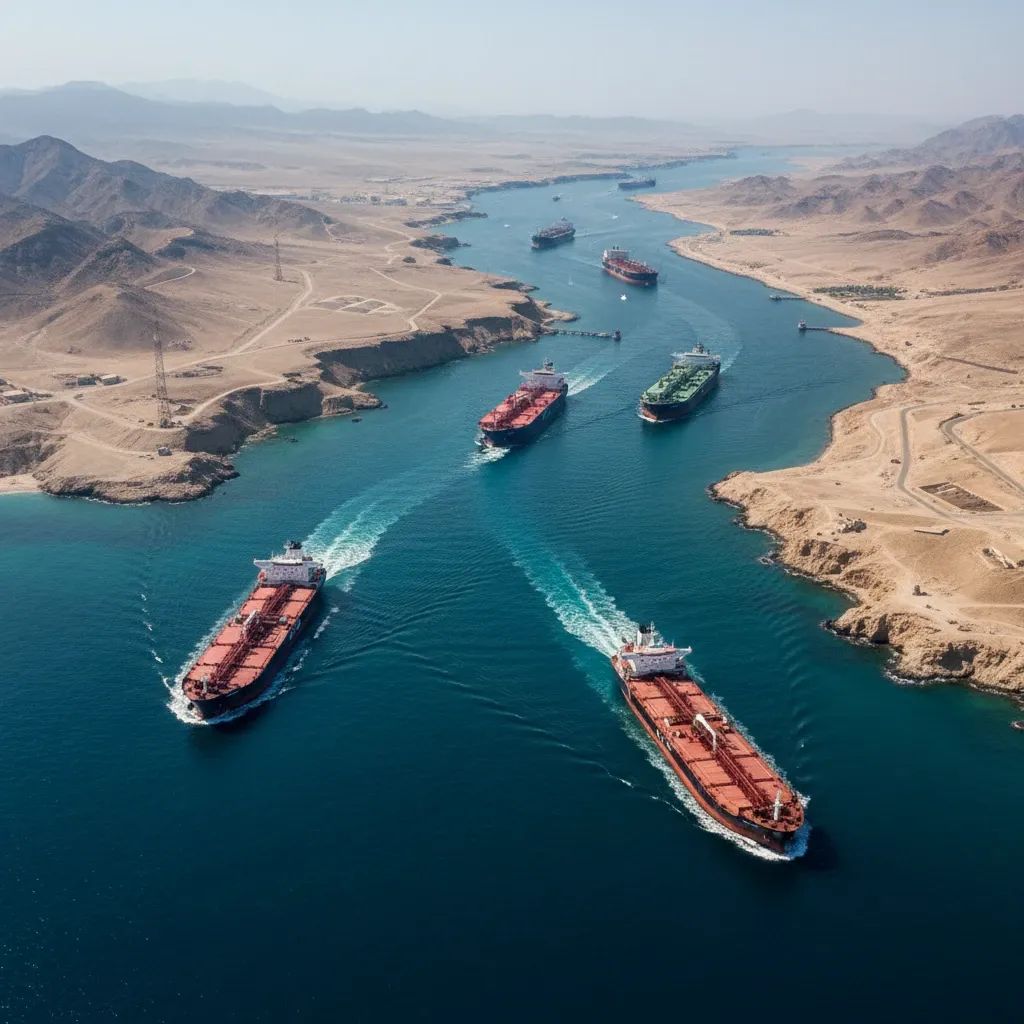
The Islamic Revolutionary Guard Corps (IRGC) has fired upon at least two merchant vessels attempting passage through the Strait of Hormuz, according to three maritime security and shipping industry sources speaking to Reuters. The incident marks an escalation in tensions that has disrupted maritime traffic through one of the world's most critical energy chokepoints.
Confirmed Incident Details
According to the UK Maritime Trade Operations (UKMTO), managed by the British Royal Navy, an incident was logged northeast of Oman near the strait entrance. The captain of a tanker reported that IRGC patrol boats approached his vessel and opened fire. Both the tanker and its crew are reported safe, though the full scope of damage remains unclear.
A second merchant ship also reported being struck by gunfire during transit attempts. MarineTraffic data tracked multiple vessels moving through the waterway earlier in the day—a convoy that included tankers designed to carry crude oil, liquefied petroleum gas, and chemical products—before the situation deteriorated.
Iran Re-Closes the Strait
The Iranian military command announced that the strait has returned to its "previous state" under full control of Iran's armed forces, reversing a temporary easing that had allowed some traffic to resume. Tehran justified the renewed closure by accusing Washington of continuing a naval blockade on Iranian ports. The Iranian armed forces warned that strict control would remain in place until the United States guarantees full freedom of passage for Iranian vessels.
The Strait of Hormuz normally handles roughly 20% of global crude oil and a significant share of liquefied natural gas (LNG), making this closure a matter of significant international concern.
MSC Euribia and Cruise Convoy Escape
The MSC Euribia, a cruise liner operated by the Italy-based shipping giant MSC, is nearing full exit from the Strait of Hormuz after being stranded in the Persian Gulf for several weeks. AIS tracking data shows the vessel traveling at approximately 22 knots and nearly rounding the Musandam Peninsula at Oman's northern tip, effectively clearing the strait's confines.
The Euribia is part of a convoy of cruise ships attempting coordinated departure. Following immediately behind are other passenger vessels. The coordinated movement suggests shipping companies are attempting to exit while conditions permit.
The escape of these passenger vessels brings relief to thousands of tourists and crew members. However, the fate of hundreds of cargo vessels—many carrying time-sensitive goods—remains uncertain.
Implications for Italy and Global Markets
Italy's economy, like much of Europe, depends on energy supplies that transit the Strait of Hormuz. The Strait of Hormuz handles a significant portion of global LNG and petroleum products, and any prolonged disruption to transit could affect energy costs.
Fuel prices may face upward pressure if the closure persists, which could have implications for household budgets and industries dependent on energy. The Italian Ministry of Economic Development has yet to announce specific measures to address potential impacts.
For Italian businesses engaged in international trade, the blockage could disrupt supply chains for various goods. Companies are already exploring alternative shipping routes—notably around Africa's Cape of Good Hope—though such detours add significantly to transit times and shipping costs.
Asian economies—particularly China, India, Japan, and South Korea—rely heavily on energy exports through Hormuz and face the most immediate exposure to disruption. European energy-intensive industries also face potential pressure if the closure continues.
Current Shipping Advisories
The UK Maritime Trade Operations continues to advise extreme caution for vessels transiting the area. Major shipping lines have suspended or sharply curtailed Gulf operations pending clarity on safe passage conditions.
Bimco, an international shipping industry association, has warned that navigation through the area carries significant risks.
Outlook
For residents and businesses in Italy, the unfolding situation underscores the importance of stable energy supplies and the interconnected nature of global maritime trade. While the immediate outcome remains uncertain, the disruption to one of the world's most critical energy corridors could have ripple effects across multiple sectors in the coming weeks and months.


